

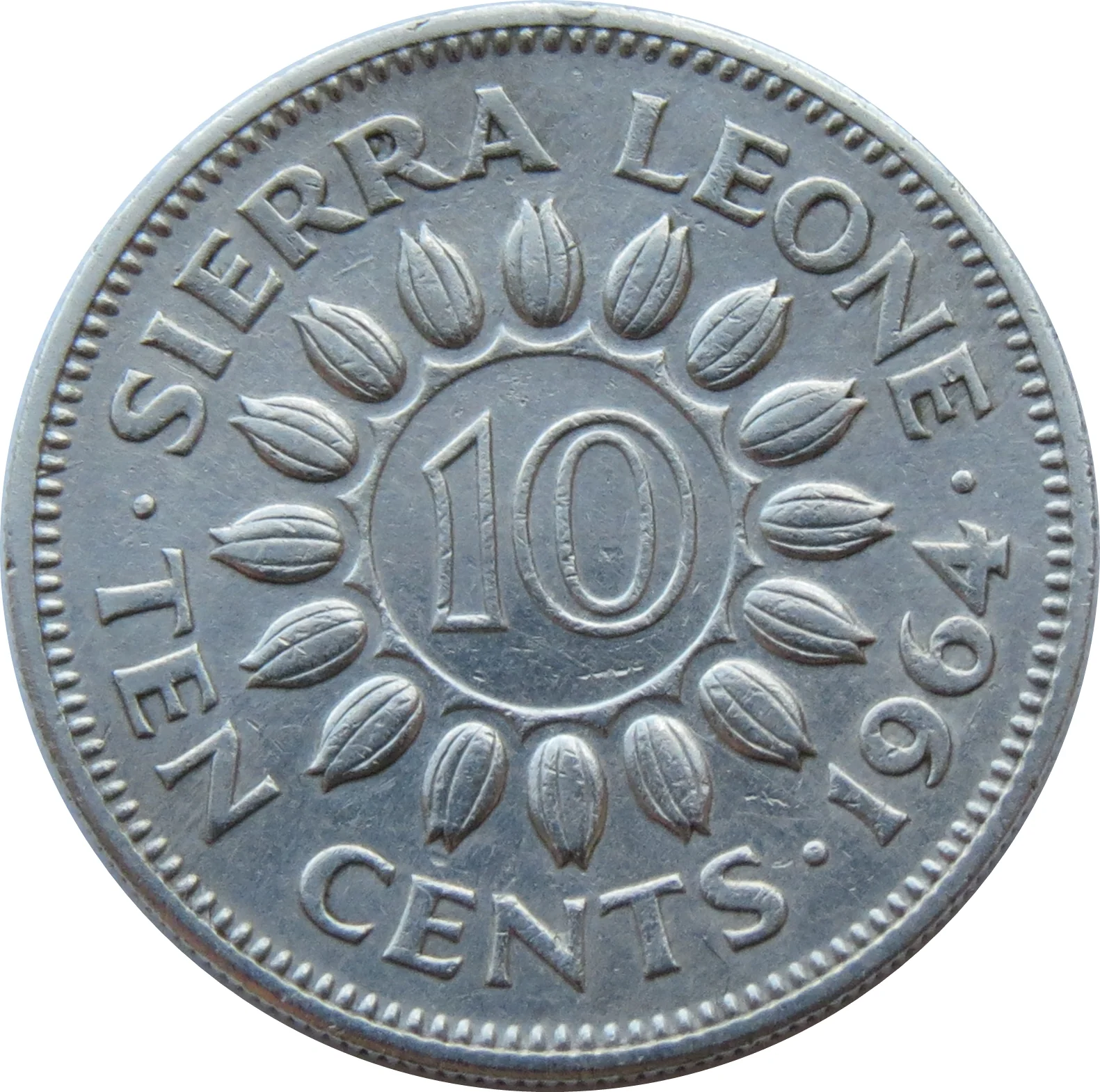
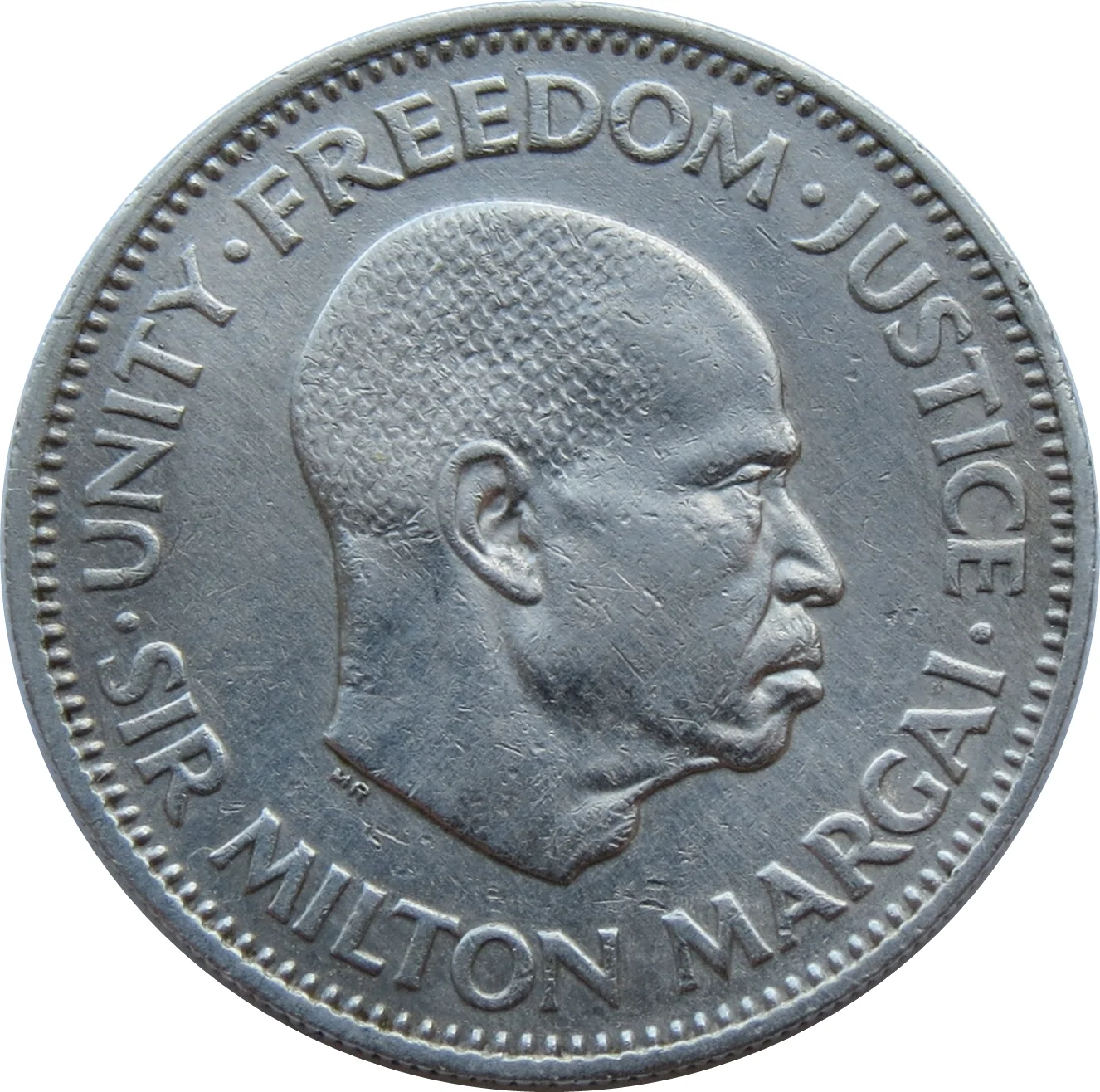
10 Cents – Sierra Leone
Sierra Leone
Context
Year: 1964
Issuer: Sierra Leone 
Ruler: Milton Margai
Currency:
(1964—2023)
Demonetization: 1 January 2024
Total mintage: 24,010,000
Material
References
KM: #Click to copy to clipboard19
Numista: #7328
Value
Exchange value: 0.10 SLL
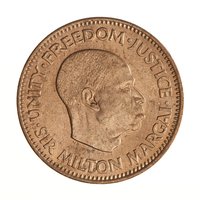
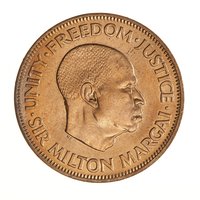
Obverse
Reverse
Description:
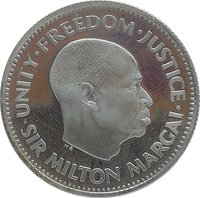
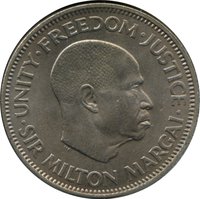
Sir Milton Margai facing right, encircled by text.
Inscription:
UNITY·FREEDOM·JUSTICE
MR
·SIR MILTON MARGAI·
MR
·SIR MILTON MARGAI·
Script: Latin
Edge
Reeded
Categories
| Person> Politician |
| Plant> Fruit |
Mints
| Name | Mark |
|---|---|
| Royal Mint (Tower Hill) | — |
Mintings
| Year | Mint Mark | Mintage | Quality | Collection |
|---|---|---|---|---|
| 1964 | — | 24,000,000 | ||
| 1964 | — | 10,000 | Proof |
Historical background
In 1964, Sierra Leone operated under the West African Currency Board (WABC) system, a colonial-era monetary framework it shared with The Gambia, Ghana, and Nigeria. This system pegged the West African Pound at par with the British Pound Sterling, with currency issuance fully backed by sterling reserves held in London. While this arrangement provided stability and facilitated trade with Britain, it also meant Sierra Leone had no independent control over its monetary policy, interest rates, or money supply, limiting its ability to respond to domestic economic needs.
The year 1964 was a pivotal moment of transition, however, as Sierra Leone moved decisively toward establishing its own central bank and national currency. Following independence in 1961, the government sought greater economic sovereignty, and the Parliament passed the Bank of Sierra Leone Act in 1963. Preparations were well advanced throughout 1964 for the launch of the Bank of Sierra Leone, which would open its doors in August of the same year, taking over the responsibility of issuing currency.
Consequently, by the end of 1964, the stage was set for a fundamental change. The West African Pound was in its final months of circulation, to be replaced in 1964 by the new national currency, the Leone, introduced at a rate of two Leones to one West African Pound (and thus maintaining the parity with the British Pound). This shift marked Sierra Leone's crucial step in decolonizing its financial institutions and asserting direct management over its monetary affairs as a sovereign nation.
The year 1964 was a pivotal moment of transition, however, as Sierra Leone moved decisively toward establishing its own central bank and national currency. Following independence in 1961, the government sought greater economic sovereignty, and the Parliament passed the Bank of Sierra Leone Act in 1963. Preparations were well advanced throughout 1964 for the launch of the Bank of Sierra Leone, which would open its doors in August of the same year, taking over the responsibility of issuing currency.
Consequently, by the end of 1964, the stage was set for a fundamental change. The West African Pound was in its final months of circulation, to be replaced in 1964 by the new national currency, the Leone, introduced at a rate of two Leones to one West African Pound (and thus maintaining the parity with the British Pound). This shift marked Sierra Leone's crucial step in decolonizing its financial institutions and asserting direct management over its monetary affairs as a sovereign nation.
🌱 Very Common