

½ cent – Netherlands
Add to wishlist
Netherlands
Context
Years: 1878–1901
Issuer: Netherlands
Ruler: Wilhelmina
Currency:
(1817—2001)
Demonetization: 1940
Total mintage: 53,000,000
Material
References
KM: #
Numista: #7326
Value
Exchange value: 0.005 NLG
Obverse
Description:
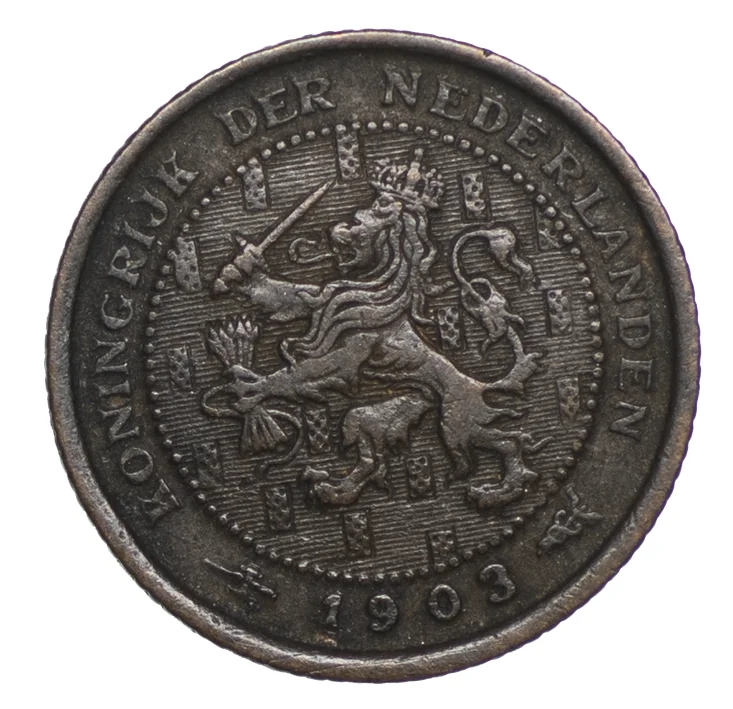
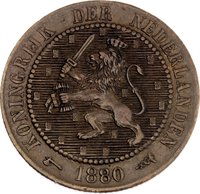
A crowned lion facing left, holding a sword and seven arrows, within a central beaded circle. Lettering is above, the date below, and a privy mark is to the date's left.
Inscription:
KONINGRIJK DER NEDERLANDEN
1884
1884
Translation:
KINGDOM OF THE NETHERLANDS
1884
1884
Script: Latin
Language: Dutch
Reverse
Edge
Milled
Categories
| Symbols> Coat of Arms |
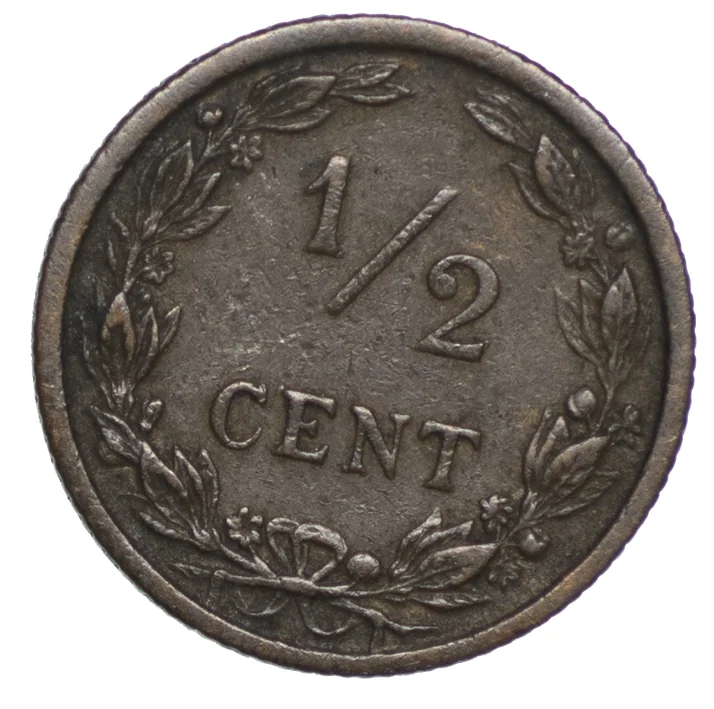
| Symbol> Wreath |
Mints
| Name | Mark |
|---|---|
| Royal Dutch Mint | — |
Mintings
| Year | Mint Mark | Mintage | Quality | Collection |
|---|---|---|---|---|
| 1878 | — | 4,000,000 | ||
| 1883 | — | 800,000 | ||
| 1884 | — | 17,200,000 | ||
| 1885 | — | 7,800,000 | ||
| 1886 | — | 2,200,000 | ||
| 1891 | — | 5,000,000 | ||
| 1894 | — | 5,000,000 | ||
| 1898 | — | 2,000,000 | ||
| 1900 | — | 3,000,000 | ||
| 1901 | — | 6,000,000 |
Historical background
In 1878, the Netherlands operated under a bimetallic standard, a system where both gold and silver were legal tender at a fixed ratio set by the state. This placed the country within the broader European monetary upheaval of the late 19th century, known as the "Battle of the Standards." Following major silver discoveries and Germany's adoption of a pure gold standard in 1871, the global market price of silver began a sustained decline. Consequently, the Dutch mint ratio (15.9:1) became undervalued compared to the soaring market price of gold, causing gold coins to be hoarded or exported and leaving the circulation dominated by the increasingly depreciating silver.
This situation created significant economic strain and uncertainty. Domestically, the falling value of silver threatened the real value of debts and savings, while internationally, it complicated trade and finance with nations on the gold standard. The Dutch government, led by Prime Minister Jan Kappeyne van de Coppello, was acutely aware of the instability. After years of debate, 1877-1878 marked a critical turning point: Parliament passed the necessary legislation to formally suspend the free coinage of silver guilders, effectively taking the first decisive step toward abandoning bimetallism.
Therefore, the currency situation in 1878 was one of transition and deliberate policy shift. The suspension of free silver coinage was a defensive measure to stem the outflow of gold and stabilize the currency. It set the stage for the Netherlands' eventual, full transition to the gold standard, which was legally completed with the Monetary Law of 1879, aligning the country with its major trading partners like Britain and Germany and seeking to anchor its currency to the more stable and internationally dominant gold-based system.
This situation created significant economic strain and uncertainty. Domestically, the falling value of silver threatened the real value of debts and savings, while internationally, it complicated trade and finance with nations on the gold standard. The Dutch government, led by Prime Minister Jan Kappeyne van de Coppello, was acutely aware of the instability. After years of debate, 1877-1878 marked a critical turning point: Parliament passed the necessary legislation to formally suspend the free coinage of silver guilders, effectively taking the first decisive step toward abandoning bimetallism.
Therefore, the currency situation in 1878 was one of transition and deliberate policy shift. The suspension of free silver coinage was a defensive measure to stem the outflow of gold and stabilize the currency. It set the stage for the Netherlands' eventual, full transition to the gold standard, which was legally completed with the Monetary Law of 1879, aligning the country with its major trading partners like Britain and Germany and seeking to anchor its currency to the more stable and internationally dominant gold-based system.
🌱 Very Common