

1 Naira – Nigeria
Nigeria
Context
Years: 1991–1993
Issuer: Nigeria 
Issuing organization: Central Bank of Nigeria
Period:
(since 1963)
Currency:
(since 1973)
Demonetization: 2007
Material
References
KM: #Click to copy to clipboard14
Numista: #7323
Value
Exchange value: 1 NGN
Obverse
Reverse
Description:
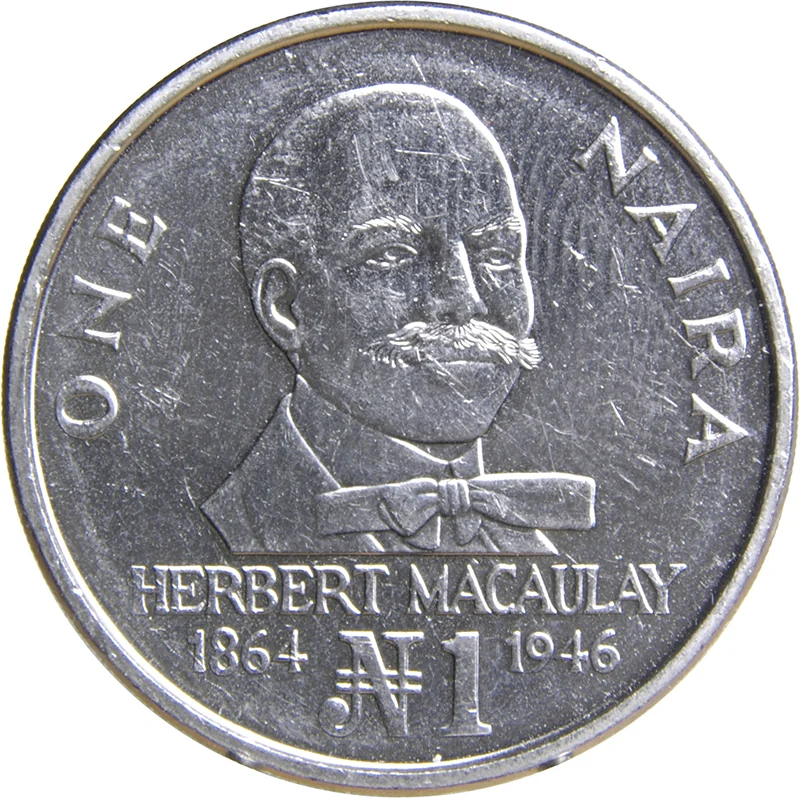
Herbert Macaulay, profile right.
Inscription:
ONE NAIRA
HERBERT MACAULAY
1864 ₦1 1946
HERBERT MACAULAY
1864 ₦1 1946
Script: Latin
Edge
Reeded with inscription
Legend:
CENTRAL BANK OF NIGERIA
Categories
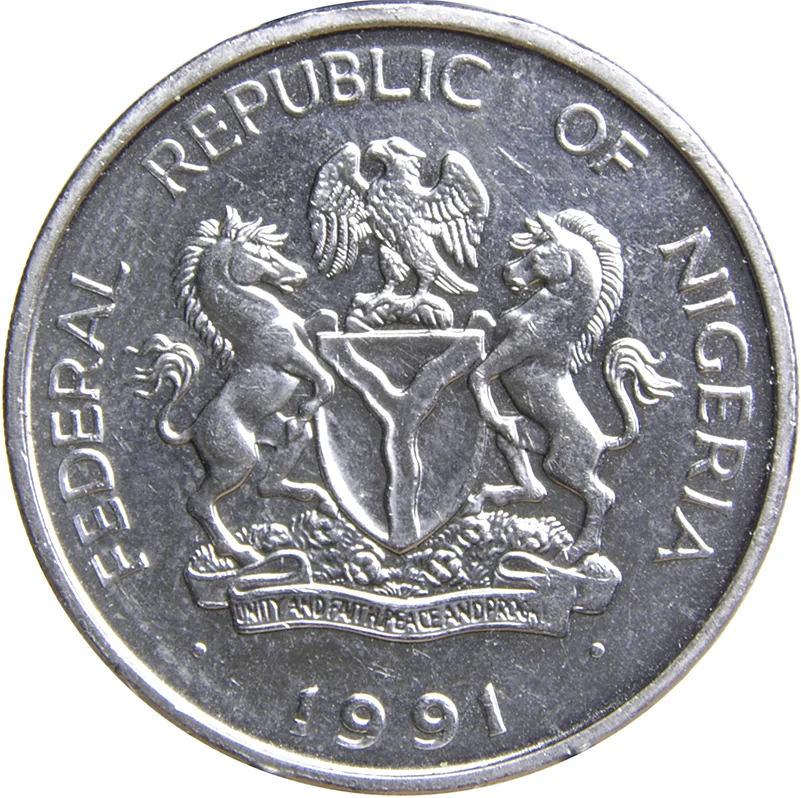
| Symbols> Coat of Arms |
Mintings
| Year | Mint Mark | Mintage | Quality | Collection |
|---|---|---|---|---|
| 1991 | — | — | ||
| 1993 | — | — |
Historical background
In 1991, Nigeria's currency situation was characterized by the complex and strained legacy of the Structural Adjustment Programme (SAP) introduced in 1986. A central pillar of SAP was the move from a fixed exchange rate to a market-driven system, administered through the Second-Tier Foreign Exchange Market (SFEM). By 1991, this had evolved into the Autonomous Foreign Exchange Market (AFEM), but the core challenge remained: a severe and chronic shortage of foreign exchange, particularly US dollars, which stifled imports and industrial production. The official exchange rate, though theoretically market-determined, was still subject to significant central bank management and did not align with economic realities, fostering a thriving black market where the Naira traded at a steep discount.
This foreign exchange crisis directly impacted the domestic economy, contributing to high inflation and a continued devaluation of the Naira. The government, under President Ibrahim Babangida, was grappling with the social costs of economic liberalization, including rising costs of imported goods and raw materials. Efforts to manage the currency were further complicated by the nation's heavy reliance on oil revenues, which made the economy—and the value of the Naira—vulnerable to volatile global crude oil prices. Consequently, businesses faced immense difficulty accessing forex for legitimate transactions, leading to widespread rent-seeking behaviors and corruption within the allocation system.
Overall, the currency situation in 1991 reflected a period of difficult transition and economic uncertainty. The policies aimed at achieving a realistic valuation of the Naira and attracting foreign investment were undercut by structural bottlenecks, fiscal deficits, and a lack of public confidence. The disparity between the official and parallel market rates became a defining feature of the economy, undermining policy effectiveness and setting the stage for the continued monetary challenges and further devaluations that would characterize the Nigerian economy in the decades to follow.
This foreign exchange crisis directly impacted the domestic economy, contributing to high inflation and a continued devaluation of the Naira. The government, under President Ibrahim Babangida, was grappling with the social costs of economic liberalization, including rising costs of imported goods and raw materials. Efforts to manage the currency were further complicated by the nation's heavy reliance on oil revenues, which made the economy—and the value of the Naira—vulnerable to volatile global crude oil prices. Consequently, businesses faced immense difficulty accessing forex for legitimate transactions, leading to widespread rent-seeking behaviors and corruption within the allocation system.
Overall, the currency situation in 1991 reflected a period of difficult transition and economic uncertainty. The policies aimed at achieving a realistic valuation of the Naira and attracting foreign investment were undercut by structural bottlenecks, fiscal deficits, and a lack of public confidence. The disparity between the official and parallel market rates became a defining feature of the economy, undermining policy effectiveness and setting the stage for the continued monetary challenges and further devaluations that would characterize the Nigerian economy in the decades to follow.
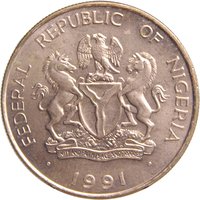
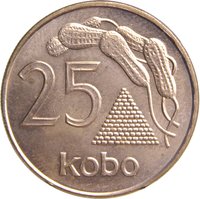
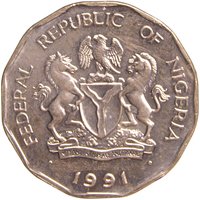
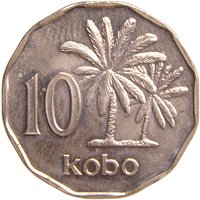
Series: 1991 Nigeria circulation coins
🌱 Very Common