

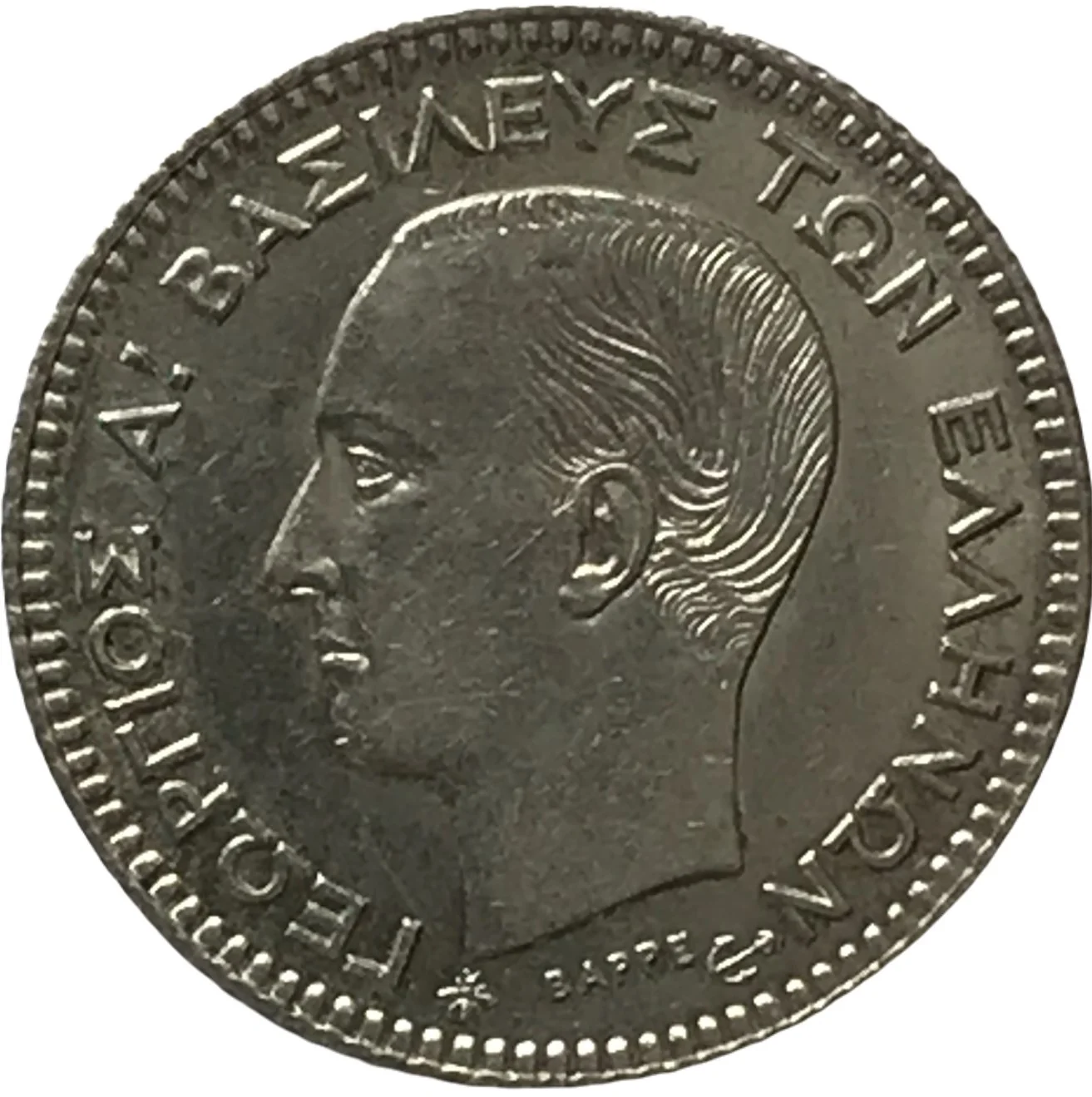
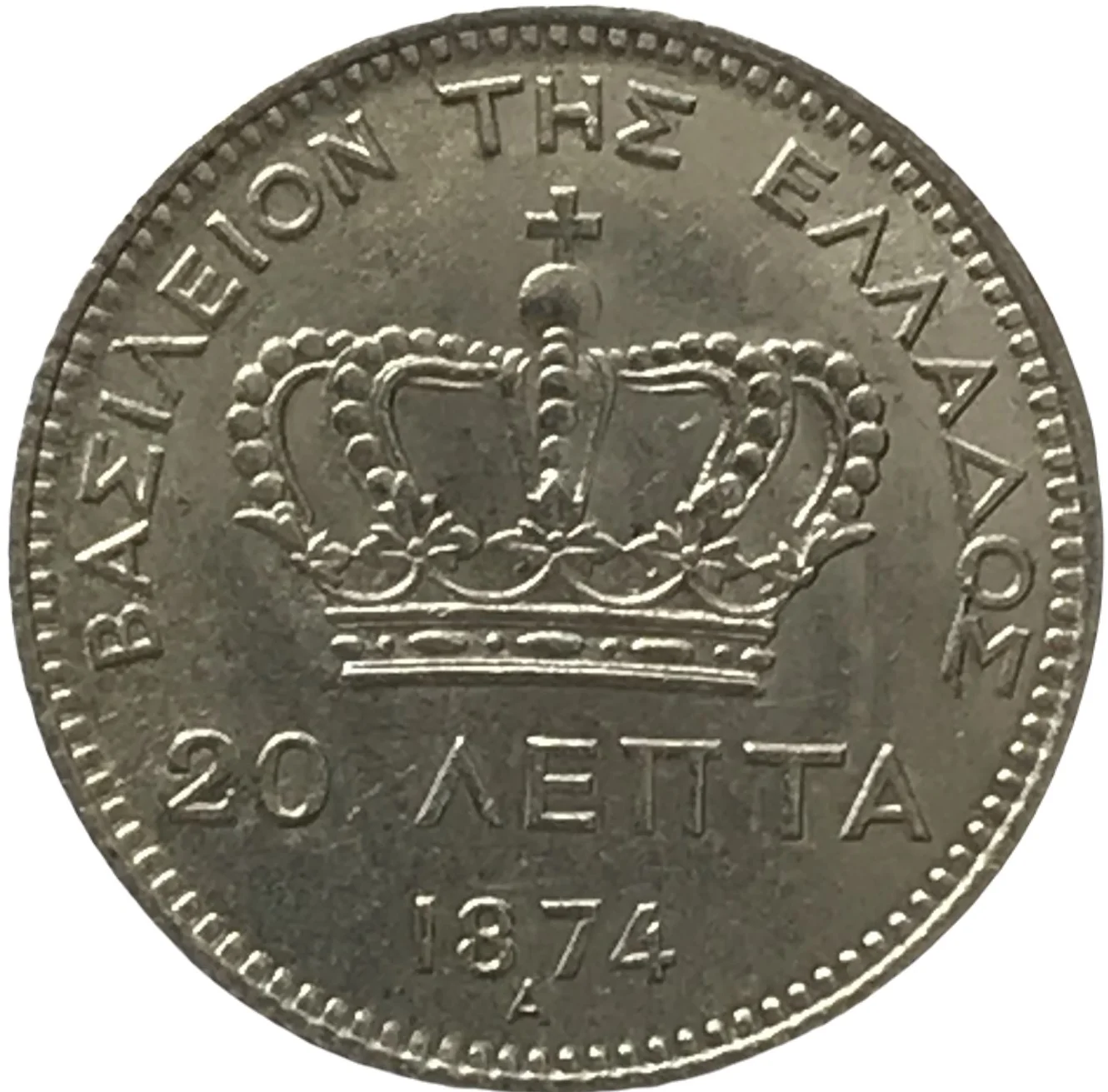
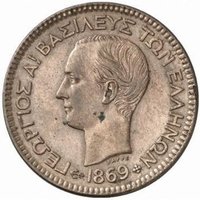
Obverse
Description:
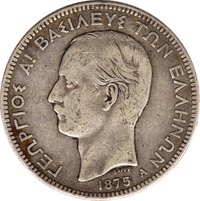
Young King George I, facing left.
Inscription:
ΓΕΩΡΓΙΟΣ Α! ΒΑΣΙΛΕΥΣ ΤΩΝ ΕΛΛΗΝΩΝ
ΒΑΡΡΕ
ΒΑΡΡΕ
Translation:
GEORGE A! KING OF THE GREEKS
BARRE
BARRE
Script: Greek
Language: Greek
Engraver: Désiré-Albert Barre
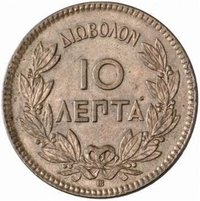
Reverse
Description:
Minor coin.
Inscription:
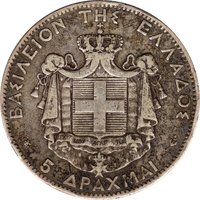
ΒΑΣΙΛΕΙΟΝ ΤΗΣ ΕΛΛΑΔΟΣ
20 ΛΕΠΤΑ 1874 Α
20 ΛΕΠΤΑ 1874 Α
Translation:
KINGDOM OF GREECE
20 LEPTA 1874 A
20 LEPTA 1874 A
Script: Greek
Language: Greek
Engraver: Désiré-Albert Barre
Edge
Reeded
Mints
| Name | Mark |
|---|---|
| Monnaie de Paris | A |
Historical background
In 1874, Greece operated under a complex and unstable monetary system, a legacy of its post-independence economic struggles. The nation was officially on a bimetallic standard (gold and silver), but in practice, the currency in circulation was a chaotic mix. This included the drachma, the national silver coin; a plethora of older Ottoman and foreign coins; and, most problematically, large quantities of low-value, inconvertible paper money known as "forced currency" (cours forcé). This paper money, first issued to finance the War of Independence and subsequent deficits, was not backed by precious metal reserves and traded at a significant discount to its face value, causing inflation and eroding public trust.
The core financial issue was the chronic budget deficit of the Greek state, which relied heavily on foreign loans. To cover immediate expenses, the government repeatedly resorted to printing more of this paper currency, further depreciating its value. By 1874, the public had little confidence in the paper drachma, and international transactions were hampered by the discrepancy between the nominal and real value of the currency. This environment created a dual economy: one for everyday transactions with depreciating paper and another for foreign trade and large-scale finance reliant on metal.
This precarious situation was nearing a crisis point, setting the stage for major reforms later in the decade. International creditors, particularly Greece's financial supervisors, demanded fiscal discipline and monetary stabilization as a condition for further loans. Consequently, the period around 1874 represents the final years of the unstable cours forcé system, which would soon lead to the pivotal 1875-1878 reforms under Prime Minister Charilaos Trikoupis and the eventual adoption of the gold standard in 1883, anchoring the drachma to international monetary norms.
The core financial issue was the chronic budget deficit of the Greek state, which relied heavily on foreign loans. To cover immediate expenses, the government repeatedly resorted to printing more of this paper currency, further depreciating its value. By 1874, the public had little confidence in the paper drachma, and international transactions were hampered by the discrepancy between the nominal and real value of the currency. This environment created a dual economy: one for everyday transactions with depreciating paper and another for foreign trade and large-scale finance reliant on metal.
This precarious situation was nearing a crisis point, setting the stage for major reforms later in the decade. International creditors, particularly Greece's financial supervisors, demanded fiscal discipline and monetary stabilization as a condition for further loans. Consequently, the period around 1874 represents the final years of the unstable cours forcé system, which would soon lead to the pivotal 1875-1878 reforms under Prime Minister Charilaos Trikoupis and the eventual adoption of the gold standard in 1883, anchoring the drachma to international monetary norms.
🌱 Fairly Common