

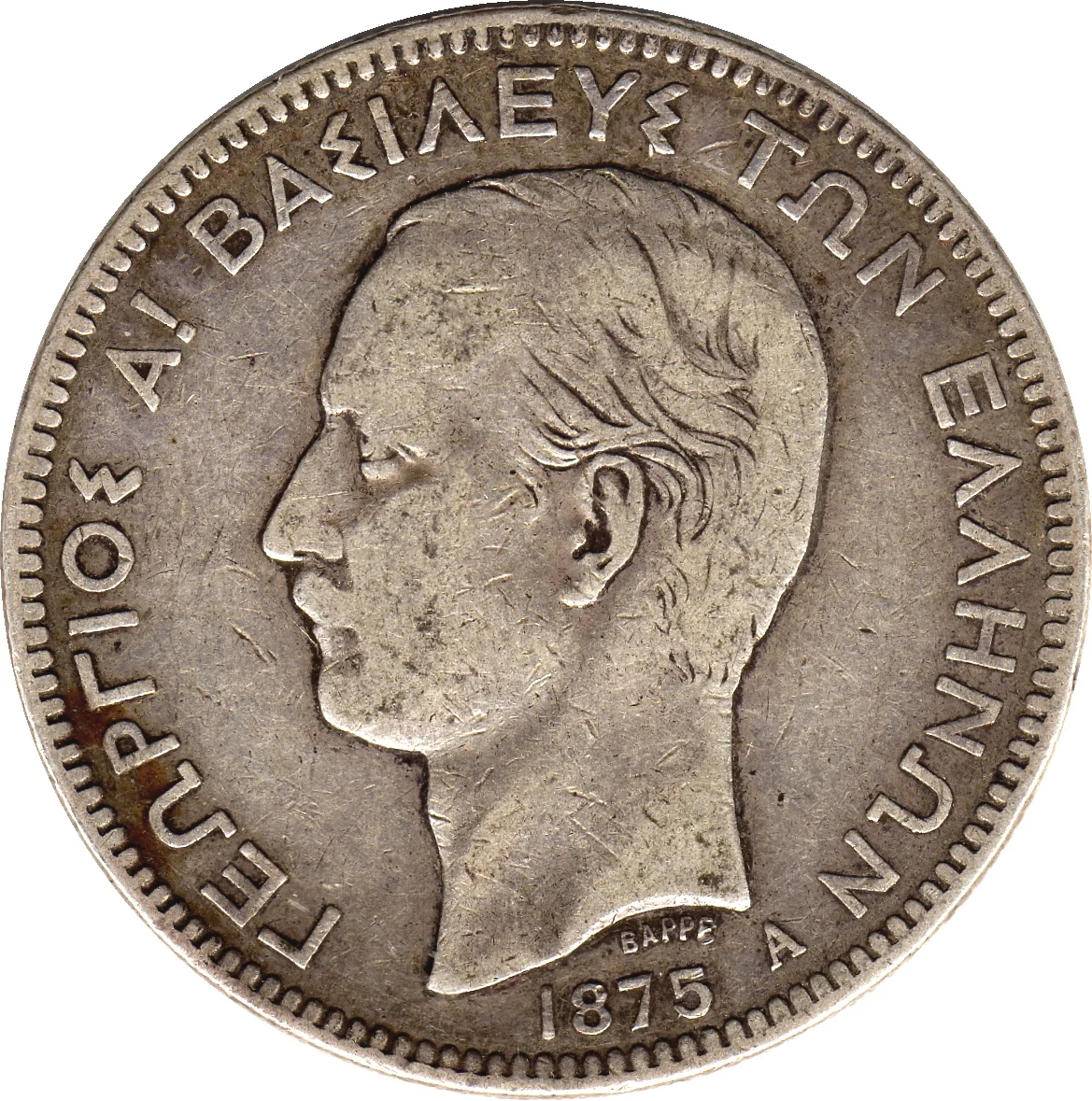
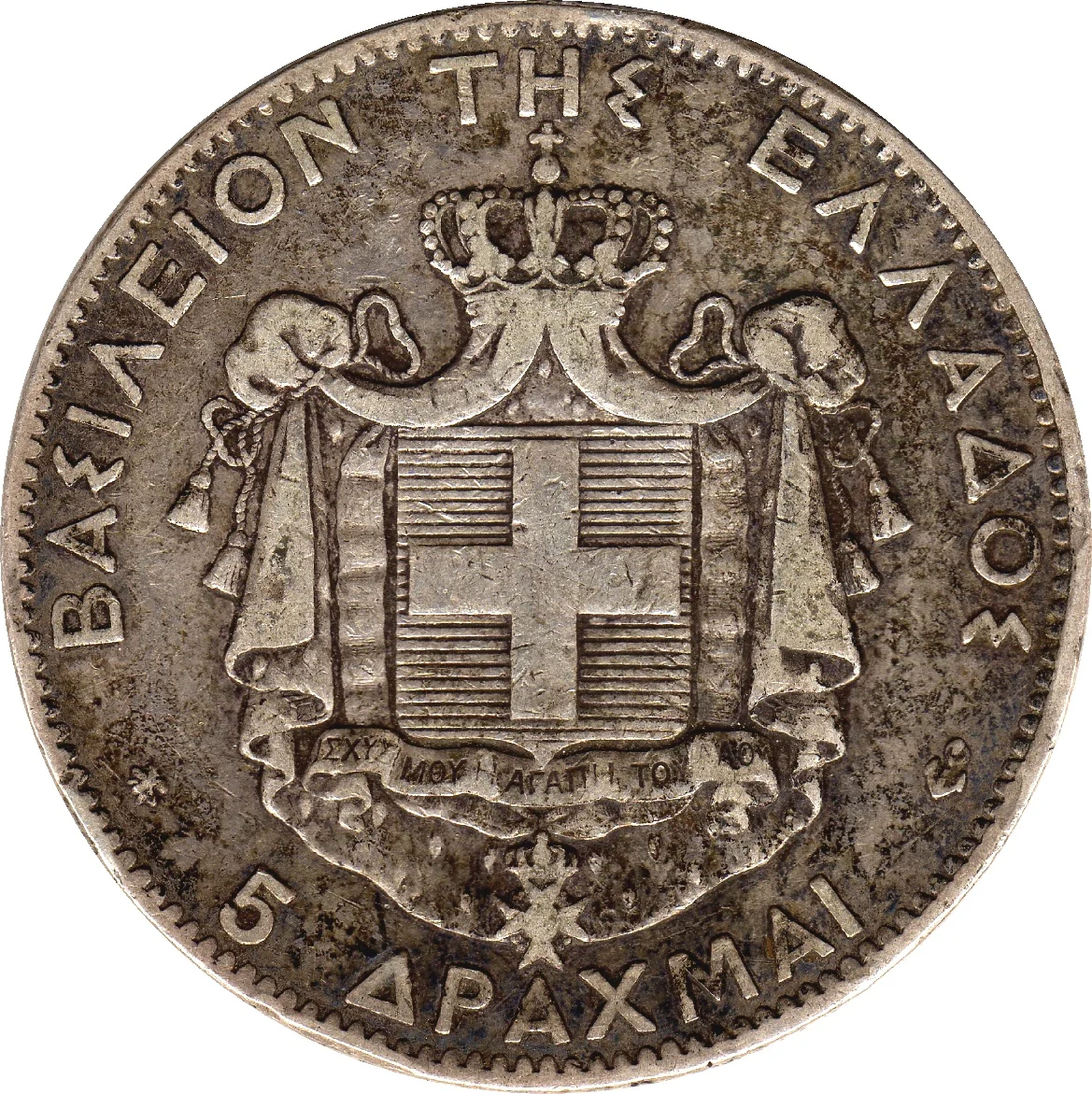
5 Drachmai – Greece
Greece
Obverse
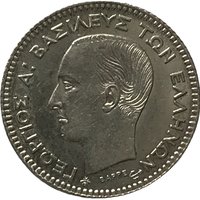
Description:
Portrait of King George I, left-facing, with date beneath.
Inscription:
ΓΕΩΡΓΙΟΣ Α! ΒΑΣΙΛΕΥΣ ΤΩΝ ΕΛΛΗΝΩΝ
ΒΑΡΡΕ
1875 A
ΒΑΡΡΕ
1875 A
Translation:
GEORGE A! KING OF THE GREEKS
BARRE
1875 A
BARRE
1875 A
Script: Greek
Language: Greek
Engraver: Désiré-Albert Barre
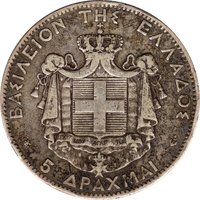
Reverse
Description:
Arms in crowned mantle, denomination beneath.
Inscription:
ΒΑΣΙΛΕΙΟΝ ΤΗΣ ΕΛΛΑΔΟΣ
5 ΔΡΑΧΜΑΙ
ΙΣΧΥΣ ΜΟΥ Η ΑΓΑΠΗ ΤΟΥ ΛΑΟΥ
5 ΔΡΑΧΜΑΙ
ΙΣΧΥΣ ΜΟΥ Η ΑΓΑΠΗ ΤΟΥ ΛΑΟΥ
Translation:
KINGDOM OF GREECE
5 DRACHMAS
MY STRENGTH IS THE LOVE OF THE PEOPLE
5 DRACHMAS
MY STRENGTH IS THE LOVE OF THE PEOPLE
Script: Greek
Language: Greek
Engraver: Désiré-Albert Barre
Edge
Reeded
Mints
| Name | Mark |
|---|---|
| Monnaie de Paris | A |
Historical background
In 1875, Greece’s currency situation was defined by a complex and unstable dual system, a legacy of its post-independence financial struggles. The official currency was the Greek drachma, introduced in 1832 and nominally on a bimetallic (silver and gold) standard. However, severe fiscal deficits, chronic foreign borrowing, and excessive issuance of paper money by the National Bank of Greece had led to a significant devaluation. The drachma’s value was not fixed to precious metals in practice, and it circulated at a substantial discount against major European currencies like the French franc and the British pound sterling.
Alongside the depreciated drachma, a parallel system of "hard" foreign currencies was widely used in commerce, particularly in major ports and for international trade. The most prominent of these was the Greek phoenix, a gold coin minted in limited quantities, and more importantly, the French 20-franc gold coin (the "napoléon"). These foreign gold coins were preferred for large transactions and savings due to their stable intrinsic value, creating a de facto gold standard for the economy's elite and foreign trade, while the state and general populace contended with a weaker silver and paper drachma.
This period of monetary disarray was nearing a turning point. The year 1875 fell within a decade of fiscal and monetary reforms aimed at modernizing the state. Pressure from foreign creditors and the government's desire for economic integration with Europe culminated in the Law of 1883, which would formally place Greece on the gold standard and stabilize the drachma. Therefore, the currency situation of 1875 represents the fraught final chapter of an era of monetary fragmentation, immediately preceding a concerted, though painful, effort to achieve financial orthodoxy and European monetary alignment.
Alongside the depreciated drachma, a parallel system of "hard" foreign currencies was widely used in commerce, particularly in major ports and for international trade. The most prominent of these was the Greek phoenix, a gold coin minted in limited quantities, and more importantly, the French 20-franc gold coin (the "napoléon"). These foreign gold coins were preferred for large transactions and savings due to their stable intrinsic value, creating a de facto gold standard for the economy's elite and foreign trade, while the state and general populace contended with a weaker silver and paper drachma.
This period of monetary disarray was nearing a turning point. The year 1875 fell within a decade of fiscal and monetary reforms aimed at modernizing the state. Pressure from foreign creditors and the government's desire for economic integration with Europe culminated in the Law of 1883, which would formally place Greece on the gold standard and stabilize the drachma. Therefore, the currency situation of 1875 represents the fraught final chapter of an era of monetary fragmentation, immediately preceding a concerted, though painful, effort to achieve financial orthodoxy and European monetary alignment.
🌱 Common