

100 Escudos – Portugal
Portugal
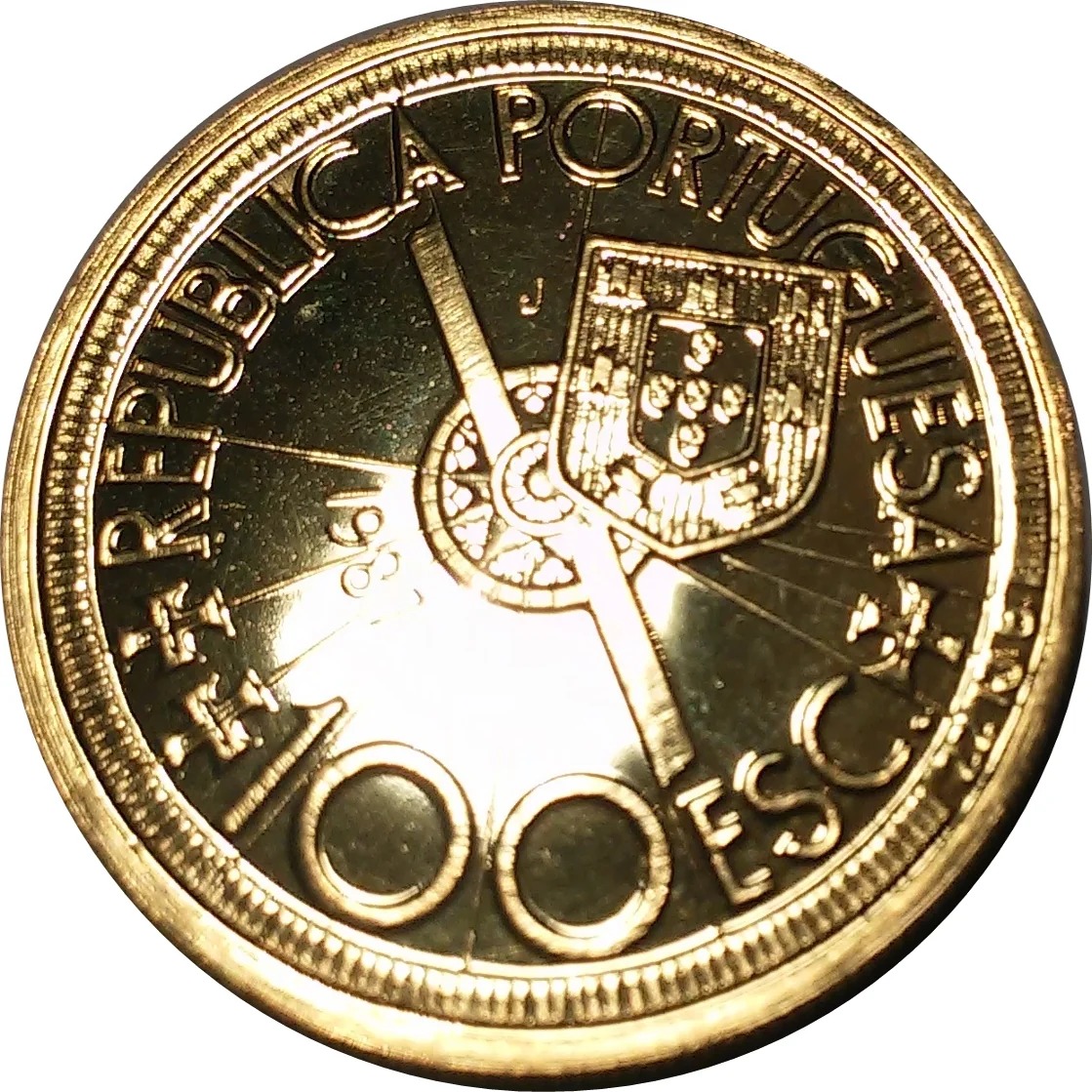
Obverse
Description:
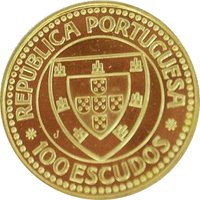
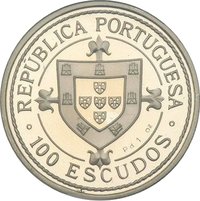
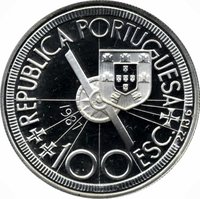
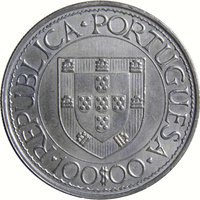
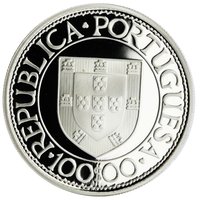
Shield top right, value beneath.
Inscription:
REPUBLICA PORTUGUESA
1987
☩☩100 ESC.☩
22 13 6
1987
☩☩100 ESC.☩
22 13 6
Translation:
PORTUGUESE REPUBLIC
1987
☩☩100 ESCUDOS☩
22 13 6
1987
☩☩100 ESCUDOS☩
22 13 6
Script: Latin
Language: Portuguese
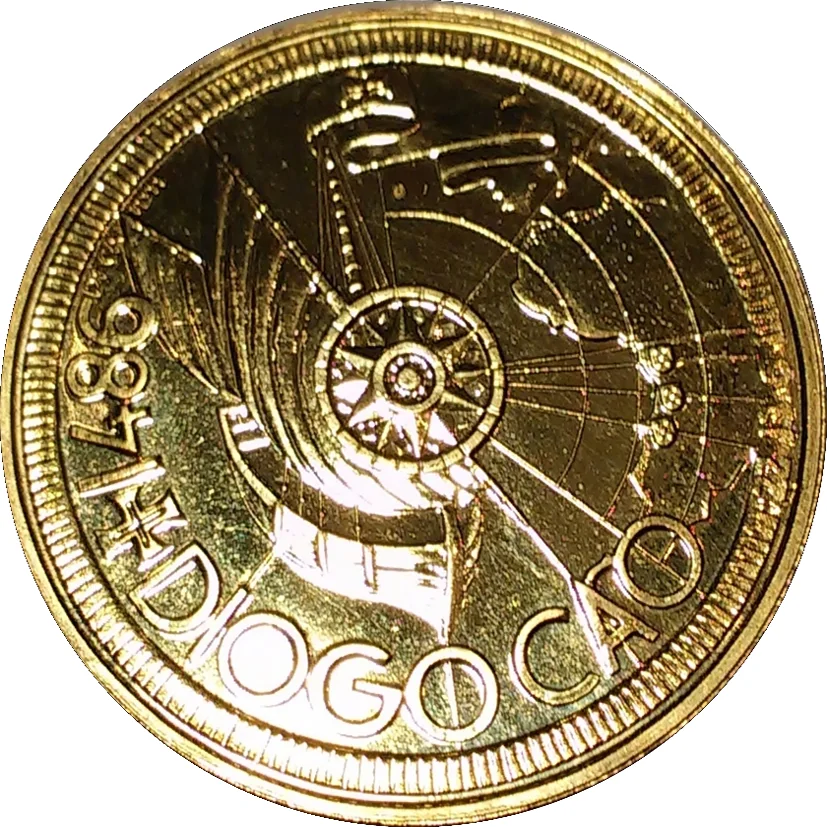
Reverse
Description:
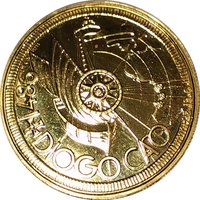
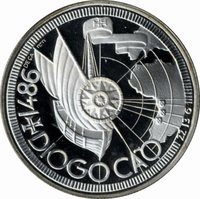
Compass on map in sailboat.
Inscription:
☩1486
DIOGO CÃO
22 13 6
DIOGO CÃO
22 13 6
Translation:
☩1486
DIOGO CÃO
22 13 6
DIOGO CÃO
22 13 6
Script: Latin
Languages: Latin, Portuguese
Edge
Reeded
Mints
| Name | Mark |
|---|---|
| Imprensa Nacional - Casa da Moeda | — |
Mintings
| Year | Mint Mark | Mintage | Quality | Collection |
|---|---|---|---|---|
| 1987 | INCM | 5,256 | In sets | |
| 1987 | INCM | 2,000 | Proof |
Historical background
In 1987, Portugal’s currency situation was defined by its recent accession to the European Economic Community (EEC) in 1986 and its ongoing struggle with economic instability. The national currency, the escudo, operated within a managed float but was effectively pegged to a basket of European currencies, primarily the Deutsche Mark, through the European Monetary System (EMS). This linkage was a cornerstone of the government's anti-inflationary policy, aiming to import monetary credibility from Germany. However, maintaining this peg required high domestic interest rates and strict exchange controls, which constrained economic growth and investment.
The economy faced significant pressures, including high public debt, persistent inflation (though declining from earlier hyperinflation), and a large current account deficit. These fundamentals often put downward pressure on the escudo, testing the commitment to the EMS parity. The government, led by Prime Minister Aníbal Cavaco Silva, pursued a program of structural reforms and austerity to modernize the economy and meet its EEC convergence obligations. A key monetary policy goal was to stabilize the escudo as a prerequisite for future participation in a single European currency, a distant but stated ambition.
Consequently, 1987 represented a transitional year of cautious stabilization within a broader European framework. The escudo's value was politically symbolic, representing Portugal's commitment to European integration and economic discipline. While the fixed exchange rate policy helped curb inflation, it came at the cost of limited monetary autonomy and ongoing vulnerability to speculative attacks, a tension that would continue until the escudo's eventual replacement by the euro in 1999.
The economy faced significant pressures, including high public debt, persistent inflation (though declining from earlier hyperinflation), and a large current account deficit. These fundamentals often put downward pressure on the escudo, testing the commitment to the EMS parity. The government, led by Prime Minister Aníbal Cavaco Silva, pursued a program of structural reforms and austerity to modernize the economy and meet its EEC convergence obligations. A key monetary policy goal was to stabilize the escudo as a prerequisite for future participation in a single European currency, a distant but stated ambition.
Consequently, 1987 represented a transitional year of cautious stabilization within a broader European framework. The escudo's value was politically symbolic, representing Portugal's commitment to European integration and economic discipline. While the fixed exchange rate policy helped curb inflation, it came at the cost of limited monetary autonomy and ongoing vulnerability to speculative attacks, a tension that would continue until the escudo's eventual replacement by the euro in 1999.
Series: I-Portuguese Discoveries
✨ Legendary