

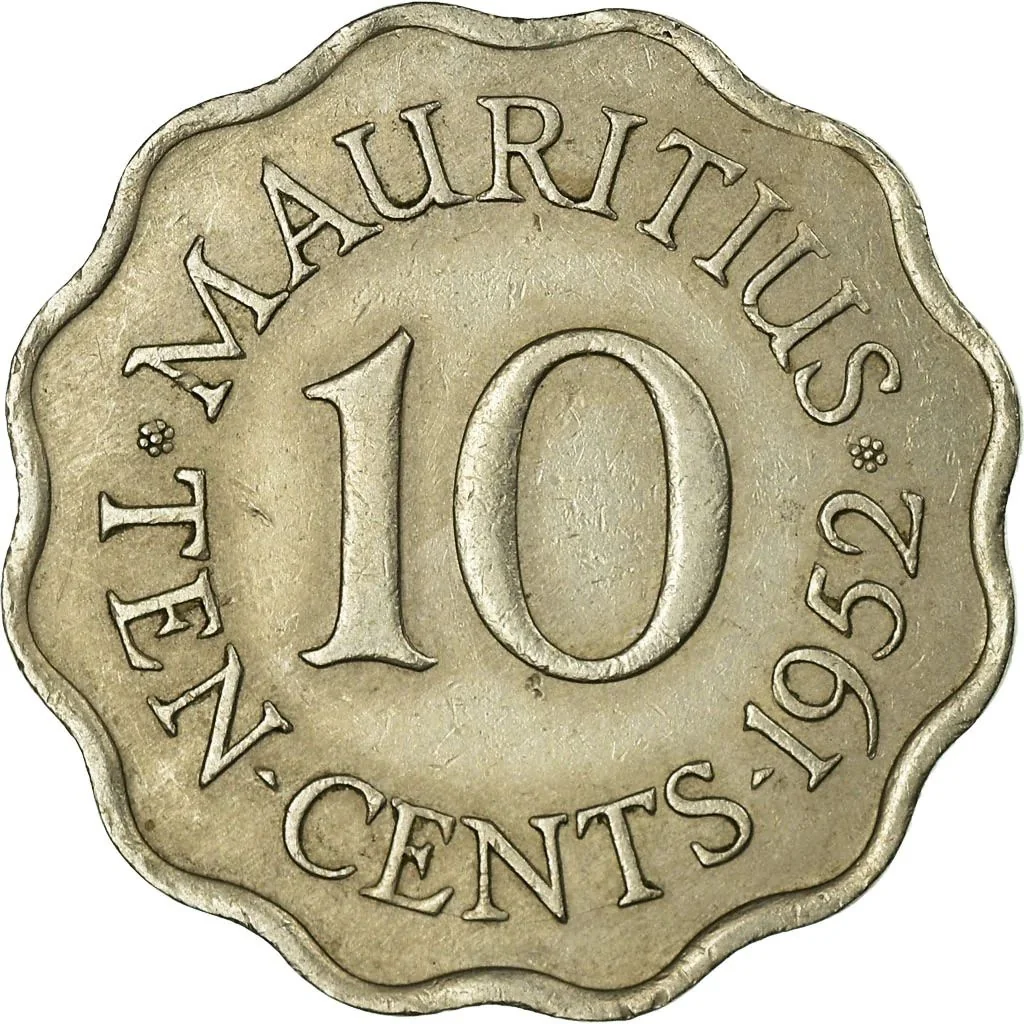
10 cents – Mauritius
Add to wishlist
Mauritius
Context
Material
Diameter: 23.5 mm
Weight: 5.15 g
Shape: Scalloped
Composition: Copper-nickel
Technique: Milled
Alignment: Medal alignment
flip
References
KM: #
Numista: #7300
Value
Exchange value: 0.10 MUR
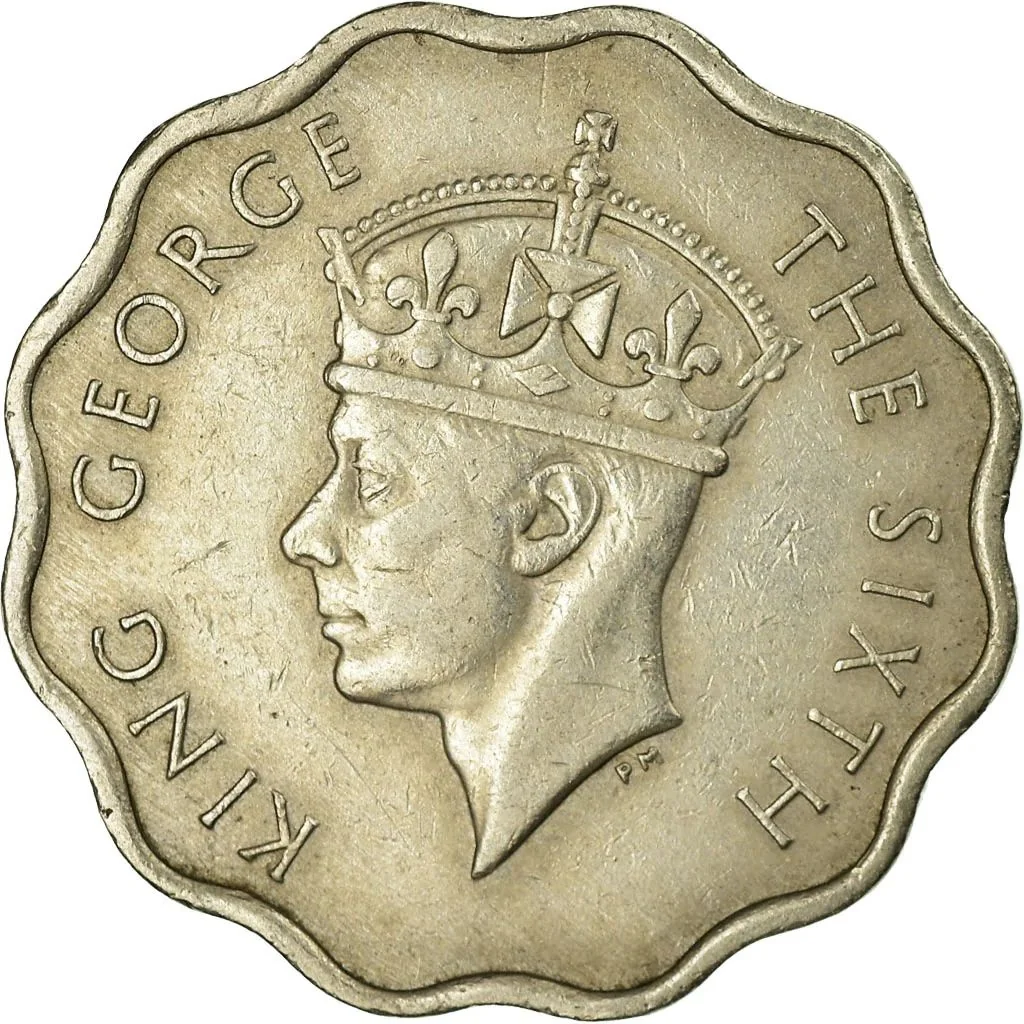
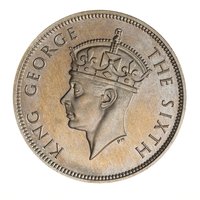
Obverse
Description:
King facing left.
Inscription:
KING GEORGE THE SIXTH
PM
PM
Translation:
KING GEORGE THE SIXTH
BY THE GRACE OF GOD, KING OF ALL THE BRITISH DOMINIONS, DEFENDER OF THE FAITH, EMPEROR OF INDIA
BY THE GRACE OF GOD, KING OF ALL THE BRITISH DOMINIONS, DEFENDER OF THE FAITH, EMPEROR OF INDIA
Script: Latin
Language: English
Engraver: Percy Metcalfe
Reverse
Edge
Mints
| Name | Mark |
|---|---|
| Royal Mint (Tower Hill) | — |
Mintings
| Year | Mint Mark | Mintage | Quality | Collection |
|---|---|---|---|---|
| 1952 | — | 250,000 | ||
| 1952 | — | — | Proof |
Historical background
In 1952, Mauritius was a British Crown Colony, and its currency situation was directly managed by the British colonial monetary system. The official currency was the Mauritian Rupee (MUR), which was not an independent, floating currency but was pegged to a sterling exchange standard. This meant its value was fixed in relation to the British Pound Sterling (GBP), providing stability for trade with the United Kingdom, the island's dominant economic partner. The currency was issued by a Currency Board, a typical colonial arrangement that required the local currency to be fully backed by sterling reserves held in London, limiting local monetary policy autonomy.
The economy was heavily dependent on the sugar industry, with over 90% of its export earnings coming from sugar, almost all of which was sold to the UK under preferential agreements. This trade structure reinforced the logic of the sterling peg, as it facilitated the smooth repatriation of earnings and payment for imports. However, this also made the Mauritian economy vulnerable to fluctuations in the global sugar price and dependent on the economic health of Britain, which was itself still in a period of post-war austerity and recovery.
Socially and politically, the currency arrangement was a point of contention within the growing movement for self-government. While the sterling peg provided stability, it was seen by emerging local political leaders as a symbol of colonial economic control, limiting Mauritius's financial sovereignty. The debate over currency management was part of a broader discussion on economic diversification and greater autonomy, which would eventually lead to the establishment of a central bank (the Bank of Mauritius) after independence in 1968, allowing for a more independent monetary policy.
The economy was heavily dependent on the sugar industry, with over 90% of its export earnings coming from sugar, almost all of which was sold to the UK under preferential agreements. This trade structure reinforced the logic of the sterling peg, as it facilitated the smooth repatriation of earnings and payment for imports. However, this also made the Mauritian economy vulnerable to fluctuations in the global sugar price and dependent on the economic health of Britain, which was itself still in a period of post-war austerity and recovery.
Socially and politically, the currency arrangement was a point of contention within the growing movement for self-government. While the sterling peg provided stability, it was seen by emerging local political leaders as a symbol of colonial economic control, limiting Mauritius's financial sovereignty. The debate over currency management was part of a broader discussion on economic diversification and greater autonomy, which would eventually lead to the establishment of a central bank (the Bank of Mauritius) after independence in 1968, allowing for a more independent monetary policy.
🌟 Uncommon