

100 Mils – British Palestine
Israel
Context
Years: 1927–1942
Country: Israel 
Issuer: British Palestine
Period:
(1920—1948)
Currency:
(1927—1948)
Demonetization: 1952
Total mintage: 10,800,066
Material
References
KM: #Click to copy to clipboard7
Numista: #7298
Value
Bullion value: $24.44
Obverse
Description:
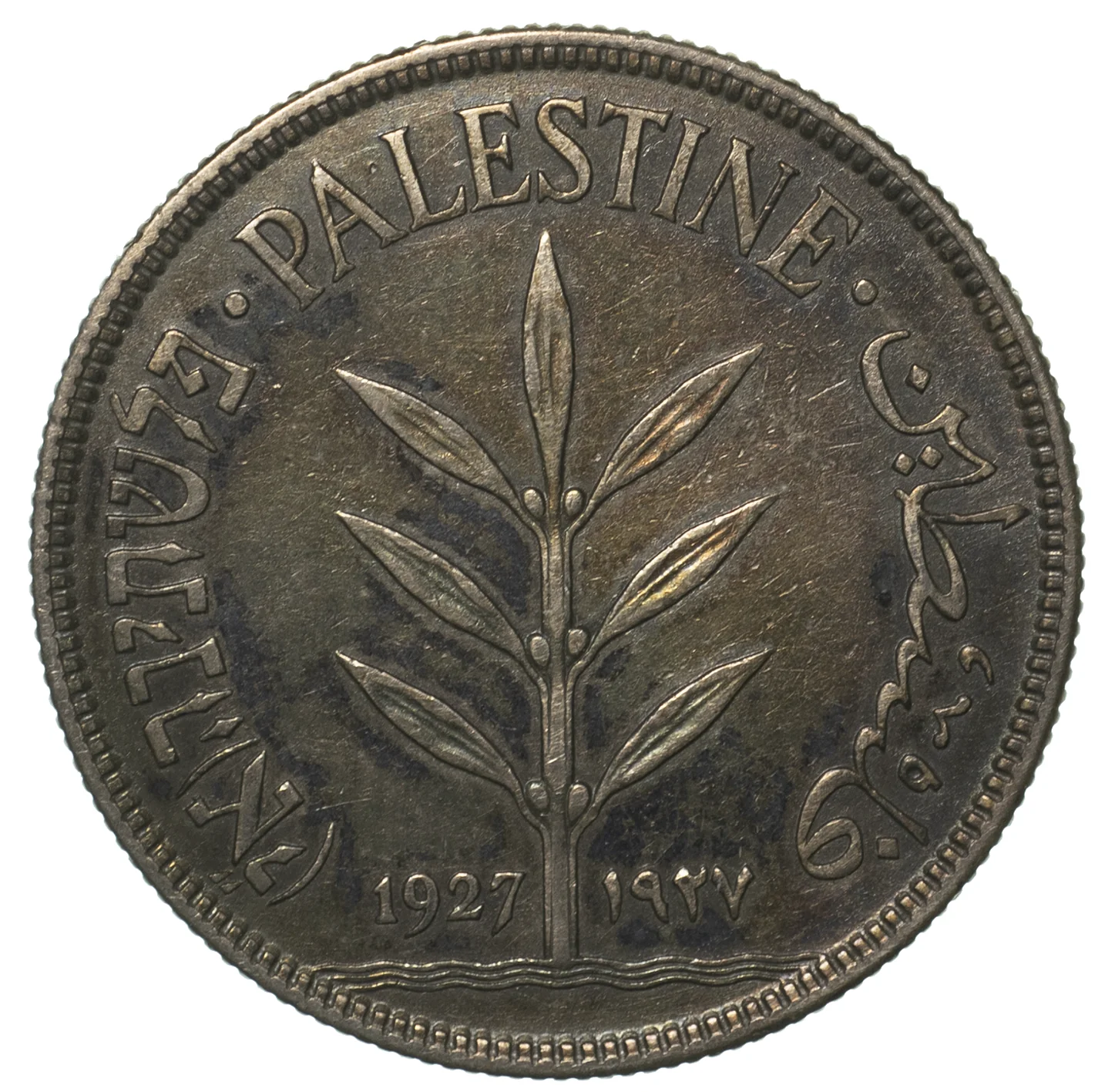
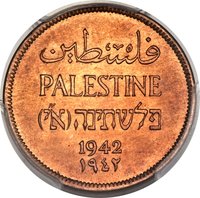
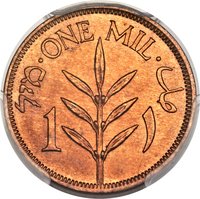
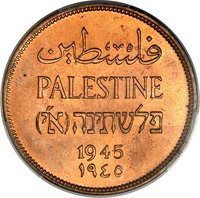
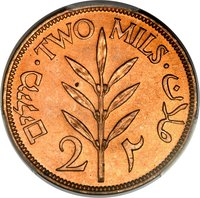
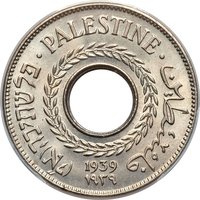
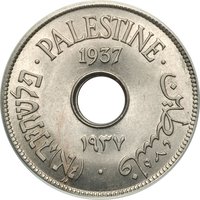
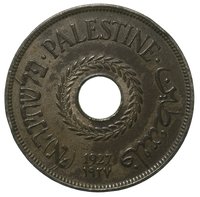
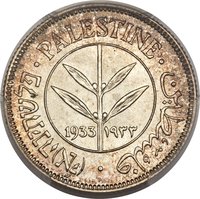
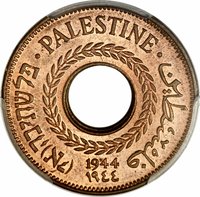
Palestine in Hebrew, English, and Arabic encircling an olive branch, with the date in English and Arabic on each side.
Inscription:
(פלשתינה (א"י • PALESTINE • فلسطين
1931 ١٩٣١
1931 ١٩٣١
Translation:
PALESTINE (Eretz Yisrael) • PALESTINE • Palestine
1931 1931
1931 1931
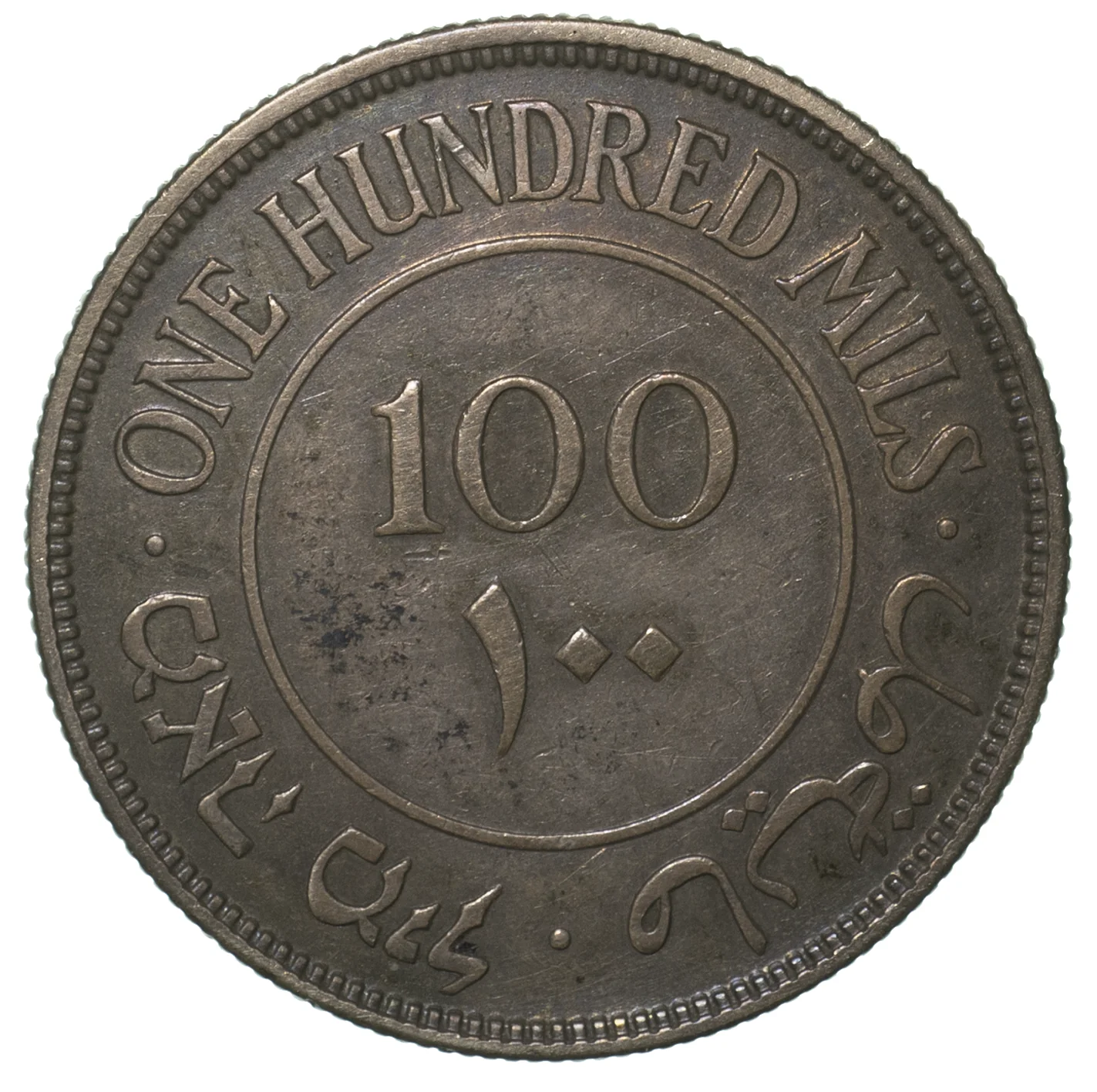
Reverse
Edge
Milled
Mints
| Name | Mark |
|---|---|
| Royal Mint (Tower Hill) | — |
Mintings
| Year | Mint Mark | Mintage | Quality | Collection |
|---|---|---|---|---|
| 1927 | — | 2,000,000 | ||
| 1927 | — | 66 | Proof | |
| 1931 | — | 250,000 | ||
| 1931 | — | — | Proof | |
| 1933 | — | 500,000 | ||
| 1934 | — | 200,000 | ||
| 1935 | — | 2,850,000 | ||
| 1939 | — | 1,500,000 | ||
| 1939 | — | — | Proof | |
| 1940 | — | 1,000,000 | ||
| 1942 | — | 2,500,000 |
Historical background
In 1927, the currency situation in British-administered Palestine was defined by the Palestine Currency Board, established in London in 1926. This system replaced the previous, more chaotic mix of Egyptian pounds, Ottoman gold coins, and various foreign currencies that had circulated since the fall of the Ottoman Empire. The Board introduced a new sovereign-backed currency, the Palestinian pound (₤P), which was strictly pegged at par with the British pound sterling. This meant the currency was not issued locally but was effectively a sterling exchange standard, with notes and coins convertible on demand in London, ensuring stability and tying the Palestinian economy firmly to the British imperial system.
However, the year 1927 was one of severe economic crisis, testing this new monetary framework. A sharp downturn followed the inflationary boom of the mid-1920s, characterized by a collapse in private construction, a significant drop in Jewish immigration, and widespread unemployment. Crucially, the rigid currency peg and the Board's conservative rules prevented any discretionary monetary policy to stimulate the economy. The Board could only issue notes against sterling reserves, meaning the money supply was entirely dependent on the balance of payments, which was severely negative due to a halt in capital inflows. This exacerbated deflationary pressures, deepening the recession.
The crisis of 1927 ultimately validated the Currency Board's primary objective—currency stability—but highlighted its limitations in managing domestic economic welfare. While the peg maintained confidence and prevented a currency collapse, it offered no tools for credit expansion or lender-of-last-resort functions during the liquidity crunch. The recession eventually bottomed out, and capital inflows slowly returned, but the experience underscored the colonial nature of the arrangement: monetary policy was conducted for the benefit of external stability and British creditors, with little regard for internal counter-cyclical measures, leaving the local economy to endure the full force of the market adjustment.
However, the year 1927 was one of severe economic crisis, testing this new monetary framework. A sharp downturn followed the inflationary boom of the mid-1920s, characterized by a collapse in private construction, a significant drop in Jewish immigration, and widespread unemployment. Crucially, the rigid currency peg and the Board's conservative rules prevented any discretionary monetary policy to stimulate the economy. The Board could only issue notes against sterling reserves, meaning the money supply was entirely dependent on the balance of payments, which was severely negative due to a halt in capital inflows. This exacerbated deflationary pressures, deepening the recession.
The crisis of 1927 ultimately validated the Currency Board's primary objective—currency stability—but highlighted its limitations in managing domestic economic welfare. While the peg maintained confidence and prevented a currency collapse, it offered no tools for credit expansion or lender-of-last-resort functions during the liquidity crunch. The recession eventually bottomed out, and capital inflows slowly returned, but the experience underscored the colonial nature of the arrangement: monetary policy was conducted for the benefit of external stability and British creditors, with little regard for internal counter-cyclical measures, leaving the local economy to endure the full force of the market adjustment.
Series: 1927 British Palestine
🌱 Common