

5 Francs – Belgium
Belgium
Context
Years: 1936–1937
Issuer: Belgium 
Ruler: Leopold III
Currency:
(1832—2001)
Demonetization: 18 January 1951
Total mintage: 2,497,500
Material
References
KM: #Click to copy to clipboard108
Numista: #7283
Value
Exchange value: 5 BEF
Obverse
Description:
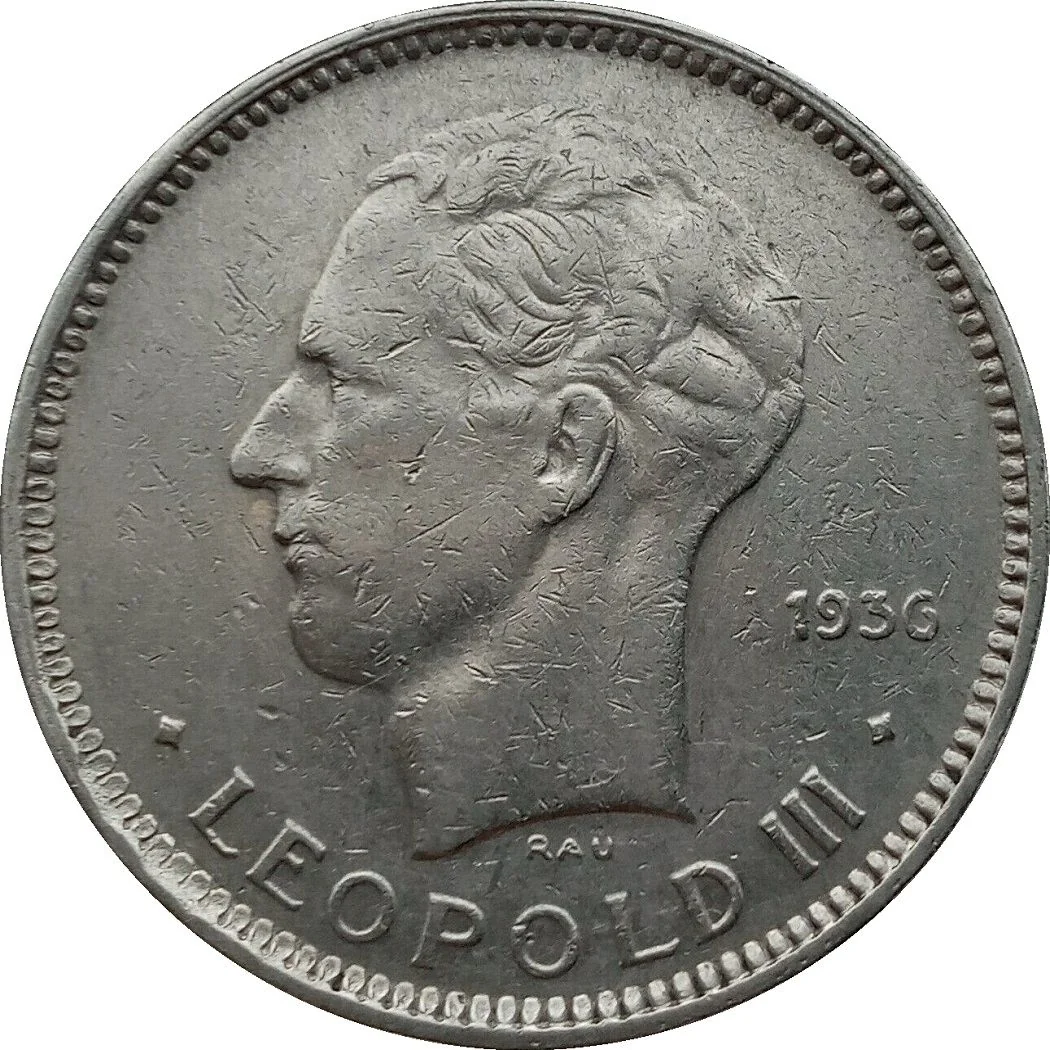
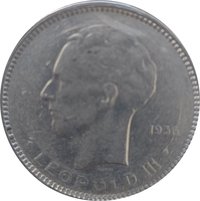
King Leopold III facing left, with his name and designer below, and the year at right.
Inscription:
1936
RAU
◆ LEOPOLD III ◆
RAU
◆ LEOPOLD III ◆
Translation:
1936
RAU
◆ LEOPOLD III ◆
RAU
◆ LEOPOLD III ◆
Script: Latin
Engraver: Marcel Rau
Reverse
Description:
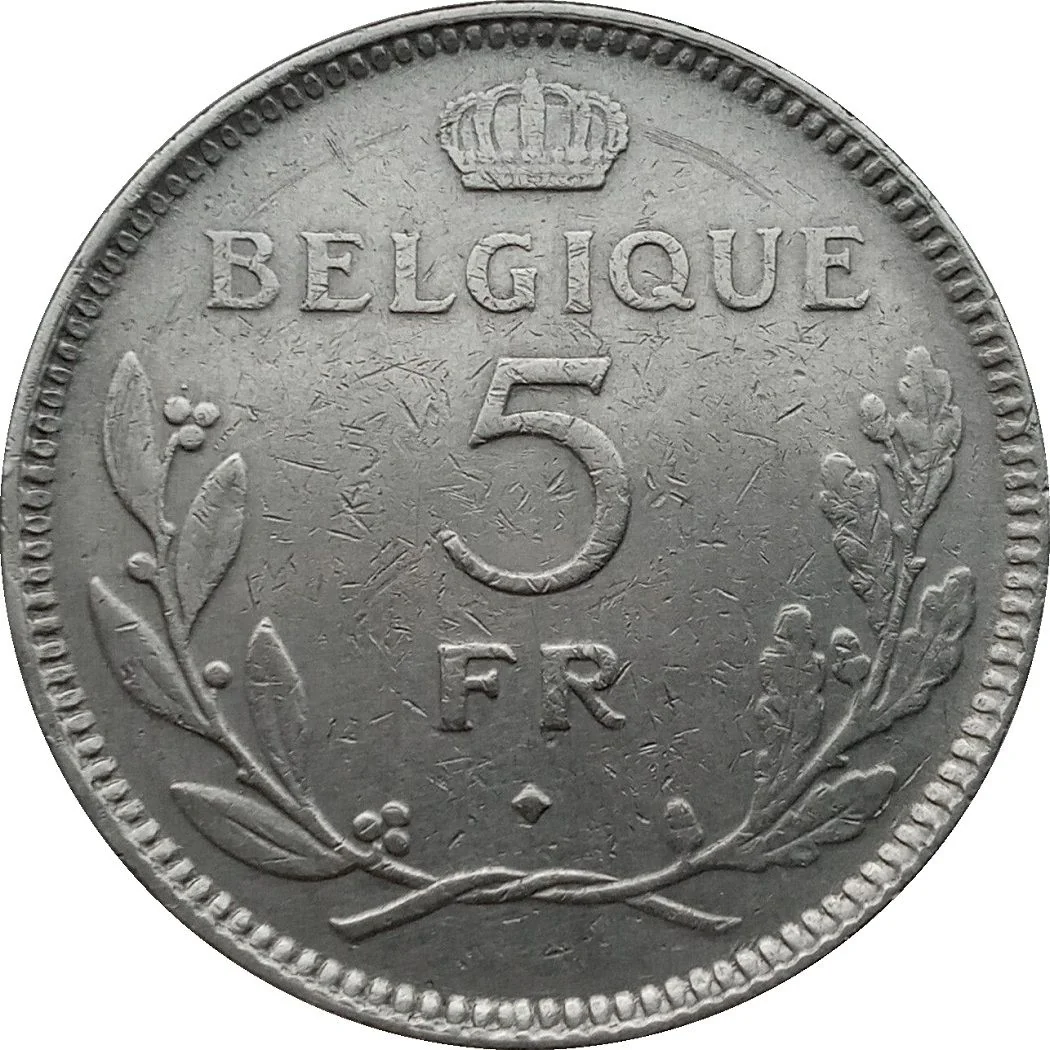
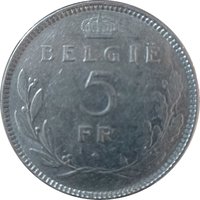
Center value, crown above, laurel below.
Inscription:
BELGIQUE
5
FR
◆
5
FR
◆
Translation:
Belgium 5 Francs
Script: Latin
Language: French
Engraver: Marcel Rau
Mints
| Name | Mark |
|---|---|
| Royal Mint of Belgium | — |
Mintings
| Year | Mint Mark | Mintage | Quality | Collection |
|---|---|---|---|---|
| 1936 | — | 650,000 | ||
| 1937 | — | 1,847,500 |
Historical background
In 1936, Belgium faced a severe currency crisis rooted in the Great Depression and the deflationary policies of the "Gold Bloc." Having maintained the gold standard at its pre-war parity after a painful stabilization in 1926, the Belgian franc was widely considered overvalued. This overvaluation crippled Belgian exports, as its goods were more expensive than those from countries like Britain and the United States, which had already devalued. The resulting trade deficit drained gold reserves, increased unemployment, and created persistent budget deficits, placing immense pressure on the national economy.
The situation came to a head in March 1936, following Germany's remilitarization of the Rhineland. Financial markets, fearing political instability, triggered a massive flight of capital from Brussels. Gold reserves hemorrhaged, losing nearly a third of their value in weeks and forcing the National Bank of Belgium to raise interest rates dramatically. With the Gold Bloc collapsing—as France and others were also failing—the government of Prime Minister Paul Van Zeeland faced an inevitable choice: impose strict exchange controls or devalue.
On March 29, 1936, Van Zeeland's government announced a decisive break, suspending gold convertibility and devaluing the franc by 28%. This was not a free float but a managed devaluation, pegging the currency to a weaker, more sustainable level. The move was accompanied by a comprehensive program of economic recovery, including public works, wage increases, and a forty-hour work week. The devaluation successfully restored competitiveness, boosted exports, and spurred industrial recovery, marking a pivotal turn from orthodox financial policy toward state-led economic intervention in Belgium.
The situation came to a head in March 1936, following Germany's remilitarization of the Rhineland. Financial markets, fearing political instability, triggered a massive flight of capital from Brussels. Gold reserves hemorrhaged, losing nearly a third of their value in weeks and forcing the National Bank of Belgium to raise interest rates dramatically. With the Gold Bloc collapsing—as France and others were also failing—the government of Prime Minister Paul Van Zeeland faced an inevitable choice: impose strict exchange controls or devalue.
On March 29, 1936, Van Zeeland's government announced a decisive break, suspending gold convertibility and devaluing the franc by 28%. This was not a free float but a managed devaluation, pegging the currency to a weaker, more sustainable level. The move was accompanied by a comprehensive program of economic recovery, including public works, wage increases, and a forty-hour work week. The devaluation successfully restored competitiveness, boosted exports, and spurred industrial recovery, marking a pivotal turn from orthodox financial policy toward state-led economic intervention in Belgium.
🌱 Common