

20 Francs – Belgium
Belgium
Context
Years: 1934–1935
Issuer: Belgium 
Ruler: Leopold III
Currency:
(1832—2001)
Demonetization: 20 June 1947
Total mintage: 12,010,475
Material
References
KM: #Click to copy to clipboard105
Numista: #2138
Value
Exchange value: 20 BEF
Bullion value: $21.26
Obverse
Description:
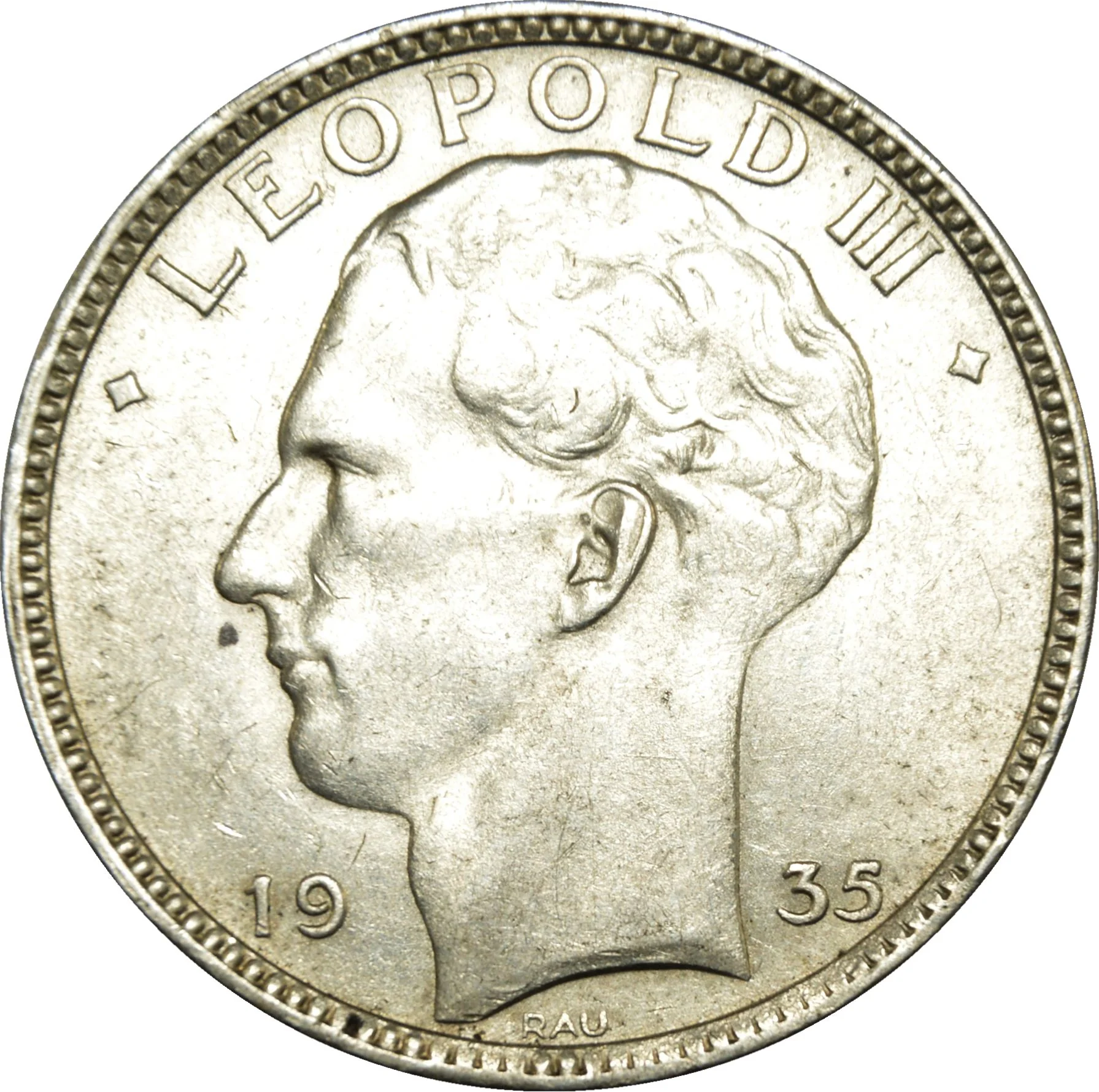
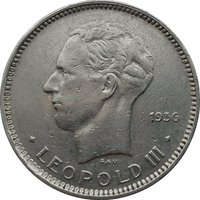
King Leopold III left, divides date. Name above, designer below.
Inscription:
♦ LEOPOLD III ♦
1935
RAU
1935
RAU
Translation:
♦ LEOPOLD III ♦
1935
RAU
1935
RAU
Script: Latin
Language: German
Engraver: Marcel Rau
Reverse
Description:
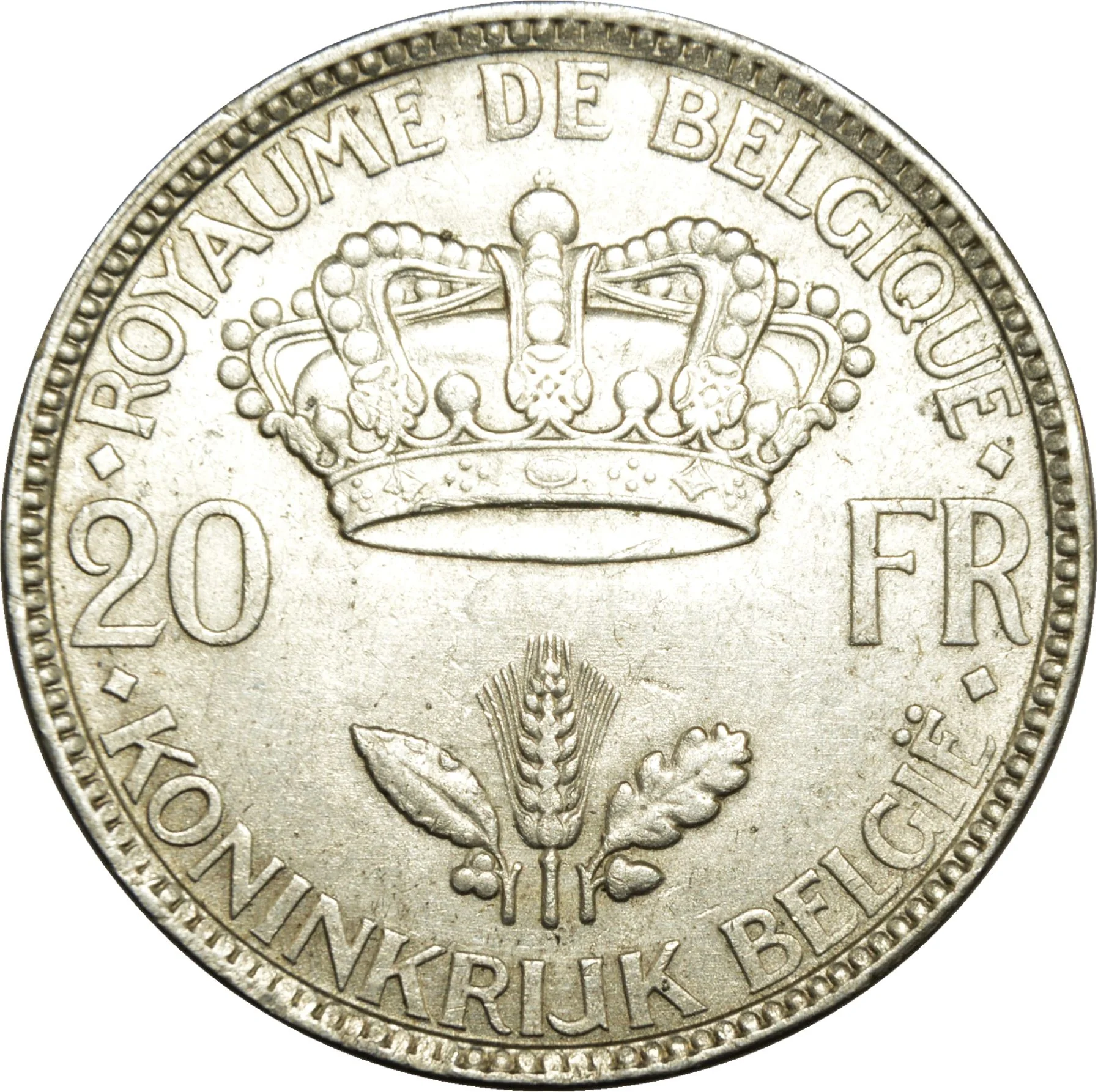
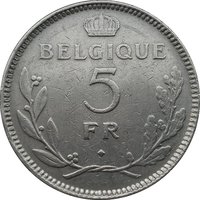
Crown divides bilingual text. Wheat and oak bouquet below.
Inscription:
♦ ROYAUME DE BELGIQUE ♦
20 FR
♦ KONINKRIJK BELGIË ♦
20 FR
♦ KONINKRIJK BELGIË ♦
Translation:
♦ KINGDOM OF BELGIUM ♦
20 FR
♦ KINGDOM OF BELGIUM ♦
20 FR
♦ KINGDOM OF BELGIUM ♦
Script: Latin
Engraver: Marcel Rau
Mints
| Name | Mark |
|---|---|
| Royal Mint of Belgium | — |
Mintings
| Year | Mint Mark | Mintage | Quality | Collection |
|---|---|---|---|---|
| 1934 | — | 1,250,000 | ||
| 1935 | — | 10,760,475 |
Historical background
In 1934, Belgium was in the grip of the Great Depression, and its currency situation was defined by a critical loss of confidence and a forced devaluation. The Belgian franc, which had been painstakingly stabilized and pegged to gold at its pre-war parity in 1926 under the "Poincaré franc" model, was widely considered overvalued. This overvaluation crippled Belgian exports just as global trade collapsed, leading to a severe drain on the country's gold reserves as investors and citizens alike lost faith in the currency's ability to maintain its peg.
Facing unsustainable pressure, the government of Prime Minister Charles de Broqueville was compelled to act. On March 29, 1934, Belgium officially suspended the gold standard and devalued the franc by 28%. This decisive break from the gold peg was not taken lightly, as it represented a significant political and financial rupture from the hard-won stability of the late 1920s. The devaluation was a strategic move to make Belgian industry more competitive on the world market and to halt the hemorrhaging of gold reserves.
The 1934 devaluation provided necessary economic relief, but it came at a social cost and did not fully resolve the crisis. While it improved the trade balance, the preceding years of deflation and the subsequent adjustment contributed to widespread unemployment and social unrest. The currency's new, lower value remained unstable for a period, requiring further management. Ultimately, this episode marked the end of Belgium's commitment to the classical gold standard and reflected a broader European trend where nations were forced to prioritize domestic economic recovery over strict monetary orthodoxy.
Facing unsustainable pressure, the government of Prime Minister Charles de Broqueville was compelled to act. On March 29, 1934, Belgium officially suspended the gold standard and devalued the franc by 28%. This decisive break from the gold peg was not taken lightly, as it represented a significant political and financial rupture from the hard-won stability of the late 1920s. The devaluation was a strategic move to make Belgian industry more competitive on the world market and to halt the hemorrhaging of gold reserves.
The 1934 devaluation provided necessary economic relief, but it came at a social cost and did not fully resolve the crisis. While it improved the trade balance, the preceding years of deflation and the subsequent adjustment contributed to widespread unemployment and social unrest. The currency's new, lower value remained unstable for a period, requiring further management. Ultimately, this episode marked the end of Belgium's commitment to the classical gold standard and reflected a broader European trend where nations were forced to prioritize domestic economic recovery over strict monetary orthodoxy.
🌱 Very Common