

Obverse
Description:
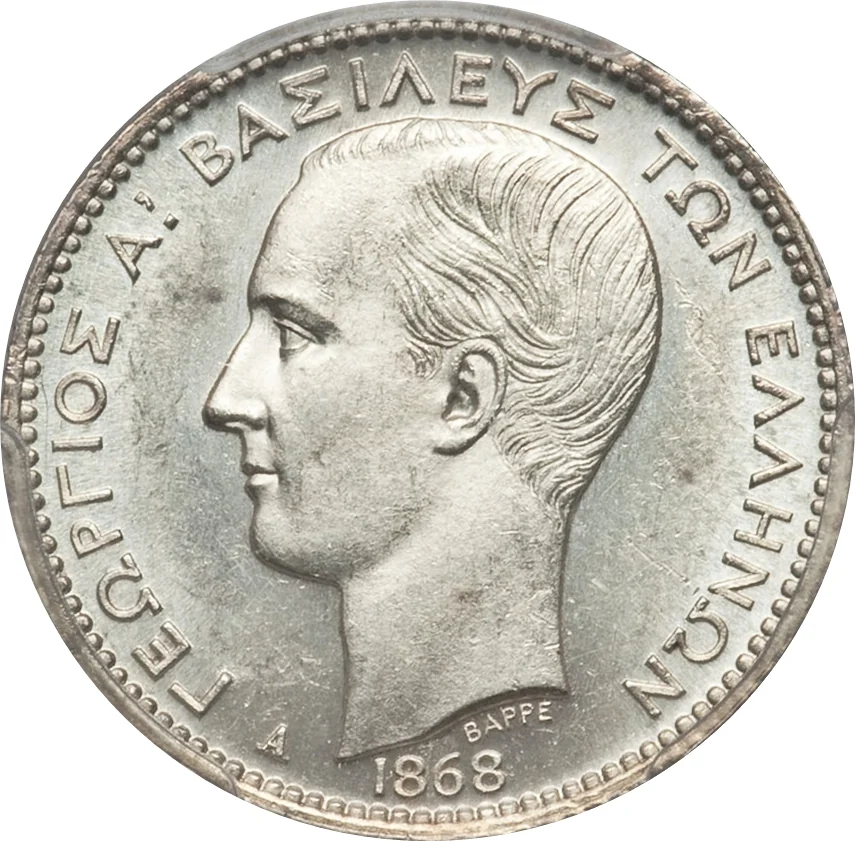
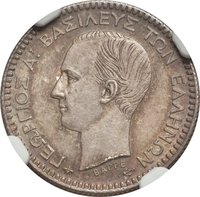
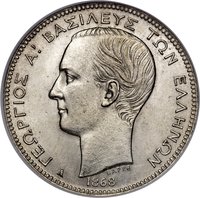
King George I, left-facing portrait with date.
Inscription:
ΓΕΩΡΓΙΟΣ Α! ΒΑΣΙΛΕΥΣ ΤΩΝ ΕΛΛΗΝΩΝ
ΒΑΡΡΕ
1868 A
ΒΑΡΡΕ
1868 A
Translation:
GEORGE A! KING OF THE GREEKS
BARRE
1868 A
BARRE
1868 A
Script: Greek
Language: Greek
Engraver: Désiré-Albert Barre
Reverse
Description:
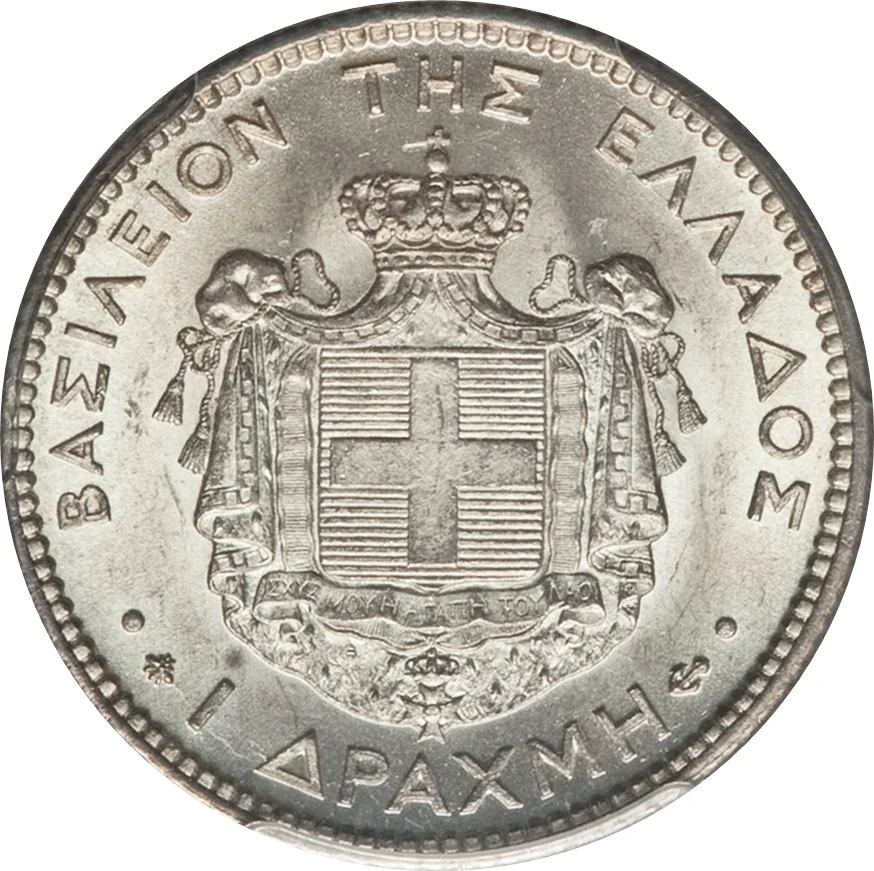
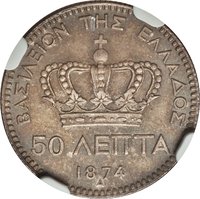
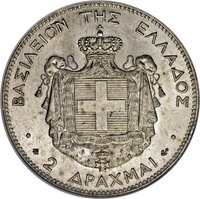
Arms in crowned mantle, denomination beneath.
Inscription:
ΒΑΣΙΛΕΙΟΝ ΤΗΣ ΕΛΛΑΔΟΣ
1 ΔΡΑΧΜΗ
1 ΔΡΑΧΜΗ
Translation:
KINGDOM OF GREECE
1 DRACHMA
1 DRACHMA
Script: Greek
Language: Greek
Engraver: Désiré-Albert Barre
Edge
Milled
Mints
| Name | Mark |
|---|---|
| Monnaie de Paris | A |
Mintings
Historical background
In 1868, Greece's currency situation was defined by its ongoing struggle to establish a stable monetary system following independence from the Ottoman Empire. The young kingdom was a complex mosaic of circulating coins, including the Greek drachma (introduced in 1832), older Ottoman kurush, French francs, British sovereigns, and Italian lire. This multiplicity created significant confusion for commerce and state finance, as exchange rates fluctuated and counterfeiting was rampant. The state's chronic fiscal deficits, exacerbated by heavy foreign borrowing for infrastructure and modernization, further undermined confidence in the national currency, leading to frequent devaluations and a general preference for trusted foreign specie in significant transactions.
The year itself was pivotal, as it marked Greece's official entry into the Latin Monetary Union (LMU). This international bimetallic union, led by France, aimed to standardize coinage across member nations based on a fixed ratio between silver and gold. Greece's accession in 1868 was driven by a desire to attract foreign investment, stabilize its economy, and align itself with Western European financial systems. The agreement obligated Greece to reform its coinage to the LMU standard, phasing out non-conforming currencies and theoretically guaranteeing the value of its drachma at a fixed rate against the French franc.
However, this move proved to be a double-edged sword. While it brought short-term prestige and stability, Greece's underlying economic weaknesses—particularly its lack of substantial gold reserves and persistent budget shortfalls—made it ill-prepared for the strict discipline of the Union. The commitment to a bimetallic standard at a fixed ratio soon became a straitjacket, as global shifts in the value of silver put pressure on the system. Consequently, Greece would soon begin to struggle with its LMU obligations, foreshadowing the monetary crises and eventual suspension of convertibility that would plague it in the decades following 1868.
The year itself was pivotal, as it marked Greece's official entry into the Latin Monetary Union (LMU). This international bimetallic union, led by France, aimed to standardize coinage across member nations based on a fixed ratio between silver and gold. Greece's accession in 1868 was driven by a desire to attract foreign investment, stabilize its economy, and align itself with Western European financial systems. The agreement obligated Greece to reform its coinage to the LMU standard, phasing out non-conforming currencies and theoretically guaranteeing the value of its drachma at a fixed rate against the French franc.
However, this move proved to be a double-edged sword. While it brought short-term prestige and stability, Greece's underlying economic weaknesses—particularly its lack of substantial gold reserves and persistent budget shortfalls—made it ill-prepared for the strict discipline of the Union. The commitment to a bimetallic standard at a fixed ratio soon became a straitjacket, as global shifts in the value of silver put pressure on the system. Consequently, Greece would soon begin to struggle with its LMU obligations, foreshadowing the monetary crises and eventual suspension of convertibility that would plague it in the decades following 1868.
🌱 Common