

500 lire – Vatican City
Add to wishlist
Circulating commemorative coins
Commemoration: Sede Vacante
Vatican City
Context
Year: 1978
Issuer: Vatican City
Period:
Currency:
(1929—2001)
Demonetization: 1 January 2002
Total mintage: 309,500
Material
References
KM: #
Numista: #7219
Value
Exchange value: 500 VAL
Bullion value: $23.06
Obverse
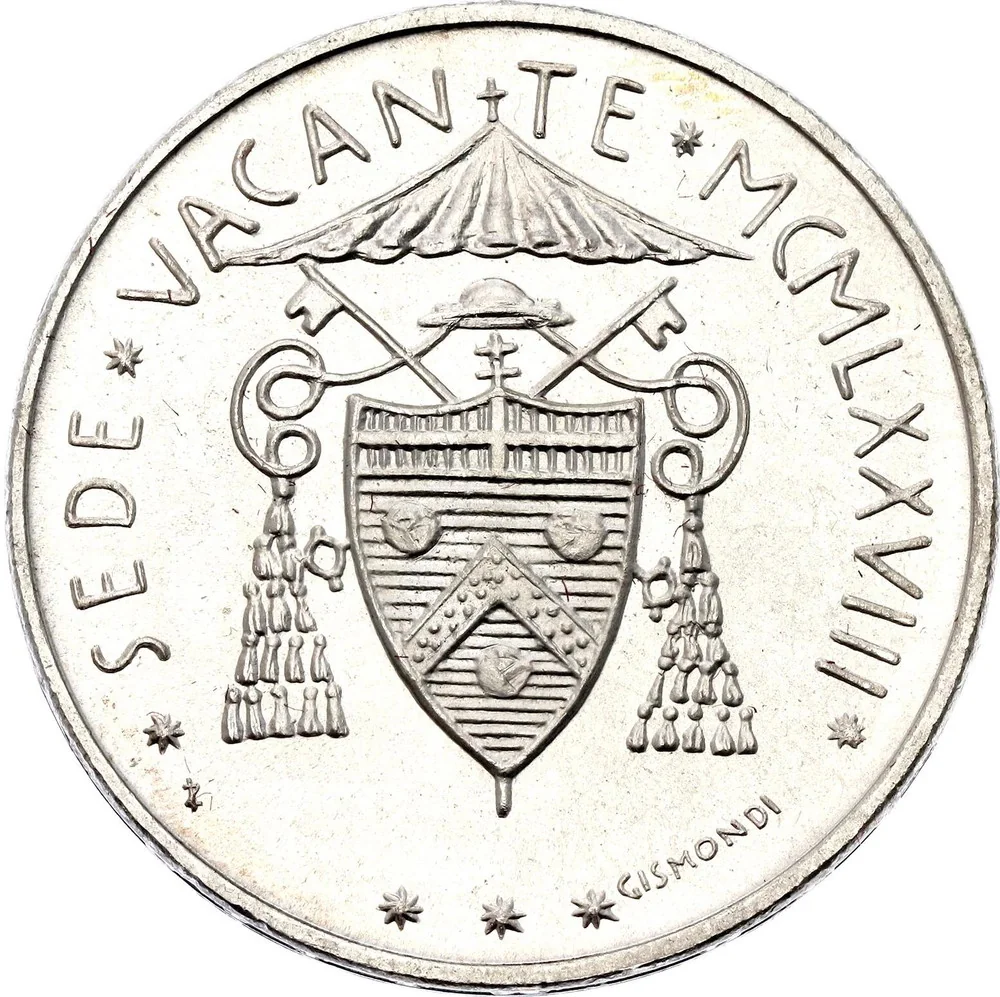
Description:
Cardinal Jean Villot's coat of arms.
Inscription:
* SEDE * VACANTE * MCMLXXVIII *
Translation:
During the Vacant See 1978
Script: Latin
Language: Latin
Engraver: Tomas Gismondi
Reverse
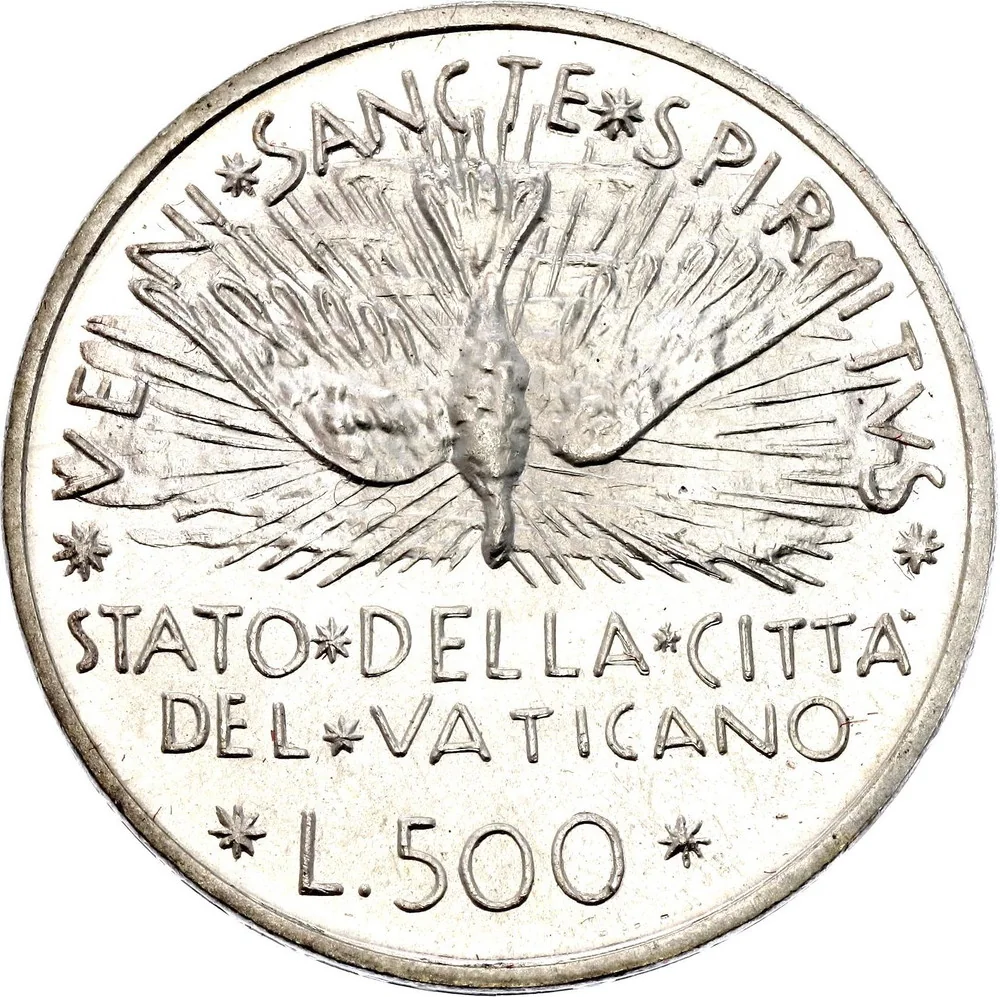
Description:
Stylized dove descending above value.
Inscription:
* VENI * SANCTE * SPIRITVS *
STATO * DELLA * CITTA'
DEL * VATICANO
* L.500 *
STATO * DELLA * CITTA'
DEL * VATICANO
* L.500 *
Translation:
* COME, HOLY SPIRIT *
STATE OF THE CITY
OF THE VATICAN
* L.500 *
STATE OF THE CITY
OF THE VATICAN
* L.500 *
Script: Latin
Engraver: Tomas Gismondi
Edge
Plain with inscription in relief
Legend:
STATO DELLA CITTA' DEL VATICANO
Translation:
State of the City of the Vatican
Language: Italian
Categories
| Animal> Bird |
| Symbols> Coat of Arms |
Mints
| Name | Mark |
|---|---|
| Rome | ZI |
Mintings
| Year | Mint Mark | Mintage | Quality | Collection |
|---|---|---|---|---|
| 1978 | ZI | 309,500 |
Historical background
In 1978, Vatican City’s currency situation was defined by its unique status as a sovereign city-state without a traditional, independent monetary system. It did not mint its own circulating lira but operated under a series of concordats with Italy, most notably the 1929 Lateran Treaty. This agreement granted the Vatican the right to issue its own coinage, but with strict parameters: its coins were to be limited in quantity and have the same metallic composition and value as Italian lira, ensuring they were legal tender and fully interchangeable within Italy. Consequently, the Italian lira was the de facto everyday currency used in all transactions within the tiny state.
The year 1978 was a period of significant transition, marked by the deaths of three popes (Paul VI, John Paul I, and John Paul II). This papal instability momentarily overshadowed monetary affairs, but the existing system continued without interruption. The Vatican’s coinage, minted by the Italian State Polygraphic Institute and Mint, served primarily as commemorative and collector items rather than practical daily cash, though they held legal tender status. Their issuance was symbolic of sovereignty, often featuring the image of the reigning pontiff, and their limited mintage made them sought-after by numismatists worldwide.
However, this monetary dependency on Italy meant the Vatican had no control over broader monetary policy, interest rates, or inflation, which were all dictated by the Banca d’Italia. The lira itself faced challenges in the 1970s, including high inflation and political instability, indirectly affecting the Vatican’s financial operations. This arrangement would remain fundamentally unchanged until the introduction of the euro in 1999/2002, when the Vatican, through a new agreement with the European Union, gained the right to issue limited euro coins, transitioning from its dependency on the Italian lira to a dependency on the Eurozone framework.
The year 1978 was a period of significant transition, marked by the deaths of three popes (Paul VI, John Paul I, and John Paul II). This papal instability momentarily overshadowed monetary affairs, but the existing system continued without interruption. The Vatican’s coinage, minted by the Italian State Polygraphic Institute and Mint, served primarily as commemorative and collector items rather than practical daily cash, though they held legal tender status. Their issuance was symbolic of sovereignty, often featuring the image of the reigning pontiff, and their limited mintage made them sought-after by numismatists worldwide.
However, this monetary dependency on Italy meant the Vatican had no control over broader monetary policy, interest rates, or inflation, which were all dictated by the Banca d’Italia. The lira itself faced challenges in the 1970s, including high inflation and political instability, indirectly affecting the Vatican’s financial operations. This arrangement would remain fundamentally unchanged until the introduction of the euro in 1999/2002, when the Vatican, through a new agreement with the European Union, gained the right to issue limited euro coins, transitioning from its dependency on the Italian lira to a dependency on the Eurozone framework.
🌱 Fairly Common