

1 franc – Togo
Add to wishlist
Togo
Context
Years: 1924–1925
Issuer: Togo
Period:
(1919—1946)
Currency:
(1924—1956)
Demonetized: Yes
Total mintage: 6,239,692
Material
Diameter: 23 mm
Weight: 5 g
Thickness: 1.6 mm
Shape: Round
Composition: Aluminium bronze
Magnetic: No
Technique: Milled
Alignment: Coin alignment
flip
References
KM: #
Numista: #11252
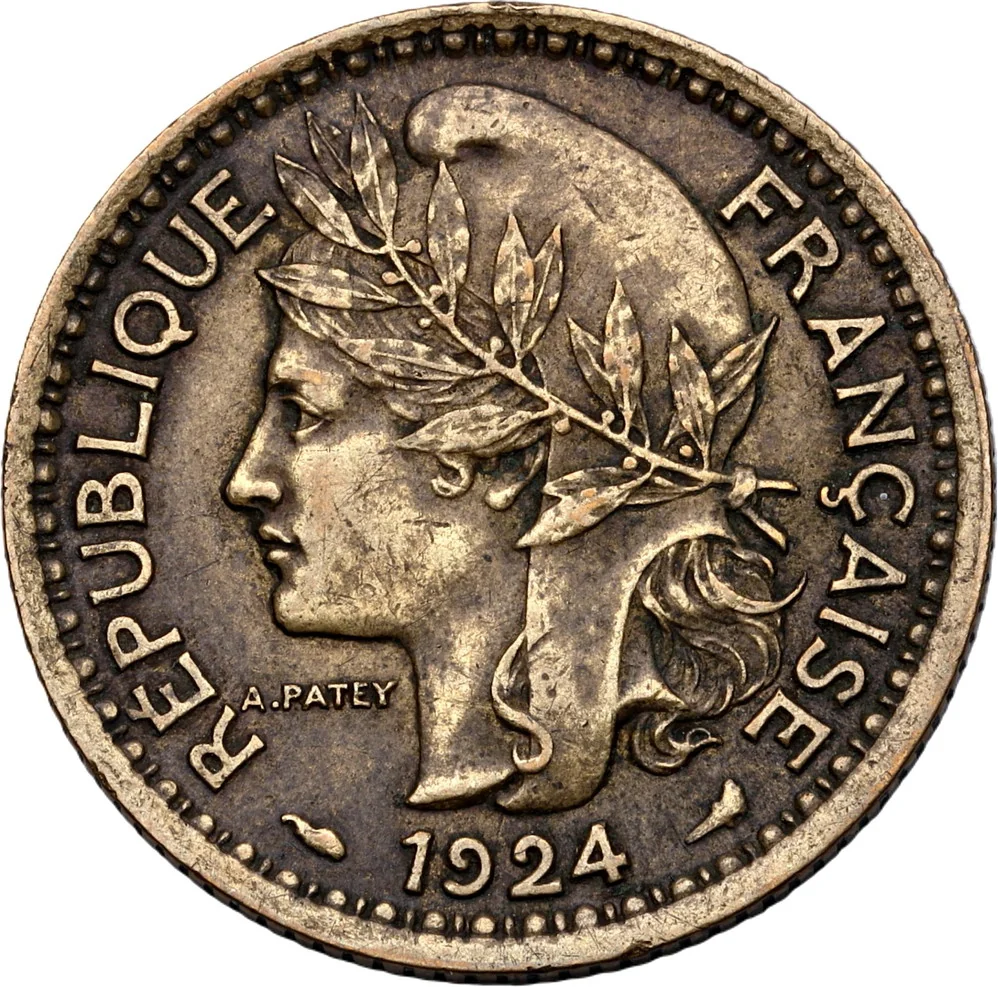
Obverse
Description:
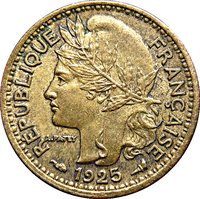
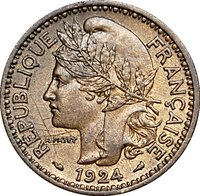
Laureate left, date beneath.
Inscription:
REPUBLIQUE FRANÇAISE
1924
A.PATEY
1924
A.PATEY
Translation:
FRENCH REPUBLIC
1924
A.PATEY
1924
A.PATEY
Script: Latin
Language: French
Engraver: Henri-Auguste Patey
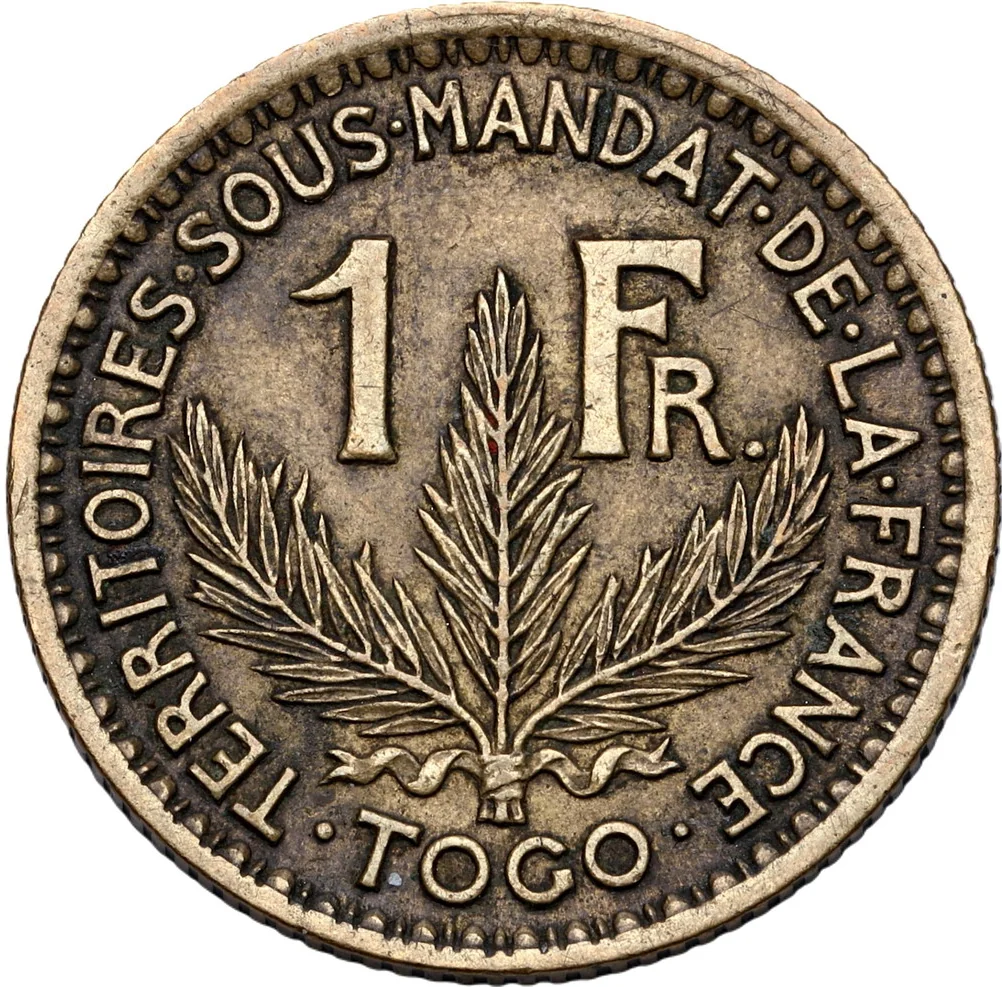
Reverse
Description:
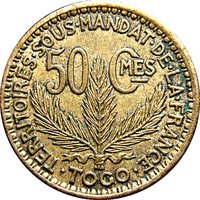
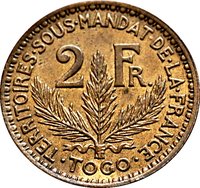
Abbreviated value per sprig.
Inscription:
TERRITOIRES·SOUS·MANDAT·DE·LA·FRANCE
1 FR.
·TOGO·
1 FR.
·TOGO·
Script: Latin
Edge
Milled
Mints
| Name | Mark |
|---|---|
| Monnaie de Paris | — |
Mintings
| Year | Mint Mark | Mintage | Quality | Collection |
|---|---|---|---|---|
| 1924 | — | 3,471,591 | ||
| 1925 | — | 2,768,101 |
Historical background
In 1924, Togo was administered under a League of Nations mandate, with its territory split between France (Togo Français) and Britain (British Togoland). The currency situation was a direct reflection of this colonial partition and was inherently complex. The French-administered zone, which comprised the larger share of the territory, was fully integrated into the monetary system of French West Africa. Consequently, the official currency was the French West African franc (CFA franc), issued by the Banque de l'Afrique Occidentale (BAO), which was pegged to and guaranteed by the French franc.
In the smaller British-administered zone to the west, which was administered from the Gold Coast (present-day Ghana), the British West African pound was the circulating currency. This created a distinct monetary zone separated from the French franc area. The border between the two mandates thus also functioned as a currency frontier, complicating trade and movement for the local population engaged in cross-border commerce, as exchange rates and the physical convertibility of currencies became practical daily concerns.
Overall, the dual-currency system of 1924 underscored Togo's fragmented political status. It was not a unified economic entity but rather two peripheries of larger colonial monetary unions, one oriented toward Dakar and Paris and the other toward Accra and London. This arrangement would persist until the post-World War II trust territories eventually led to French Togoland's independence as Togo in 1960 and British Togoland's integration into Ghana.
In the smaller British-administered zone to the west, which was administered from the Gold Coast (present-day Ghana), the British West African pound was the circulating currency. This created a distinct monetary zone separated from the French franc area. The border between the two mandates thus also functioned as a currency frontier, complicating trade and movement for the local population engaged in cross-border commerce, as exchange rates and the physical convertibility of currencies became practical daily concerns.
Overall, the dual-currency system of 1924 underscored Togo's fragmented political status. It was not a unified economic entity but rather two peripheries of larger colonial monetary unions, one oriented toward Dakar and Paris and the other toward Accra and London. This arrangement would persist until the post-World War II trust territories eventually led to French Togoland's independence as Togo in 1960 and British Togoland's integration into Ghana.
🌱 Common