

20 lire – Italy
Add to wishlist
Italy
Context
Years: 1927–1934
Issuer: Italy
Ruler: Vittorio Emanuele III
Currency:
(1861—2001)
Demonetized: Yes
Total mintage: 2,487,298
Material
References
KM: #
Numista: #7191
Value
Exchange value: 20 ITL
Bullion value: $29.35
Obverse
Description:
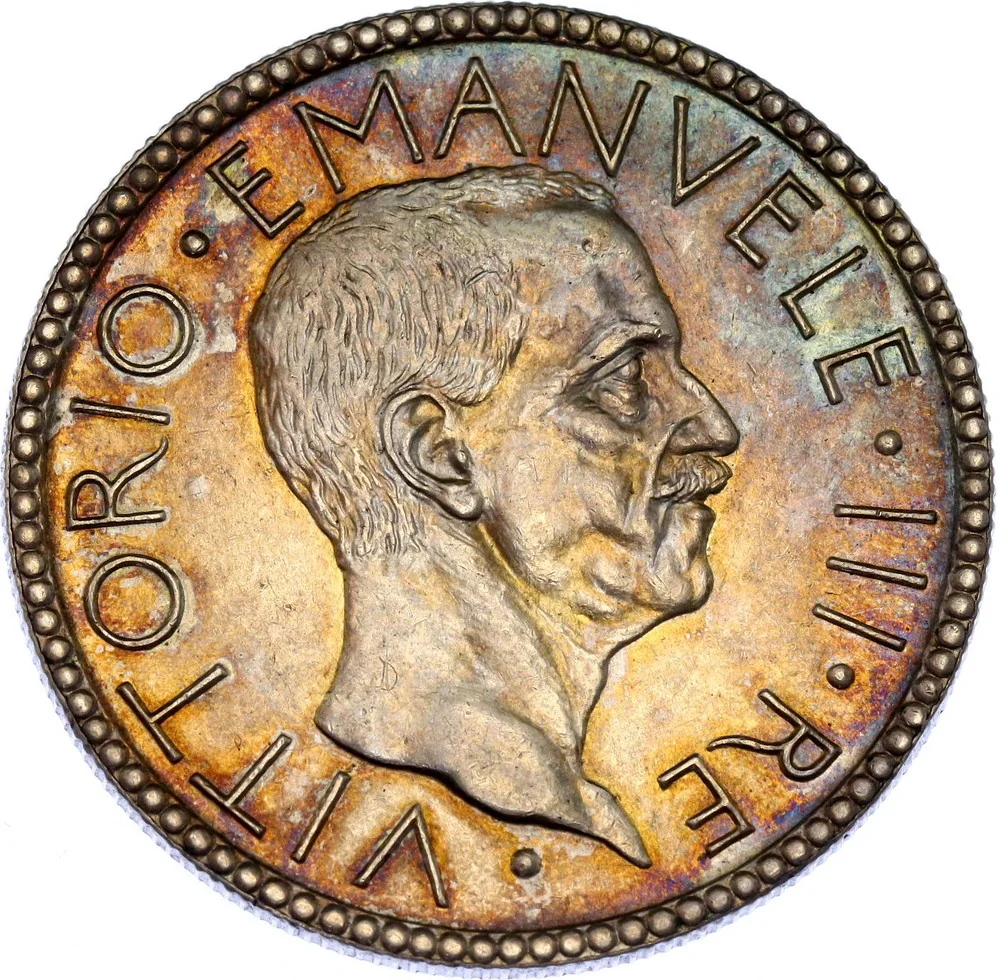
King Vittorio Emanuele III, right-facing portrait.
Inscription:
VITTORIO · EMANVELE · III · RE ·
Translation:
VICTOR EMMANUEL III KING
Script: Latin
Language: Italian
Engraver: Giuseppe Romagnoli
Reverse
Description:
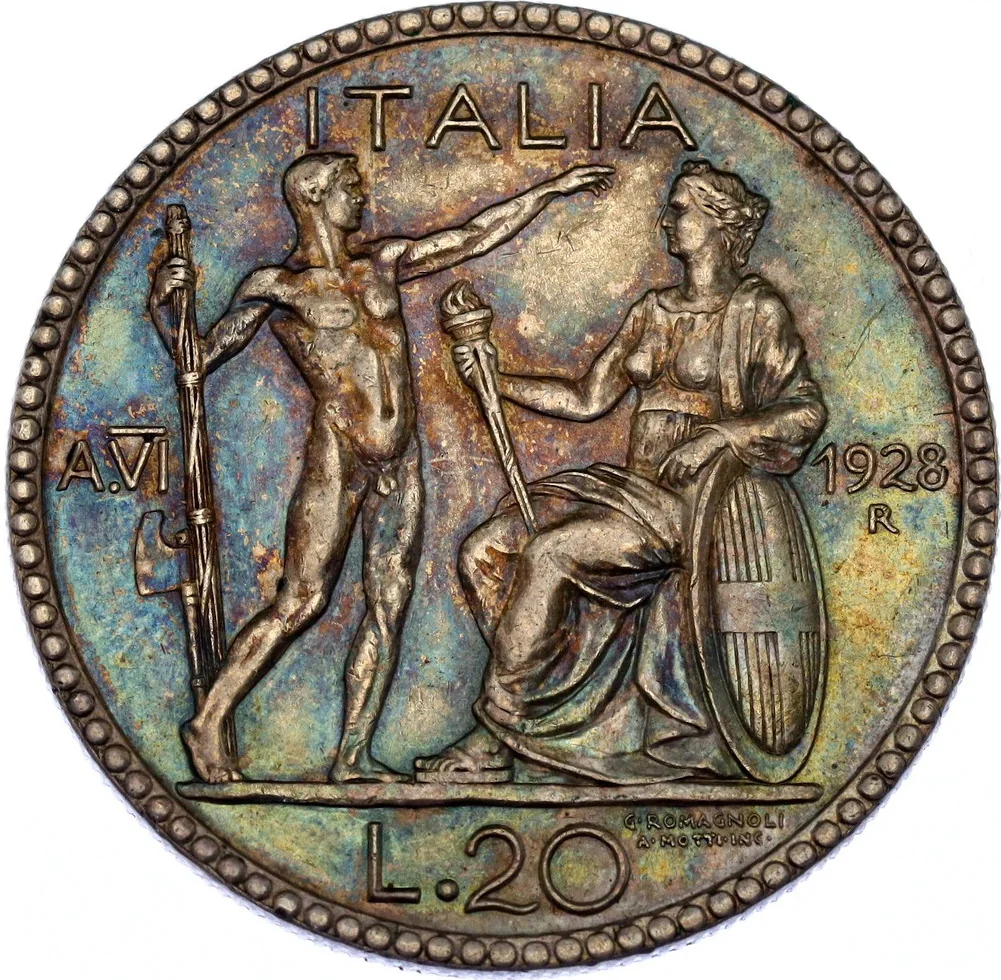
A Littore with fasces greets a seated Italy, who holds a torch and rests her arm on a Savoy shield. The Fascist Era date is left, the year and mintmark are right. The value, engraver, and author are in the exergue.
Inscription:
ITALIA
A.VI
1927
L.20
G.ROMAGNOLI
A.MOTTI INC.
A.VI
1927
L.20
G.ROMAGNOLI
A.MOTTI INC.
Translation:
Italy
Year 6
1927
Lire 20
G. Romagnoli
A. Motti Inc.
Year 6
1927
Lire 20
G. Romagnoli
A. Motti Inc.
Script: Latin
Engraver: Giuseppe Romagnoli
Edge
Reeded
Categories
| Symbols> Coat of Arms |
| Symbol> Fasces |
| Mustache/Beard |
| Symbol> Allegory |
Mints
| Name | Mark |
|---|---|
| Rome | R |
Mintings
Historical background
Italy’s currency situation in 1927 was defined by Benito Mussolini’s politically driven battle for monetary prestige, culminating in the “Quota 90” policy. Following World War I, the Italian lira had experienced severe depreciation and instability, a source of national embarrassment for the Fascist regime. Mussolini personally identified the strength of the lira with the strength of the state, vowing to defend its exchange rate as a matter of national honour and to bolster Fascist Italy’s international standing.
The decisive move came in December 1926, when Mussolini’s Minister of Finance, Count Giuseppe Volpi, and Bank of Italy Governor Bonaldo Stringher, officially pegged the lira at 90 to the British pound, a significantly overvalued rate compared to its market value of roughly 150 just two years prior. This revaluation was achieved through severe deflationary measures, including drastic credit restrictions, wage cuts, and higher taxes, which squeezed the Italian economy to artificially engineer a "strong" lira.
The consequences of Quota 90 were profound and largely negative for the domestic economy. The overvalued lira made Italian exports more expensive and less competitive, damaging key industries and contributing to rising unemployment. While the policy succeeded in its symbolic aim of projecting Fascist power and temporarily stabilized prices, it transferred the economic burden onto workers and industrialists, setting the stage for the more direct state intervention and autarkic policies of the 1930s.
The decisive move came in December 1926, when Mussolini’s Minister of Finance, Count Giuseppe Volpi, and Bank of Italy Governor Bonaldo Stringher, officially pegged the lira at 90 to the British pound, a significantly overvalued rate compared to its market value of roughly 150 just two years prior. This revaluation was achieved through severe deflationary measures, including drastic credit restrictions, wage cuts, and higher taxes, which squeezed the Italian economy to artificially engineer a "strong" lira.
The consequences of Quota 90 were profound and largely negative for the domestic economy. The overvalued lira made Italian exports more expensive and less competitive, damaging key industries and contributing to rising unemployment. While the policy succeeded in its symbolic aim of projecting Fascist power and temporarily stabilized prices, it transferred the economic burden onto workers and industrialists, setting the stage for the more direct state intervention and autarkic policies of the 1930s.
🌱 Fairly Common