

10 Lire – Italy
Italy
Context
Years: 1926–1934
Issuer: Italy 
Ruler: Vittorio Emanuele III
Currency:
(1861—2001)
Demonetized: Yes
Total mintage: 63,667,700
Material
References
KM: #Click to copy to clipboard68
Numista: #10490
Value
Exchange value: 10 ITL
Bullion value: $23.73
Obverse
Description:
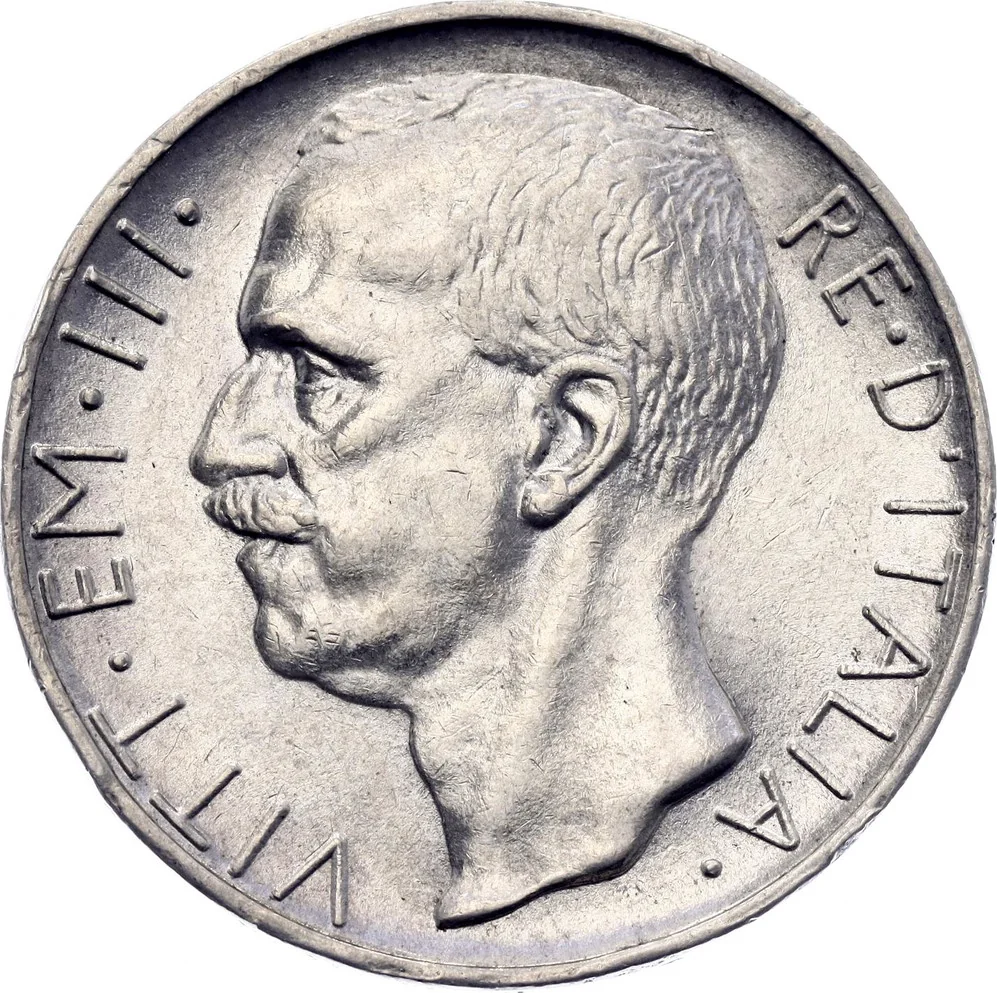
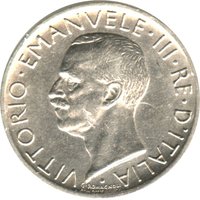
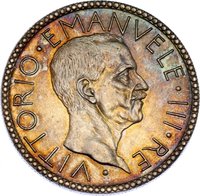
King Vittorio Emanuele III, left-facing portrait.
Inscription:
VITT·EM·III· RE·D'ITALIA·
Script: Latin
Engraver: Giuseppe Romagnoli
Reverse
Description:
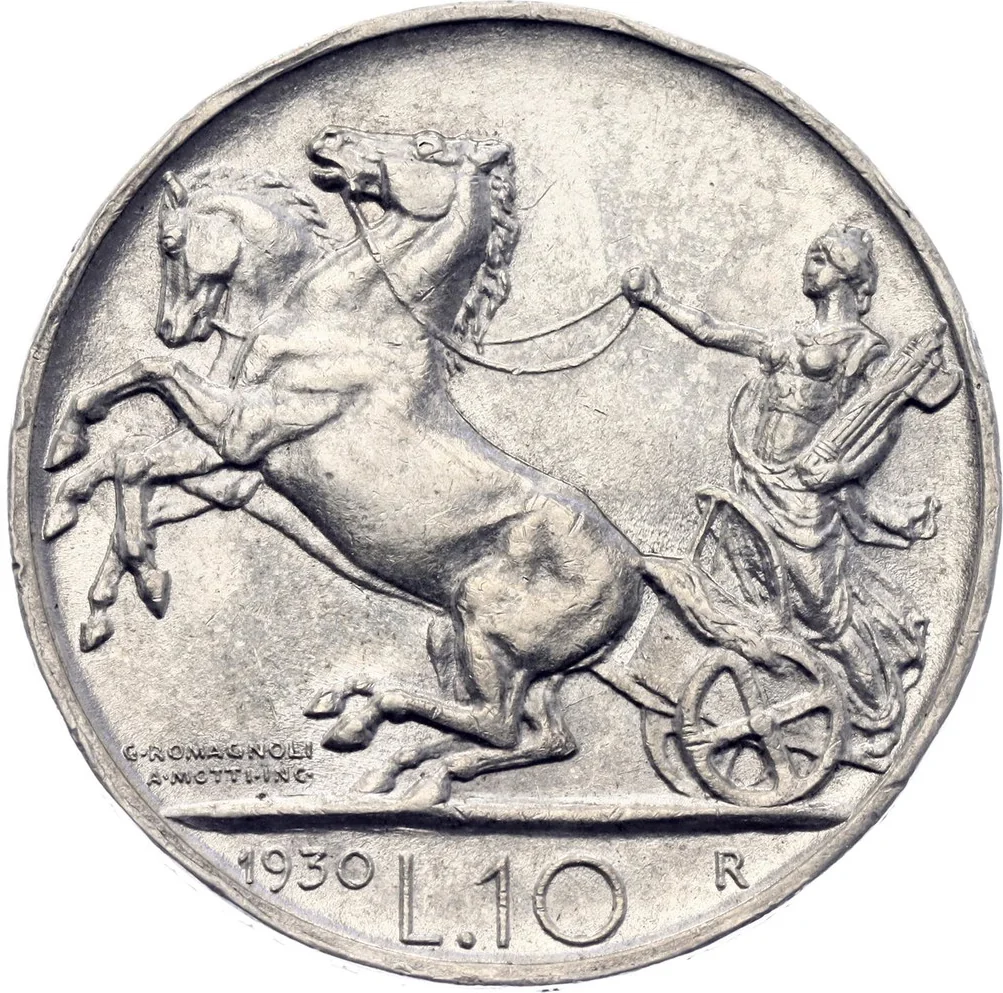
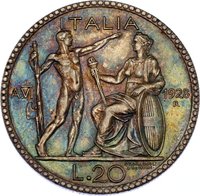
Italy holding fasces on a biga racing left. Engravers' names below horses; value in exergue between date and mintmark.
Inscription:
L.10
1927 R
G·ROMAGNOLI
A·MOTTI·INC
1927 R
G·ROMAGNOLI
A·MOTTI·INC
Script: Latin
Engraver: Giuseppe Romagnoli
Edge
Incuse lettering (FERT) between Guilloche and rosettes
Legend:
" *FERT* " (KM#68.1)
" **FERT** " (KM#68.2)
" **FERT** " (KM#68.2)
Mints
| Name | Mark |
|---|---|
| Rome | R |
Mintings
Historical background
In 1926, Italy's currency situation was defined by the aggressive economic policies of Benito Mussolini's Fascist regime, which sought to project strength and stability after years of postwar turmoil. The central focus was the "Battle for the Lira" (Battaglia della Lira), officially launched in 1927 but prepared for throughout 1926. Mussolini, driven by national prestige and the desire for an exchange rate that reflected fascist power, was determined to revalue and stabilize the lira against the British pound, which had significantly depreciated in the early 1920s due to inflation and economic uncertainty.
This policy was fiercely deflationary. To engineer a higher lira value, the government imposed severe austerity, including drastic cuts to public spending, wages, and prices. The Bank of Italy, under Governor Bonaldo Stringher, worked to tighten the money supply and build gold reserves, often through coercive measures such as requiring Italians to exchange foreign currency and bonds for state-guaranteed securities. These actions squeezed the economy, particularly hurting exporters and industrialists who suddenly found their goods more expensive on the international market, leading to falling profits and rising unemployment.
Consequently, the 1926 currency situation was a period of intense preparation for a politically motivated revaluation, achieved at great economic cost. While Mussolini would famously announce the Quota 90 peg (90 lire to the British pound) in 1927, heralding it as a triumph of fascist will, the groundwork of austerity and monetary contraction in 26 created immediate hardship. The policy succeeded in stabilizing the currency but did so by suppressing domestic demand and setting the stage for longer-term economic vulnerabilities, as the overvalued lira weakened Italy's competitive position just before the global shock of the Great Depression.
This policy was fiercely deflationary. To engineer a higher lira value, the government imposed severe austerity, including drastic cuts to public spending, wages, and prices. The Bank of Italy, under Governor Bonaldo Stringher, worked to tighten the money supply and build gold reserves, often through coercive measures such as requiring Italians to exchange foreign currency and bonds for state-guaranteed securities. These actions squeezed the economy, particularly hurting exporters and industrialists who suddenly found their goods more expensive on the international market, leading to falling profits and rising unemployment.
Consequently, the 1926 currency situation was a period of intense preparation for a politically motivated revaluation, achieved at great economic cost. While Mussolini would famously announce the Quota 90 peg (90 lire to the British pound) in 1927, heralding it as a triumph of fascist will, the groundwork of austerity and monetary contraction in 26 created immediate hardship. The policy succeeded in stabilizing the currency but did so by suppressing domestic demand and setting the stage for longer-term economic vulnerabilities, as the overvalued lira weakened Italy's competitive position just before the global shock of the Great Depression.
🌱 Common