

10 lepta – Greece
Add to wishlist
Greece
Context
Year: 1922
Issuer: Greece
Ruler: Constantine I
Currency:
(1832—1944)
Demonetized: Yes
Total mintage: 120,000,000
Material
References
KM: #
Numista: #7186
Obverse
Description:
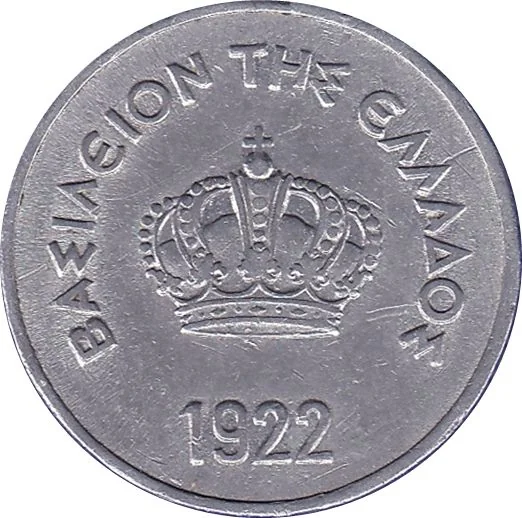
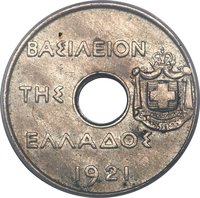
Central crown, top lettering, date below.
Inscription:
ΒΑΣΙΛΕΙΟΝ ΤΗΣ ΕΛΛΑΔΟΣ
1922
1922
Translation:
KINGDOM OF GREECE
1922
1922
Script: Greek
Language: Greek
Engraver: G. Iakovidis
Reverse
Description:
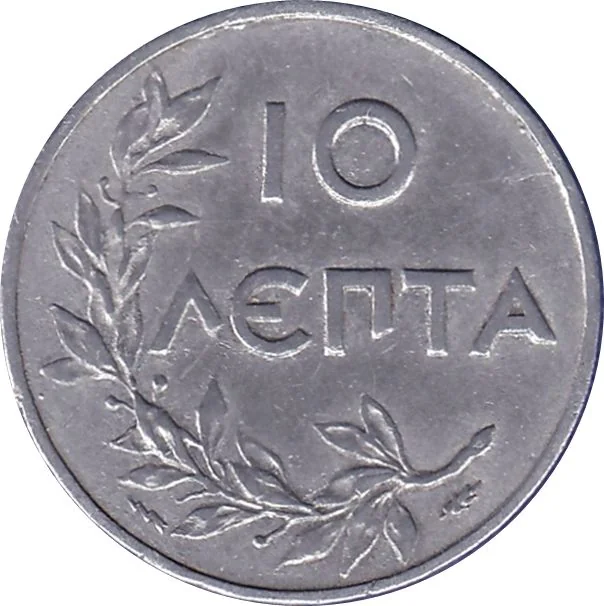
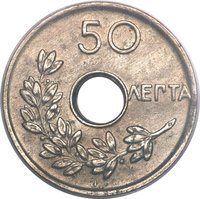
Left wreath, right value.
Inscription:
10 ΛΕΠΤΑ
Translation:
Ten Lepta
Script: Greek
Language: Greek
Engraver: G. Iakovidis
Edge
Plain
Mints
| Name | Mark |
|---|---|
| Société Française de Monnayage | — |
Mintings
| Year | Mint Mark | Mintage | Quality | Collection |
|---|---|---|---|---|
| 1922 | — | 120,000,000 |
Historical background
The currency situation in Greece in 1922 was one of catastrophic collapse, directly stemming from the national disaster of the Greco-Turkish War (1919-1922). The war effort, following the financially draining decade of the Balkan Wars and World War I, was funded almost entirely by borrowing from the National Bank of Greece and relentless printing of banknotes. This led to hyperinflation, as the money supply exploded without economic output to support it. By late 1922, with the defeat in Asia Minor and the influx of over 1.2 million refugees, the Greek drachma was in freefall, losing its value daily and pushing the state to the brink of bankruptcy.
The institutional framework was the ancient "obligatory course" system, where the central bank was legally compelled to provide the government with unlimited credit in exchange for interest-bearing bonds. This mechanism turned the printing presses into a primary tool of war finance, severing the link between the currency and any metallic reserve. Consequently, the drachma, which had traded at roughly 5 to the US dollar before World War I, plummeted to approximately 1,000 to the dollar by the end of 1922. Prices soared, savings were obliterated, and the economy reverted to barter in many areas, causing profound social suffering.
This monetary chaos set the immediate stage for the pivotal 1923 Geneva Protocol and the subsequent League of Nations-sponsored financial stabilization of 1927-28. The crisis of 1922 made it unequivocally clear that Greece could not recover without external intervention and a radical currency reform. The solution, implemented later in the decade, involved creating an entirely new central bank (the Bank of Greece), a new drachma pegged to gold, and a massive international loan to back the currency and fund refugee resettlement, finally ending the hyperinflation that the 1922 defeat had cemented.
The institutional framework was the ancient "obligatory course" system, where the central bank was legally compelled to provide the government with unlimited credit in exchange for interest-bearing bonds. This mechanism turned the printing presses into a primary tool of war finance, severing the link between the currency and any metallic reserve. Consequently, the drachma, which had traded at roughly 5 to the US dollar before World War I, plummeted to approximately 1,000 to the dollar by the end of 1922. Prices soared, savings were obliterated, and the economy reverted to barter in many areas, causing profound social suffering.
This monetary chaos set the immediate stage for the pivotal 1923 Geneva Protocol and the subsequent League of Nations-sponsored financial stabilization of 1927-28. The crisis of 1922 made it unequivocally clear that Greece could not recover without external intervention and a radical currency reform. The solution, implemented later in the decade, involved creating an entirely new central bank (the Bank of Greece), a new drachma pegged to gold, and a massive international loan to back the currency and fund refugee resettlement, finally ending the hyperinflation that the 1922 defeat had cemented.
🌱 Common