

50 lepta – Greece
Add to wishlist
Greece
Context
Year: 1921
Issuer: Greece
Ruler: Constantine I
Currency:
(1832—1944)
Demonetized: Yes
Total mintage: 2,524,000
Material
Diameter: 25 mm
Weight: 7 g
Shape: Round with a round hole
Composition: Copper-nickel
Technique: Milled
References
KM: #
Numista: #26037
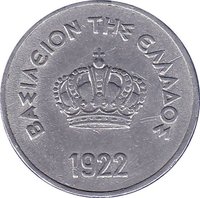
Obverse
Description:
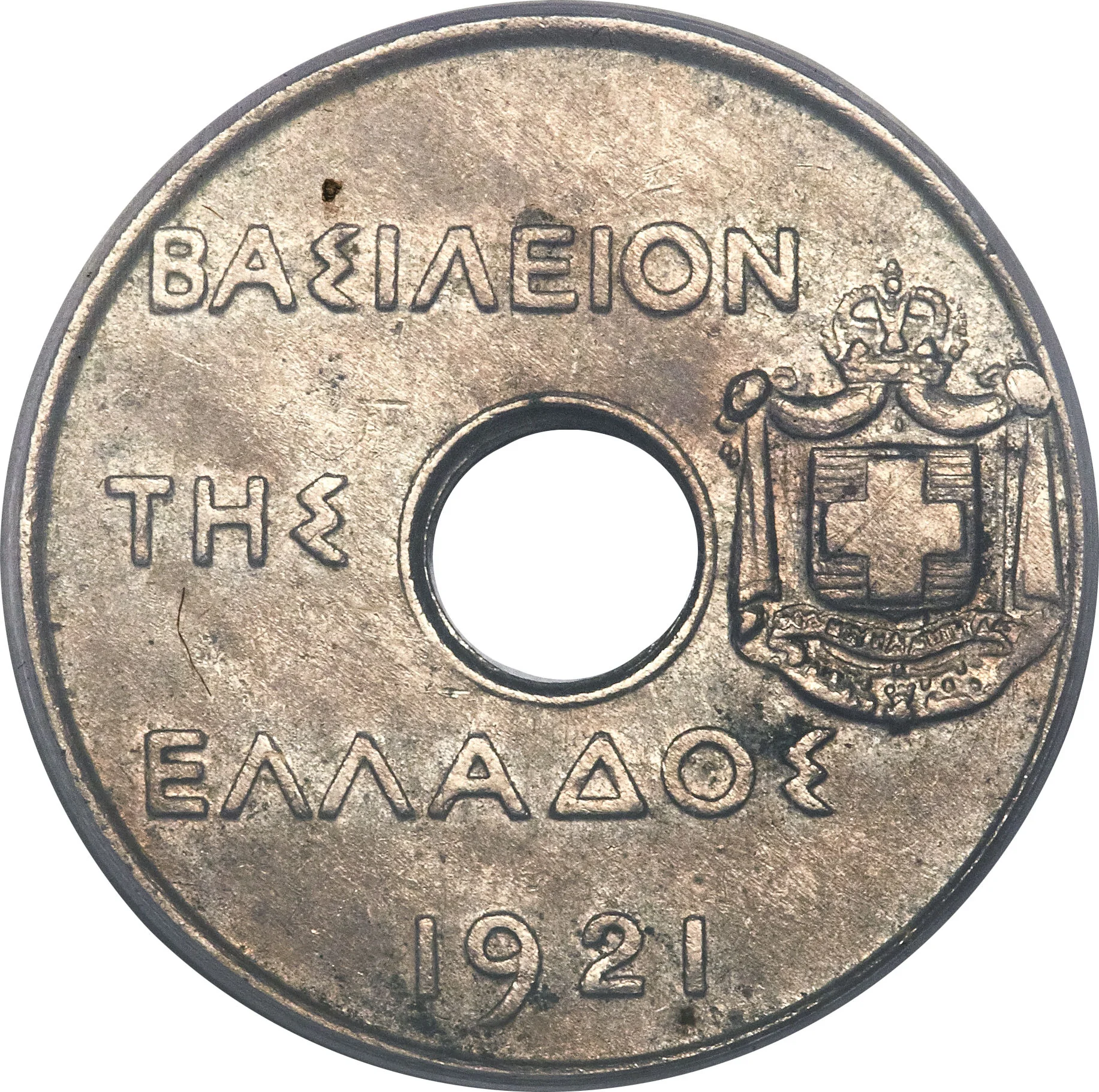
Shield with crown and mantle, date beneath.
Inscription:
ΒΑΣΙΛΕΙΟΝ ΤΗΣ ΕΛΛΑΔΟΣ
1921
1921
Translation:
KINGDOM OF GREECE
1921
1921
Script: Greek
Language: Greek
Engraver: Georgios Iakovidis
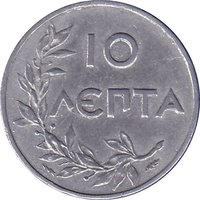
Reverse
Description:
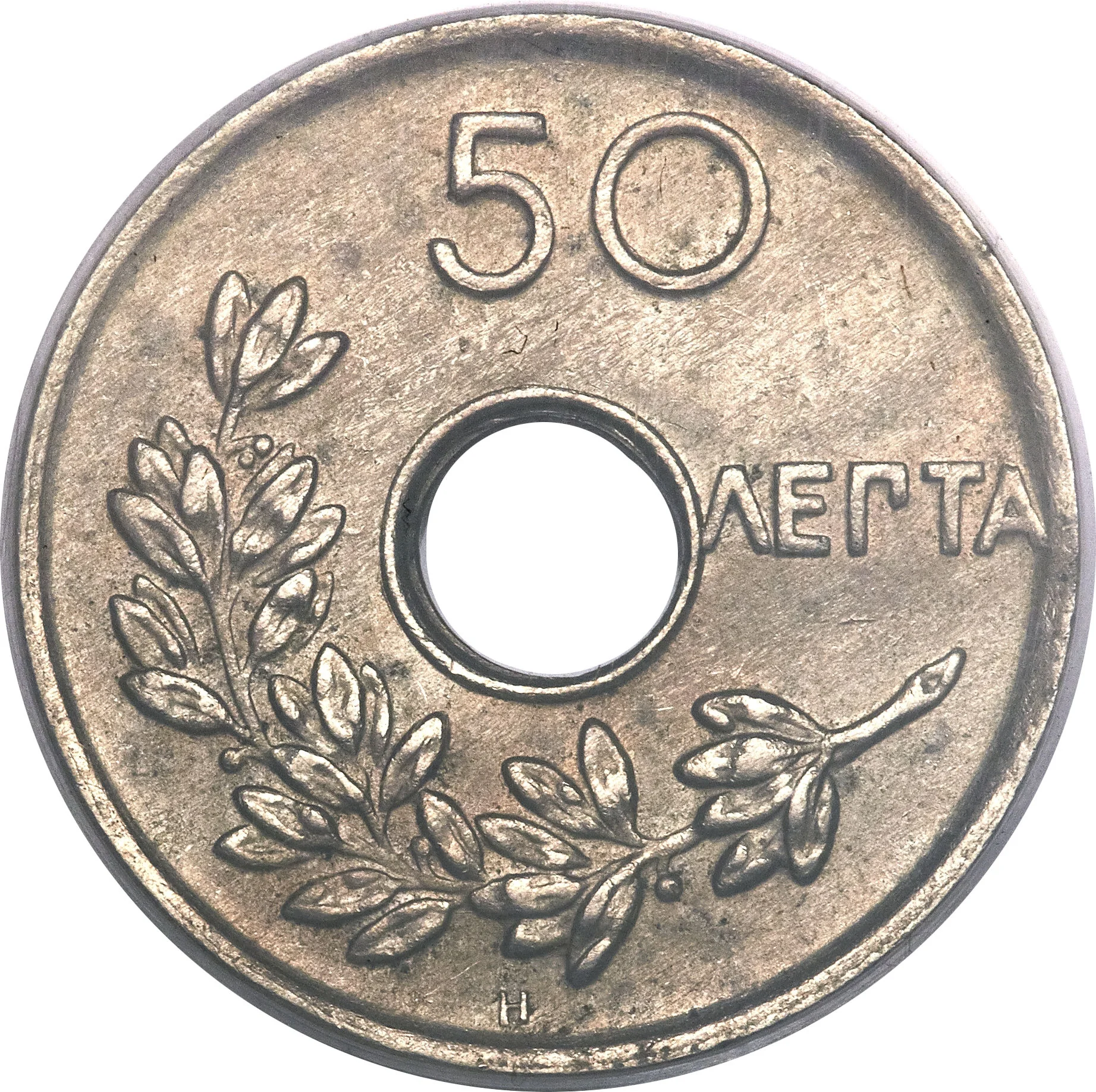
Olive branch below, denomination above.
Inscription:
50 ΛΕΠΤΑ
Translation:
Fifty Lepta
Script: Greek
Language: Greek
Engraver: Georgios Iakovidis
Edge
Reeded
Categories
| Symbol> Crown |
| Symbols> Coat of Arms |
Mints
| Name | Mark |
|---|---|
| Heaton and Sons / The Mint Birmingham | H |
| Kings Norton Metal Company | KN |
Historical background
In 1921, Greece was in the midst of a catastrophic military campaign in Asia Minor, a conflict that placed immense strain on the nation's economy and currency. The government, led by Prime Minister Dimitrios Gounaris, was financing the war almost entirely through borrowing from the Bank of Greece and printing new money, as tax revenues were insufficient. This led to a rapid expansion of the money supply, severe inflation, and a steep decline in the value of the drachma on foreign exchange markets. By the end of 1921, the drachma had lost approximately half of its pre-war (1914) value against major currencies like the British pound, severely increasing the cost of essential imports.
The currency depreciation created a vicious cycle of economic hardship. As the drachma fell, the cost of servicing Greece's substantial foreign debt, which was denominated in gold francs and sterling, skyrocketed in real terms. Furthermore, the high cost of imported goods, including vital foodstuffs and military supplies, fueled domestic price inflation, eroding the purchasing power of ordinary citizens and soldiers. The government attempted to stem the crisis by implementing foreign exchange controls and seeking international loans, but these were largely stopgap measures that failed to address the fundamental problem of runaway wartime expenditure.
This precarious monetary situation was a direct precursor to the far greater catastrophe that followed. The eventual military defeat in 1922 with the "Asia Minor Catastrophe" led to the complete collapse of the drachma, hyperinflation, and a sovereign default in 1932. Thus, the currency turmoil of 1921 was a critical early phase of a decade-long financial crisis, rooted in the fiscal policies of a nation overextended by war and soon to be overwhelmed by the social and economic consequences of defeat and a massive refugee influx.
The currency depreciation created a vicious cycle of economic hardship. As the drachma fell, the cost of servicing Greece's substantial foreign debt, which was denominated in gold francs and sterling, skyrocketed in real terms. Furthermore, the high cost of imported goods, including vital foodstuffs and military supplies, fueled domestic price inflation, eroding the purchasing power of ordinary citizens and soldiers. The government attempted to stem the crisis by implementing foreign exchange controls and seeking international loans, but these were largely stopgap measures that failed to address the fundamental problem of runaway wartime expenditure.
This precarious monetary situation was a direct precursor to the far greater catastrophe that followed. The eventual military defeat in 1922 with the "Asia Minor Catastrophe" led to the complete collapse of the drachma, hyperinflation, and a sovereign default in 1932. Thus, the currency turmoil of 1921 was a critical early phase of a decade-long financial crisis, rooted in the fiscal policies of a nation overextended by war and soon to be overwhelmed by the social and economic consequences of defeat and a massive refugee influx.
💎 Extremely Rare