

2000 pesos uruguayos – Uruguay
Add to wishlist
Circulating commemorative coins
Commemoration: Reglamento General de Tierras 1815
Uruguay
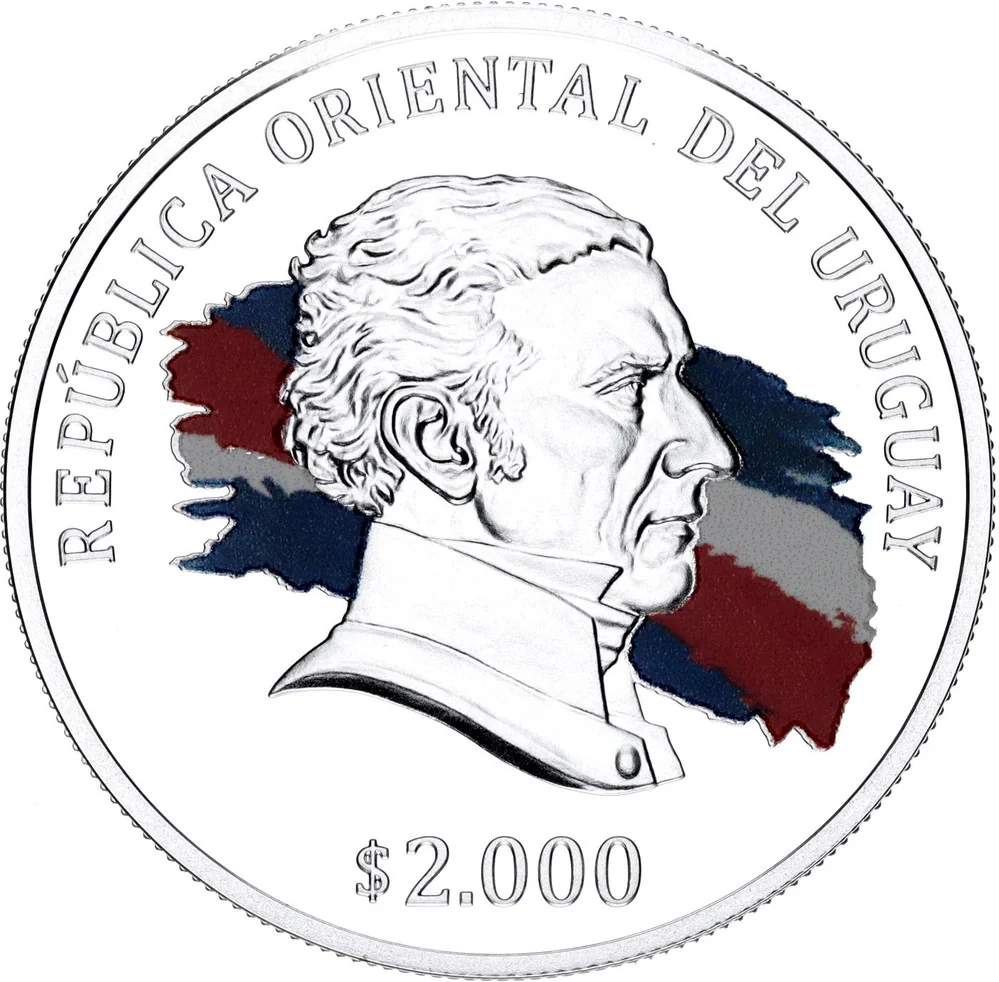
Obverse
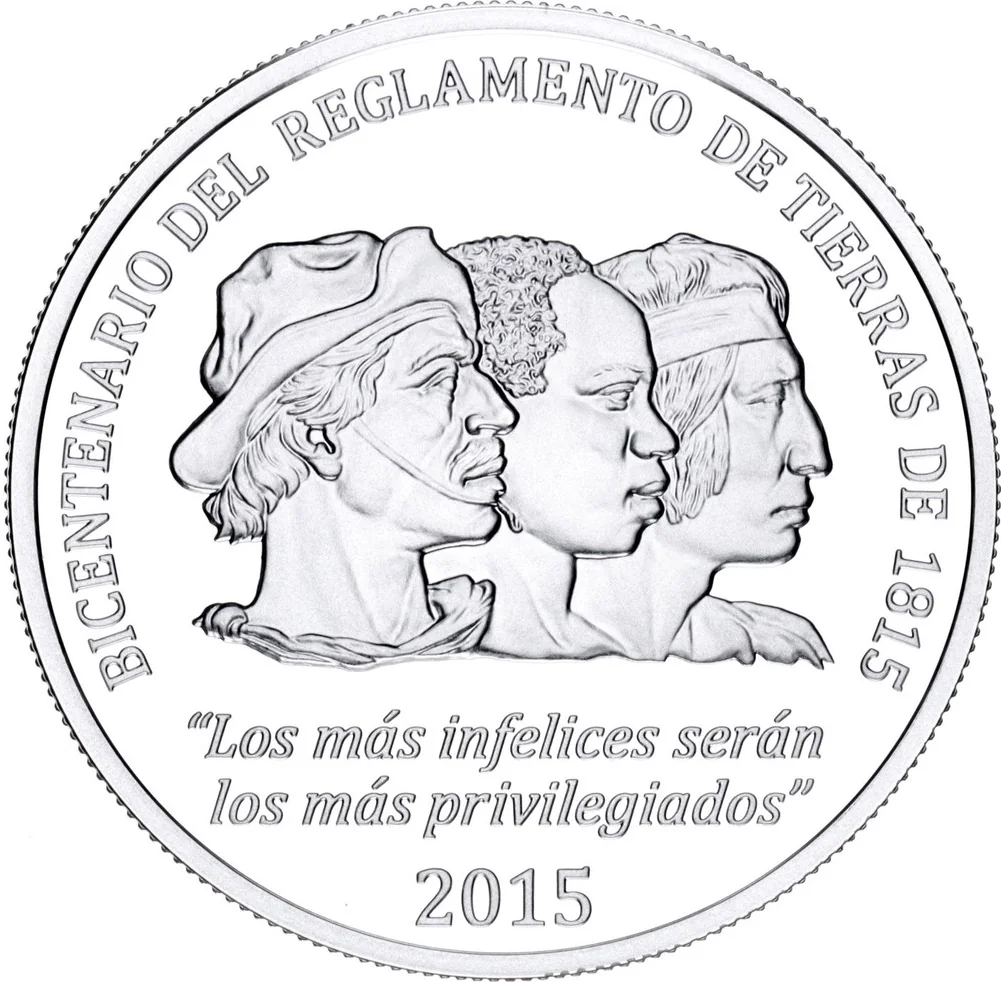
Reverse
Description:
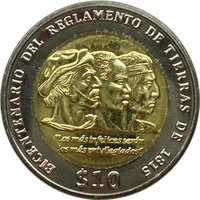
Head of a Gaucho, Afrodescendant, and Indigenous person. Below, an Artigas quote on equitable laws commemorates the event.
Inscription:
BICENTENARIO DEL REGLAMENTO DE TIERRAS DE 1815
"Los más infelices serán
los más privilegiados"
2015
"Los más infelices serán
los más privilegiados"
2015
Translation:
Bicentennial of the Land Regulation of 1815
"The most unfortunate shall be
the most privileged"
2015
"The most unfortunate shall be
the most privileged"
2015
Script: Latin
Language: Spanish
Edge
Reeded
Categories
| Mustache/Beard |
| Person> Military leader |
| Person> Politician |
| Object> Hat |
Mints
| Name | Mark |
|---|---|
| Mint of Poland | — |
Mintings
| Year | Mint Mark | Mintage | Quality | Collection |
|---|---|---|---|---|
| 2015 | — | 8,000 | Proof |
Historical background
In 2015, Uruguay's currency situation was characterized by a significant and sustained appreciation of the Uruguayan peso against the US dollar, a trend that had been ongoing since 2003. The peso strengthened from approximately 30 pesos per dollar in the early 2000s to around 24 pesos per dollar by mid-2015. This appreciation was driven by strong capital inflows, high prices for the country's key commodity exports (notably soybeans and beef), and a period of robust economic growth that boosted investor confidence. However, this strength created notable headwinds for the export-oriented sectors of the economy, as Uruguayan goods became more expensive on the international market.
The government of President Tabaré Vázquez, who took office in March 2015, faced the dual challenge of managing this currency pressure while confronting rising inflation, which hovered near the upper limit of the central bank's target range at around 8-9%. The Central Bank of Uruguay (BCU) intervened in the foreign exchange market throughout the year, purchasing US dollars to build international reserves and temper the peso's rise. These interventions aimed to alleviate the competitiveness strain on exporters and the tourism sector without fully reversing the appreciation trend, which also helped curb imported inflation.
By the end of 2015, the currency dynamics began to shift as external conditions changed. A slowdown in major economies like Brazil and China, coupled with a strengthening US dollar and falling global commodity prices, started to reverse the peso's long rally. This shift set the stage for a period of gradual depreciation in the following years, moving the policy focus from curbing appreciation to managing volatility and containing the inflationary effects of a weaker peso.
The government of President Tabaré Vázquez, who took office in March 2015, faced the dual challenge of managing this currency pressure while confronting rising inflation, which hovered near the upper limit of the central bank's target range at around 8-9%. The Central Bank of Uruguay (BCU) intervened in the foreign exchange market throughout the year, purchasing US dollars to build international reserves and temper the peso's rise. These interventions aimed to alleviate the competitiveness strain on exporters and the tourism sector without fully reversing the appreciation trend, which also helped curb imported inflation.
By the end of 2015, the currency dynamics began to shift as external conditions changed. A slowdown in major economies like Brazil and China, coupled with a strengthening US dollar and falling global commodity prices, started to reverse the peso's long rally. This shift set the stage for a period of gradual depreciation in the following years, moving the policy focus from curbing appreciation to managing volatility and containing the inflationary effects of a weaker peso.
💎 Very Rare