

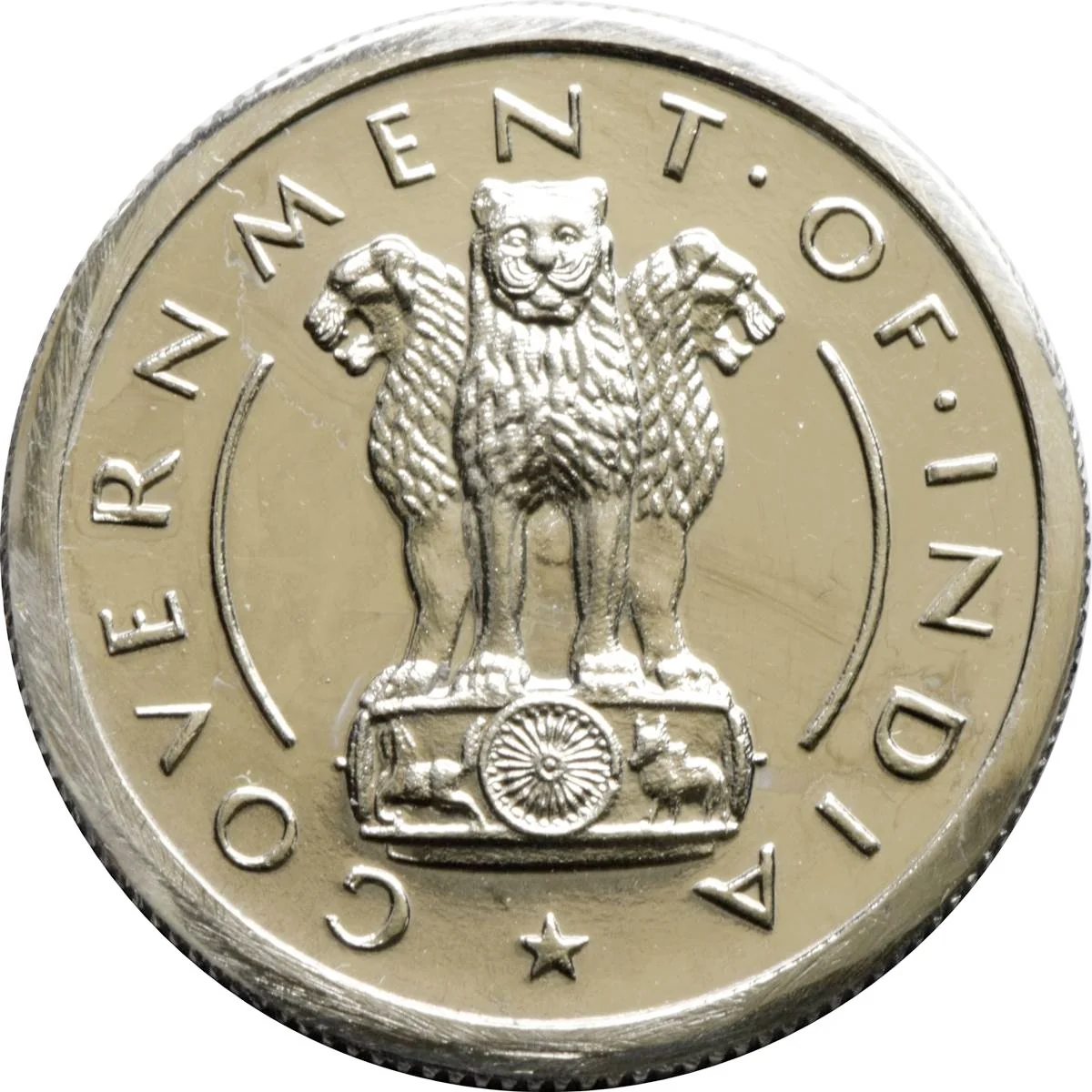
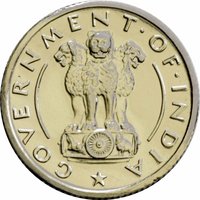
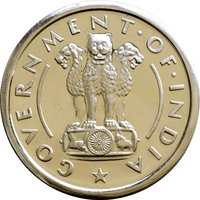
Obverse
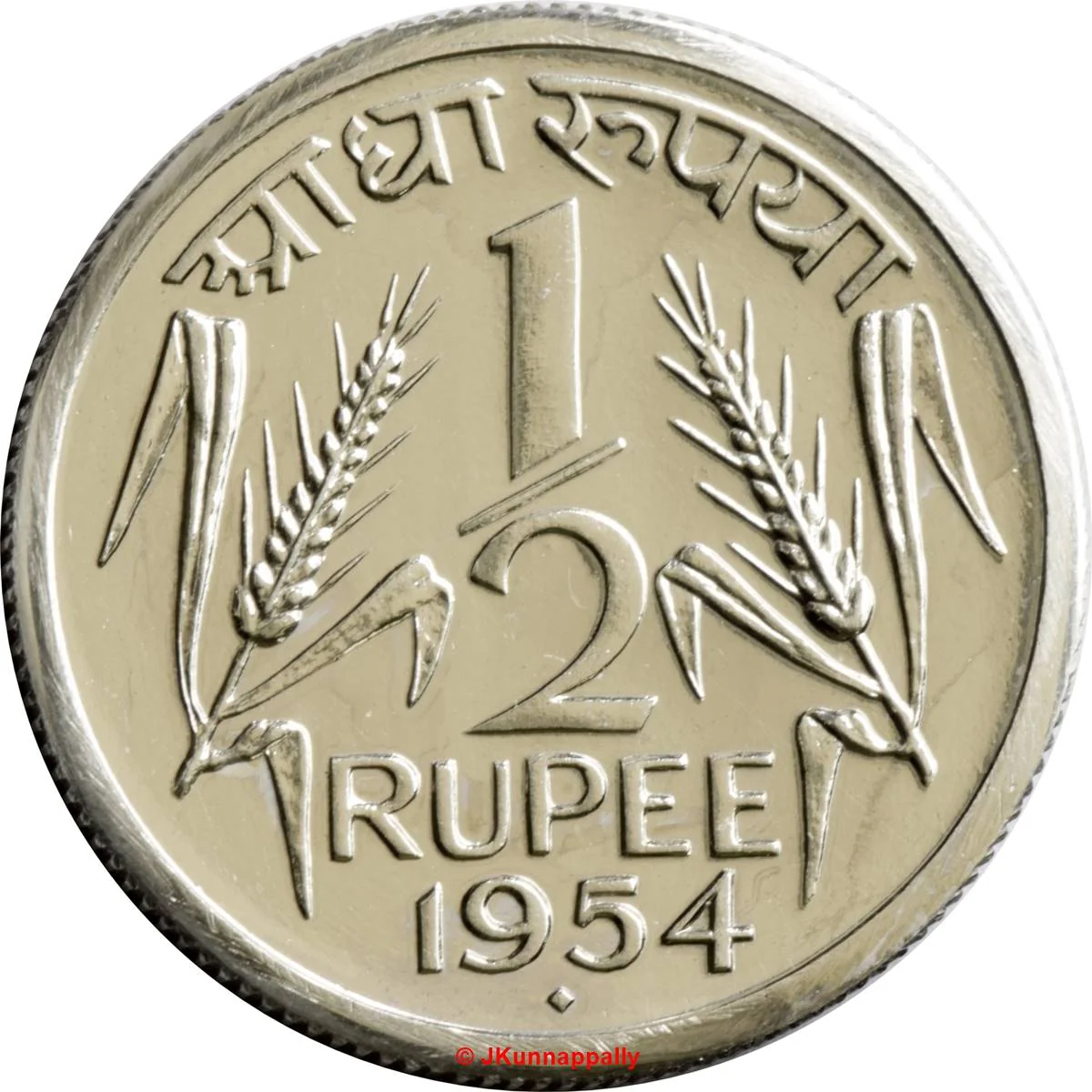
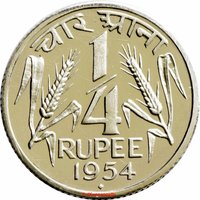
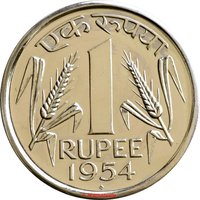
Reverse
Description:
Wheat stalks flank the value, with the date below and "Aadha Rupya" in Devnagari.
Inscription:
आधा रुपया
1/2 RUPEE
1950
1/2 RUPEE
1950
Translation:
Half Rupee
1/2 RUPEE
1950
1/2 RUPEE
1950
Scripts: Devanagari, Latin
Edge
Milled
Mints
| Name | Mark |
|---|---|
| Kolkata / Calcutta / Murshidabad | — |
| Mumbai / Bombay | ♦/small dot |
Mintings
| Year | Mint Mark | Mintage | Quality | Collection |
|---|---|---|---|---|
| 1950 | — | 1,100,000 | ||
| 1950 | ♦ | 12,352,000 | ||
| 1950 | ♦ | — | Proof | |
| 1951 | ♦ | 9,239,000 | ||
| 1954 | ♦ | — | Proof | |
| 1954 | — | 36,300,000 | ||
| 1955 | ♦ | 18,977,000 | ||
| 1956 | — | 24,900,000 |
Historical background
In 1950, India’s currency situation was a direct legacy of its colonial past and the tumultuous partition of 1947. The monetary system was governed by the Reserve Bank of India Act of 1934, with the Indian Rupee (₹) pegged to the British Pound Sterling under a fixed exchange rate regime. This link reflected the country's continued integration with the Sterling Area, a bloc of currencies tied to the Pound, which dictated India's foreign exchange reserves and trade financing. The physical currency in circulation consisted of notes issued by the Reserve Bank of India and coins by the Government of India, but the system was still recovering from the economic dislocations of World War II and partition, which had strained resources and caused inflationary pressures.
The immediate post-independence period was characterized by a severe shortage of foreign exchange, a large trade deficit, and a low level of gold reserves. India's economy was primarily agrarian and lacked industrial diversification, making it vulnerable. A critical task for the new government was to assert monetary sovereignty and manage the currency to serve national development goals rather than imperial interests. This led to a deliberate policy of a controlled and regulated economy, where foreign exchange transactions were tightly managed through licenses and the rupee's parity was carefully controlled to conserve scarce reserves for essential imports like capital goods and food grains.
Thus, in 1950, India's currency framework was in a transitional phase—formally stable under a fixed peg but operating within a context of economic fragility and deliberate control. The stage was set for the planned economic development of the 1950s, where monetary policy would become a key instrument for channeling resources into industrialization, eventually leading to a decimalized currency system in 1957 and a shift in foreign exchange management as the country sought greater economic independence.
The immediate post-independence period was characterized by a severe shortage of foreign exchange, a large trade deficit, and a low level of gold reserves. India's economy was primarily agrarian and lacked industrial diversification, making it vulnerable. A critical task for the new government was to assert monetary sovereignty and manage the currency to serve national development goals rather than imperial interests. This led to a deliberate policy of a controlled and regulated economy, where foreign exchange transactions were tightly managed through licenses and the rupee's parity was carefully controlled to conserve scarce reserves for essential imports like capital goods and food grains.
Thus, in 1950, India's currency framework was in a transitional phase—formally stable under a fixed peg but operating within a context of economic fragility and deliberate control. The stage was set for the planned economic development of the 1950s, where monetary policy would become a key instrument for channeling resources into industrialization, eventually leading to a decimalized currency system in 1957 and a shift in foreign exchange management as the country sought greater economic independence.
Series: 1950 India circulation coins
🌱 Very Common