

2 euro (Portuguese Red Cross) – Portugal
Add to wishlist
Circulating commemorative coins
Commemoration: 150th Anniversary of Portuguese Red Cross
Portugal
Context
Material
References
KM: #
Numista: #71656
Value
Exchange value: 2 EUR
Inflation-adjusted value: 2.41 EUR
Obverse
Description:
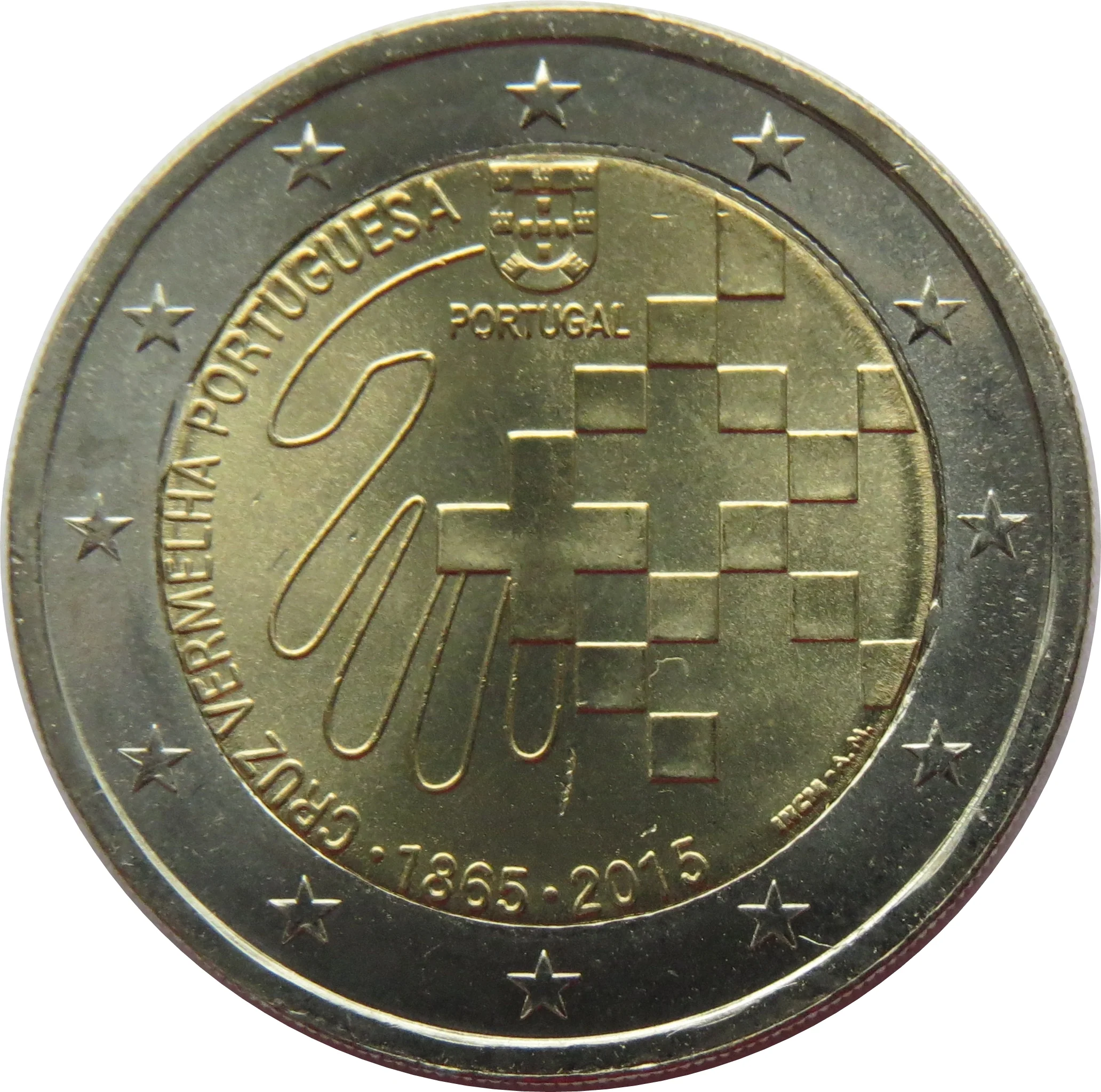
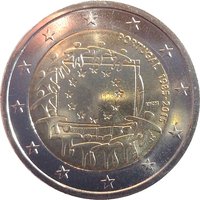
The design features multiple crosses, representing the expansion of humanitarian action in Portugal and abroad. A hand in the background symbolizes various forms of aid, primarily medical. The left side bears the inscription ‘CRUZ VERMELHA PORTUGUESA’ in a semicircle. At the top are the Portuguese Coat of Arms and the country name ‘PORTUGAL’; at the bottom, the years ‘1865’ and ‘2015’. The outer ring displays the 12 stars of the European Union.
Inscription:
CRUZ VERMELHA PORTUGUESA
∙1865∙2015
PORTUGAL
INCM - A. M.
∙1865∙2015
PORTUGAL
INCM - A. M.
Translation:
PORTUGUESE RED CROSS
∙1865∙2015
PORTUGAL
INCM - A. M.
∙1865∙2015
PORTUGAL
INCM - A. M.
Script: Latin
Language: Portuguese
Engraver: António Marinho
Reverse
Edge
Finely ribbed with seven castles and five coats of arms
Categories
| Map |
| Organization> Red Cross |
| Health |
| Symbols> Coat of Arms |
Mints
| Name | Mark |
|---|---|
| Imprensa Nacional - Casa da Moeda | INCM |
Historical background
In 2015, Portugal's currency situation was defined by its membership in the Eurozone, having adopted the euro in 1999. This meant the country had long relinquished control over its national monetary policy to the European Central Bank (ECB), which set interest rates and managed the currency for the entire bloc. The primary challenge was not a currency crisis in the traditional sense, but the severe constraints the euro placed on Portugal's ability to recover from the 2010-2014 sovereign debt crisis. Unable to devalue its currency to boost competitiveness, Portugal was forced into a painful internal devaluation—implementing austerity measures, wage cuts, and structural reforms under a €78 billion international bailout program.
The year 2015 was politically pivotal, marking the end of the post-bailout period under the center-right coalition government of Pedro Passos Coelho. While the country had exited the bailout in 2014 and regained market access, economic and social scars remained deep, with high public debt (around 130% of GDP), elevated unemployment, and stagnant growth. The euro's strength, driven by ECB policy, continued to pressure exports, while low inflation across the Eurozone exacerbated the burden of public and private debt. The currency regime was thus a backdrop to intense national debate about the sustainability of austerity and the path forward.
The September 2015 legislative elections resulted in a political shift that indirectly reflected the lingering currency dilemma. Passos Coelho's government, which had overseen the austerity program, won the most seats but lost its majority. By November, a historic alliance of left-wing parties (Socialists, Communists, and Left Bloc) formed to reject his budget and bring a Socialist government under António Costa to power. This new government explicitly sought to "turn the page on austerity" while remaining committed to the euro and EU fiscal rules, highlighting the ongoing tension between the need for growth-friendly policies and the rigid discipline imposed by sharing a common currency.
The year 2015 was politically pivotal, marking the end of the post-bailout period under the center-right coalition government of Pedro Passos Coelho. While the country had exited the bailout in 2014 and regained market access, economic and social scars remained deep, with high public debt (around 130% of GDP), elevated unemployment, and stagnant growth. The euro's strength, driven by ECB policy, continued to pressure exports, while low inflation across the Eurozone exacerbated the burden of public and private debt. The currency regime was thus a backdrop to intense national debate about the sustainability of austerity and the path forward.
The September 2015 legislative elections resulted in a political shift that indirectly reflected the lingering currency dilemma. Passos Coelho's government, which had overseen the austerity program, won the most seats but lost its majority. By November, a historic alliance of left-wing parties (Socialists, Communists, and Left Bloc) formed to reject his budget and bring a Socialist government under António Costa to power. This new government explicitly sought to "turn the page on austerity" while remaining committed to the euro and EU fiscal rules, highlighting the ongoing tension between the need for growth-friendly policies and the rigid discipline imposed by sharing a common currency.
Series: Portugal 2 euro commemoratives
🌱 Very Common