

100 Escudos – Portugal
Circulating commemorative coins
Commemoration: International Year of Disabled Persons
Series: System 1981-2001
Portugal
Context
Year: 1984
Issuer: Portugal 
Period:
(since 1974)
Currency:
(1911—2001)
Demonetized: Yes
Total mintage: 10,000
Material
Diameter: 34 mm
Weight: 17 g
Thickness: 2.4 mm
Shape: Round
Composition: Copper-nickel
Technique: Milled
Alignment: Coin alignment
flip
References
KM: #Click to copy to clipboard625
Numista: #7165
Value
Exchange value: 100 PTE
Inflation-adjusted value: 712.97 PTE
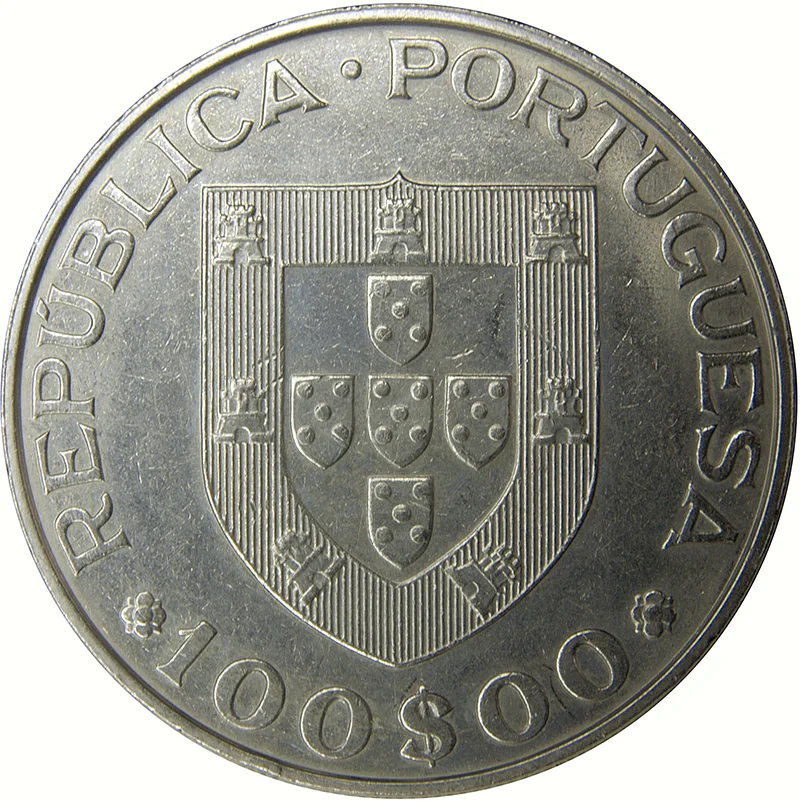
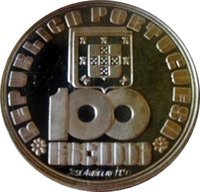
Obverse
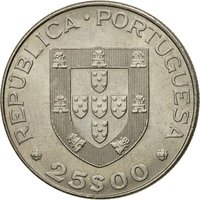
Description:
Heraldic emblem
Inscription:
REPUBLICA·PORTUGUESA
100$00
100$00
Translation:
Portuguese Republic
100$00
100$00
Script: Latin
Language: Portuguese
Engraver: Armando Matos Simões
Reverse
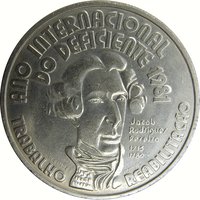
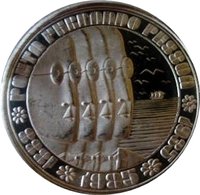
Description:
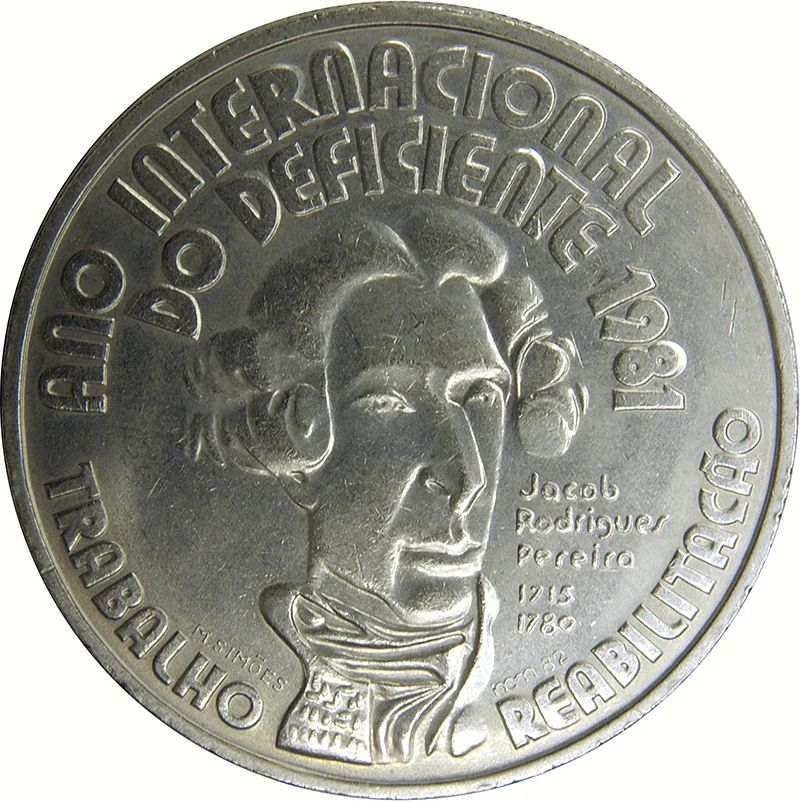
Stylized head, quarter-right view.
Inscription:
ANO INTERNATIONAL DO DEFICIENTE 1981
TRABALHO REABILITACÃO
Jacob
Rodrigues
Pereira
1715
1780
M. SIMÕES incm82
TRABALHO REABILITACÃO
Jacob
Rodrigues
Pereira
1715
1780
M. SIMÕES incm82
Translation:
International Year of the Disabled Person 1981
Work Rehabilitation
Jacob
Rodrigues
Pereira
1715
1780
M. SIMÕES incm82
Work Rehabilitation
Jacob
Rodrigues
Pereira
1715
1780
M. SIMÕES incm82
Script: Latin
Language: Portuguese
Engraver: Armando Matos Simões
Edge
Milled
Categories
| Symbols> Coat of Arms |
| Health |
Mints
| Name | Mark |
|---|---|
| Imprensa Nacional - Casa da Moeda | — |
Mintings
| Year | Mint Mark | Mintage | Quality | Collection |
|---|---|---|---|---|
| 1984 | — | 10,000 |
Historical background
In 1984, Portugal's currency situation was defined by its ongoing transition from the authoritarian Estado Novo regime and its integration into the European Economic Community (EEC). The national currency was the Portuguese escudo (PTE), which operated under a managed float but was effectively pegged to a basket of currencies, heavily weighted toward the US dollar and the Deutsche Mark. This peg was managed by the Bank of Portugal to provide stability and control inflation, which remained a persistent challenge following the economic turbulence and oil shocks of the 1970s.
The broader economic context was one of structural adjustment and modernization, driven by the conditions of Portugal's 1977 IMF loan and its impending full EEC membership in 1986. The escudo was subject to periodic devaluations to maintain export competitiveness and correct external imbalances. In 1983, a major 12% devaluation had been implemented as part of a stringent austerity package, and the currency's value in 1984 was still reflecting those corrective measures. High public debt, a large state-owned sector, and political instability following the 1974 Carnation Revolution continued to pressure the escudo's stability and Portugal's foreign exchange reserves.
Looking forward, 1984 was a year of preparation for deeper European integration. Policymakers were aligning monetary and fiscal policies with EEC partners, laying the groundwork for future participation in the European Monetary System (EMS), which Portugal would join in 1992. Thus, the escudo's management in 1984 was not just about immediate economic stability, but also a strategic stepping stone toward eventually replacing the national currency with the euro decades later, embedding Portugal firmly within the European financial architecture.
The broader economic context was one of structural adjustment and modernization, driven by the conditions of Portugal's 1977 IMF loan and its impending full EEC membership in 1986. The escudo was subject to periodic devaluations to maintain export competitiveness and correct external imbalances. In 1983, a major 12% devaluation had been implemented as part of a stringent austerity package, and the currency's value in 1984 was still reflecting those corrective measures. High public debt, a large state-owned sector, and political instability following the 1974 Carnation Revolution continued to pressure the escudo's stability and Portugal's foreign exchange reserves.
Looking forward, 1984 was a year of preparation for deeper European integration. Policymakers were aligning monetary and fiscal policies with EEC partners, laying the groundwork for future participation in the European Monetary System (EMS), which Portugal would join in 1992. Thus, the escudo's management in 1984 was not just about immediate economic stability, but also a strategic stepping stone toward eventually replacing the national currency with the euro decades later, embedding Portugal firmly within the European financial architecture.
Series: System 1981-2001
🌱 Very Common