

Fiji
Context
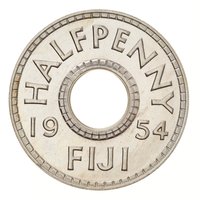
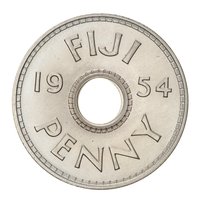
Year: 1954
Issuer: Fiji 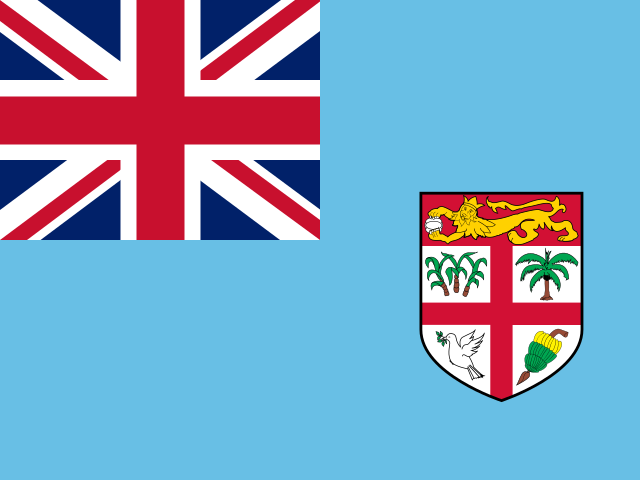
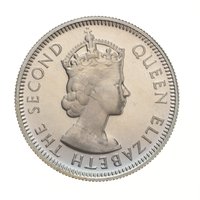
Ruler: Elizabeth II
Currency:
(1873—1969)
Demonetization: 30 June 1969
Total mintage: 228,000
Material
Diameter: 21.1 mm
Weight: 3.24 g
Shape: Round with a round hole
Composition: Copper-nickel
Technique: Milled
Alignment: Medal alignment
flip
References
KM: #Click to copy to clipboard20
Numista: #11246
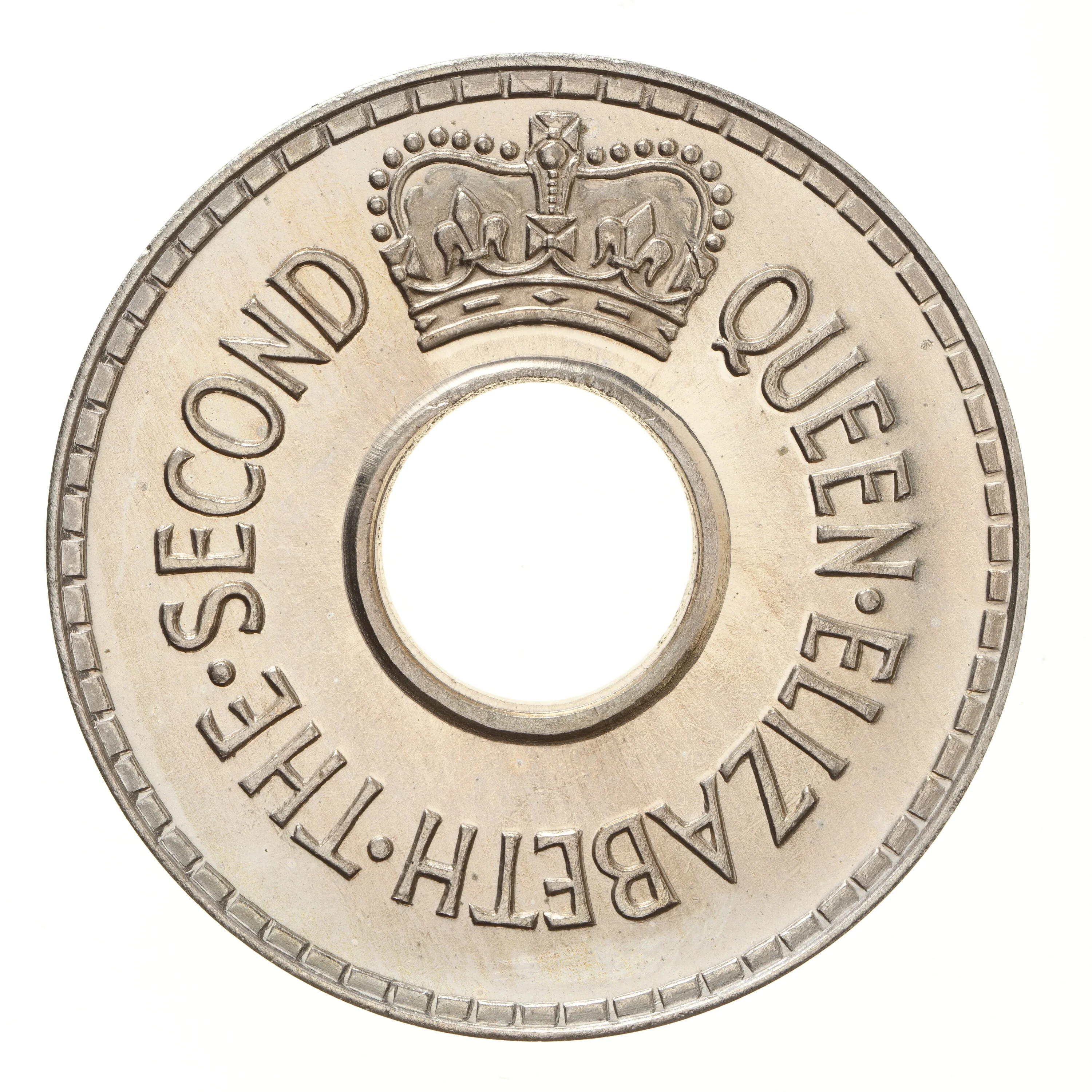
Obverse
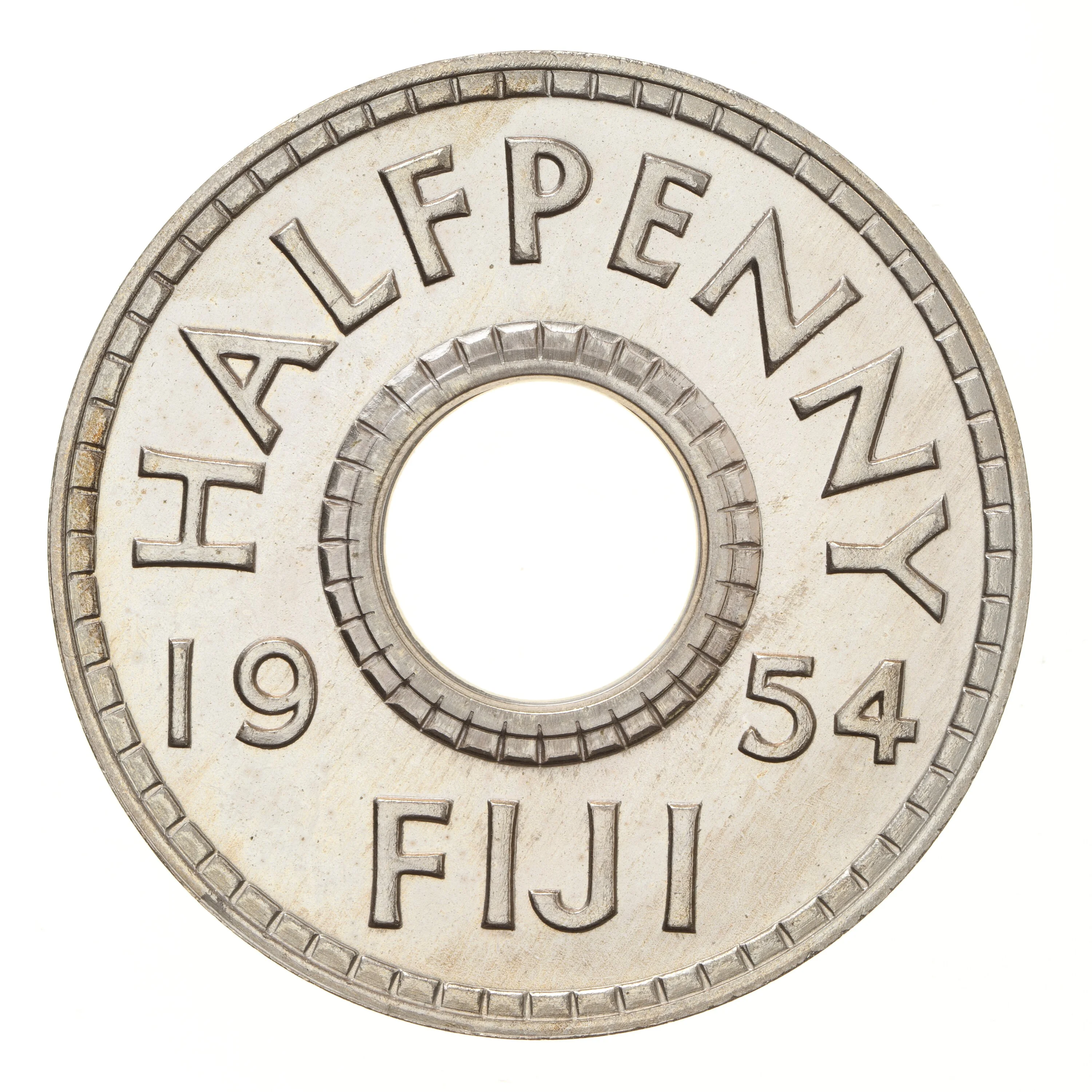
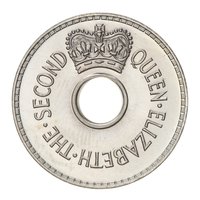
Reverse
Edge
Plain
Mints
| Name | Mark |
|---|---|
| Royal Mint (Tower Hill) | — |
Mintings
| Year | Mint Mark | Mintage | Quality | Collection |
|---|---|---|---|---|
| 1954 | — | 228,000 | ||
| 1954 | — | — | Proof |
Historical background
In 1954, Fiji's currency system was firmly under the colonial sterling area, with the Fijian pound (£F) pegged at par to the British pound sterling. This arrangement, established in 1873, meant Fiji's money supply and monetary policy were directly tied to the United Kingdom. The physical currency in circulation was a mix of British coinage and distinctive Fijian banknotes issued by the government, which were essentially sterling IOUs backed by reserves held in London. This system facilitated stable trade with the Commonwealth but offered Fiji no independent monetary tools to manage its own economy.
The territory's economy was heavily dependent on sugar exports, dominated by the Colonial Sugar Refining Company, and a growing coconut industry. The sterling peg provided stability for these export commodities, as prices were set in London markets. However, this also meant Fiji was vulnerable to economic fluctuations in Britain and had little flexibility to respond to local conditions. The currency system reflected and reinforced the broader colonial economic structure, where Fiji primarily supplied raw materials and imported manufactured goods.
By the mid-1950s, this regime was stable but increasingly seen as an anachronism. Discussions about decimalization, which would eventually lead to the introduction of the Fijian dollar in 1969, were still over a decade away. In 1954, the system functioned efficiently for colonial administration and established trade, but it laid the groundwork for future monetary sovereignty debates as the movement towards self-government gained momentum in the following decade.
The territory's economy was heavily dependent on sugar exports, dominated by the Colonial Sugar Refining Company, and a growing coconut industry. The sterling peg provided stability for these export commodities, as prices were set in London markets. However, this also meant Fiji was vulnerable to economic fluctuations in Britain and had little flexibility to respond to local conditions. The currency system reflected and reinforced the broader colonial economic structure, where Fiji primarily supplied raw materials and imported manufactured goods.
By the mid-1950s, this regime was stable but increasingly seen as an anachronism. Discussions about decimalization, which would eventually lead to the introduction of the Fijian dollar in 1969, were still over a decade away. In 1954, the system functioned efficiently for colonial administration and established trade, but it laid the groundwork for future monetary sovereignty debates as the movement towards self-government gained momentum in the following decade.
🌱 Common