

10 cents – Straits Settlements
Add to wishlist
Malaysia
Context
Years: 1909–1910
Country: Malaysia
Issuer: Straits Settlements
Ruler: Edward VII
Currency:
(1845—1939)
Demonetized: Yes
Total mintage: 12,745,414
Material
References
KM: #
Numista: #7153
Value
Bullion value: $4.14
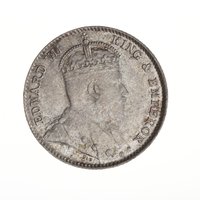
Obverse
Description:
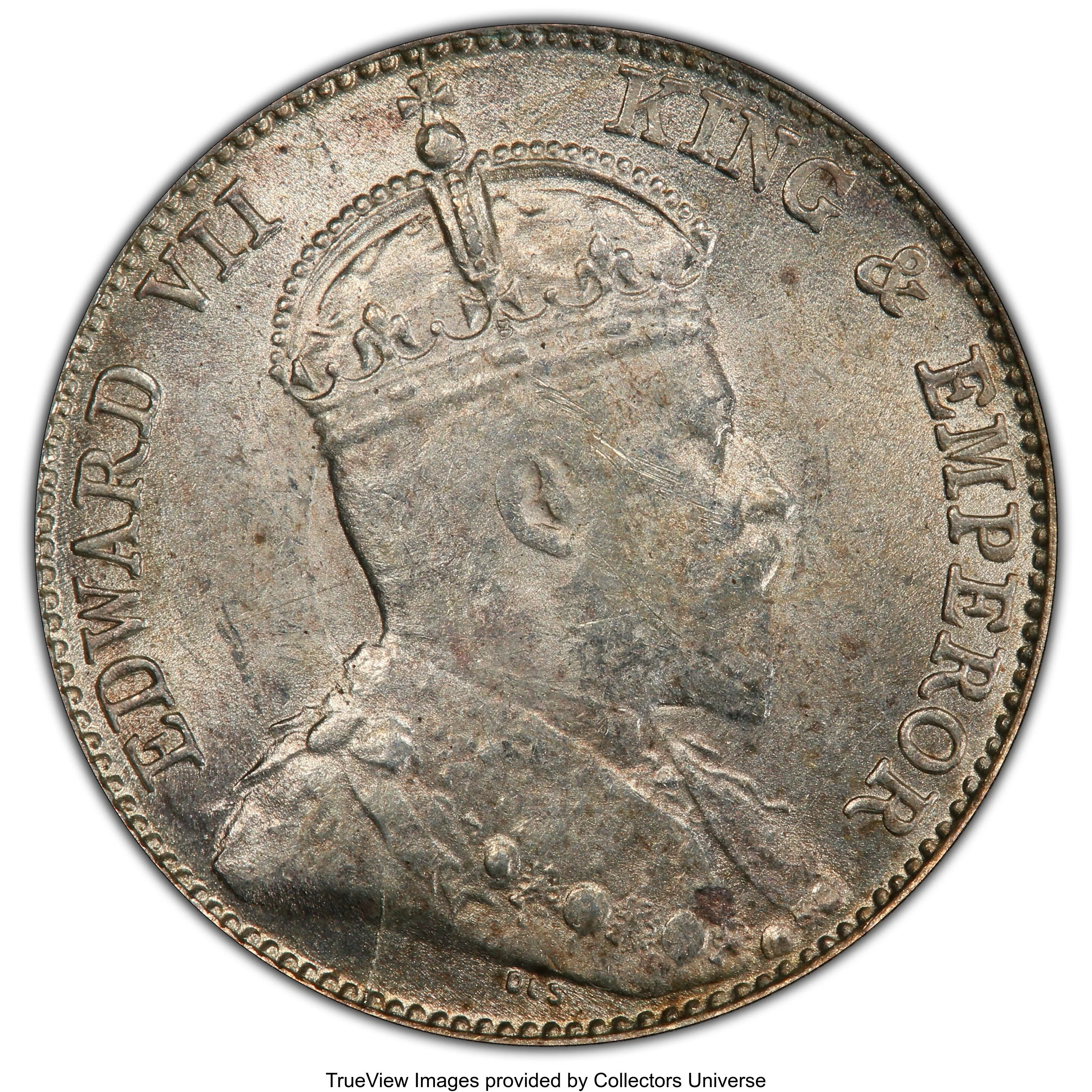
Right-facing crowned bust.
Inscription:
EDWARD VII
KING & EMPEROR
KING & EMPEROR
Translation:
EDWARD VII
KING & EMPEROR
KING & EMPEROR
Script: Latin
Language: English
Engraver: George William de Saulles
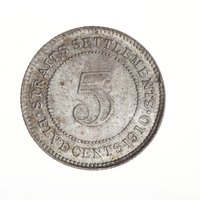
Reverse
Description:
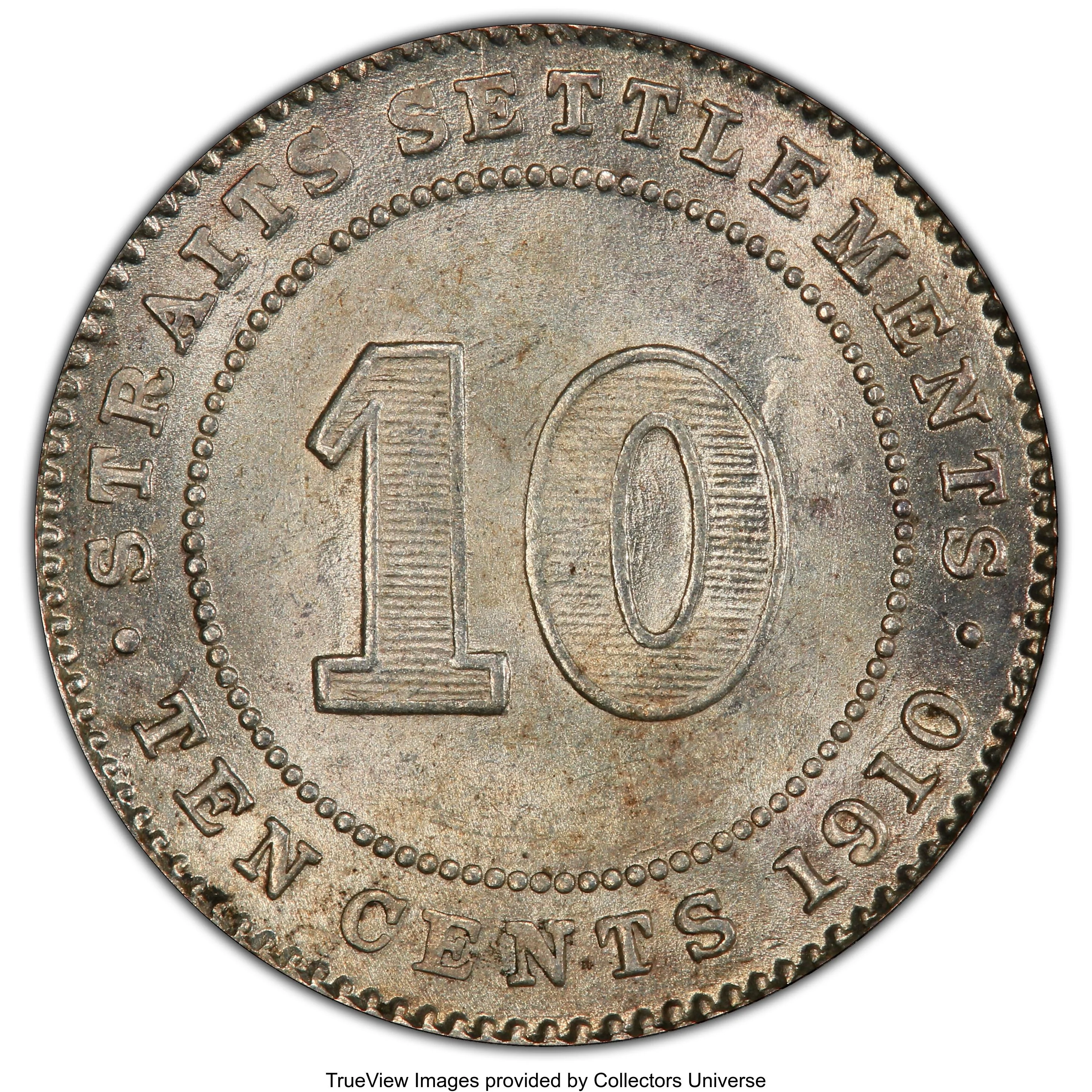
Denomination in beaded circle, date at lower right.
Inscription:
STRAITS SETTLEMENTS
10
·TEN CENTS 1910·
10
·TEN CENTS 1910·
Script: Latin
Edge
Reeded
Mints
| Name | Mark |
|---|---|
| Mumbai / Bombay | B |
Historical background
By 1909, the Straits Settlements (comprising Singapore, Penang, and Malacca) operated under a unique and complex currency system, a legacy of its role as a major regional trading hub. The official currency was the Straits dollar, a silver coin whose value was pegged to sterling at a fixed rate of 2 shillings and 4 pence. However, this sterling peg was not maintained by a central bank but by the Currency Commissioners in Singapore, who ensured convertibility through a substantial reserve fund held in London. This system, established by the Straits Settlements (Coinage) Order in Council of 1903, provided remarkable stability and helped the Straits dollar become the dominant trade currency throughout British Malaya and parts of neighbouring territories.
Despite this official stability, the practical currency environment was diverse and somewhat chaotic. Alongside the government-issued silver dollars and subsidiary coinage, a vast array of private banknotes circulated. These were issued by several major commercial banks, chiefly the Chartered Bank of India, Australia and China, the Hongkong and Shanghai Banking Corporation (HSBC), and the Mercantile Bank of India. These notes were not legal tender but were widely accepted and trusted in commerce, functioning as de facto currency. Their value was derived from the banks' promise to pay the bearer in silver Straits dollars on demand, creating a dual system of public coinage and private paper.
The year 1909 itself fell within a period of quiet confidence in the currency, but underlying tensions were present. The system's health was entirely dependent on the stability of silver, as the Straits dollar was a silver standard currency in a world increasingly moving toward the gold standard. Furthermore, the reliance on private banknotes, while practical, meant the government had limited direct control over the money supply. These factors would eventually lead to significant reform, culminating in the abolition of private banknote issues in 1911 and the establishment of a full government monopoly on currency issuance through the Board of Commissioners of Currency, Malaya, in 1938. Thus, 1909 represents the late, stable phase of a hybrid system soon to be transformed.
Despite this official stability, the practical currency environment was diverse and somewhat chaotic. Alongside the government-issued silver dollars and subsidiary coinage, a vast array of private banknotes circulated. These were issued by several major commercial banks, chiefly the Chartered Bank of India, Australia and China, the Hongkong and Shanghai Banking Corporation (HSBC), and the Mercantile Bank of India. These notes were not legal tender but were widely accepted and trusted in commerce, functioning as de facto currency. Their value was derived from the banks' promise to pay the bearer in silver Straits dollars on demand, creating a dual system of public coinage and private paper.
The year 1909 itself fell within a period of quiet confidence in the currency, but underlying tensions were present. The system's health was entirely dependent on the stability of silver, as the Straits dollar was a silver standard currency in a world increasingly moving toward the gold standard. Furthermore, the reliance on private banknotes, while practical, meant the government had limited direct control over the money supply. These factors would eventually lead to significant reform, culminating in the abolition of private banknote issues in 1911 and the establishment of a full government monopoly on currency issuance through the Board of Commissioners of Currency, Malaya, in 1938. Thus, 1909 represents the late, stable phase of a hybrid system soon to be transformed.
🌱 Common