

5 cents – Straits Settlements
Add to wishlist
Malaysia
Context
Year: 1910
Country: Malaysia
Issuer: Straits Settlements
Ruler: Edward VII
Currency:
(1845—1939)
Demonetized: Yes
Total mintage: 13,012,111
Material
References
KM: #
Numista: #12771
Value
Bullion value: $2.03
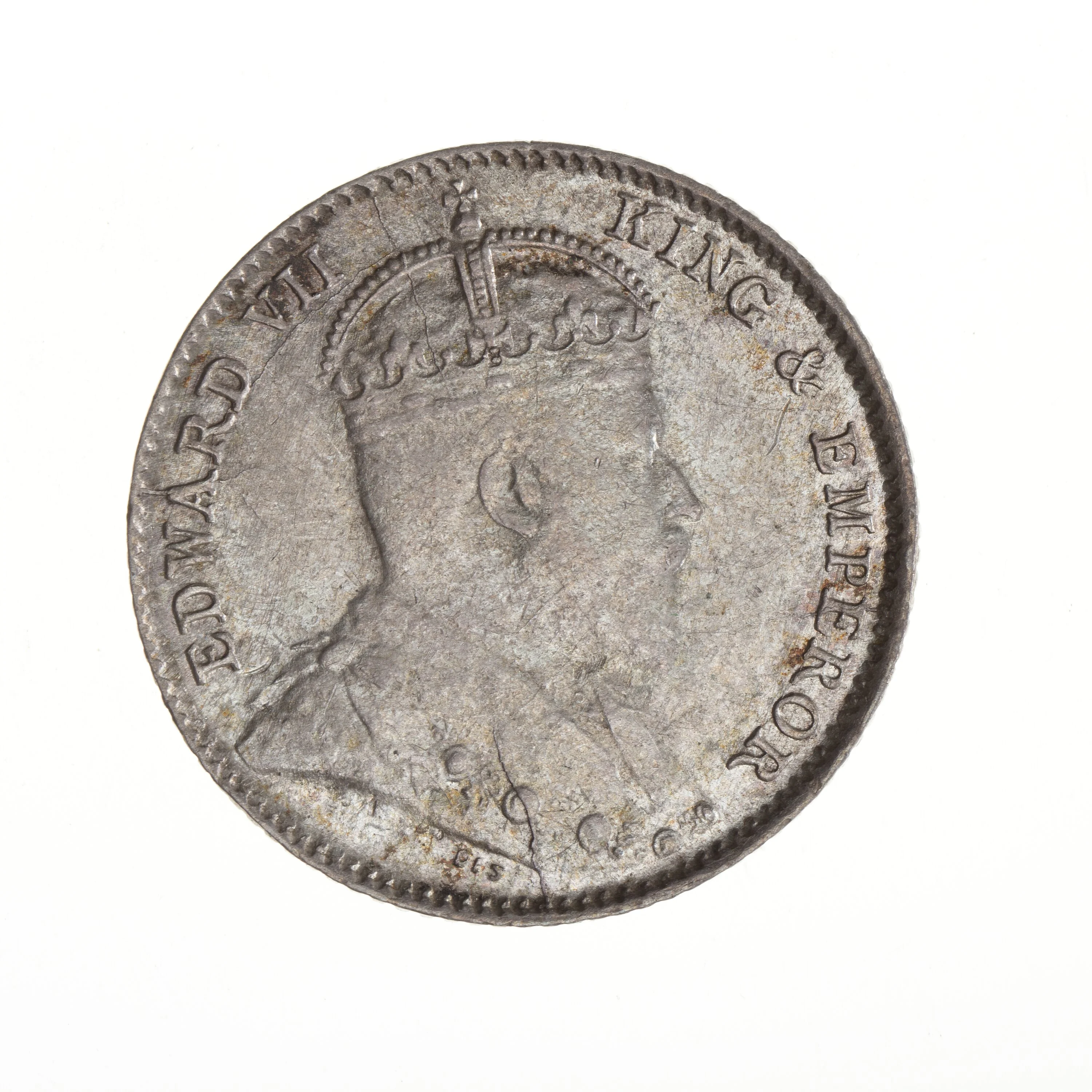
Obverse
Description:
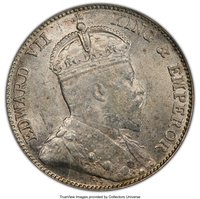
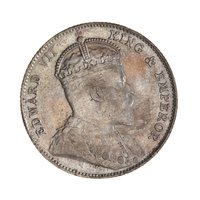
Right-facing crowned bust.
Inscription:
EDWARD VII KING & EMPEROR
Translation:
EDWARD VII KING & EMPEROR
Script: Latin
Engraver: George William de Saulles
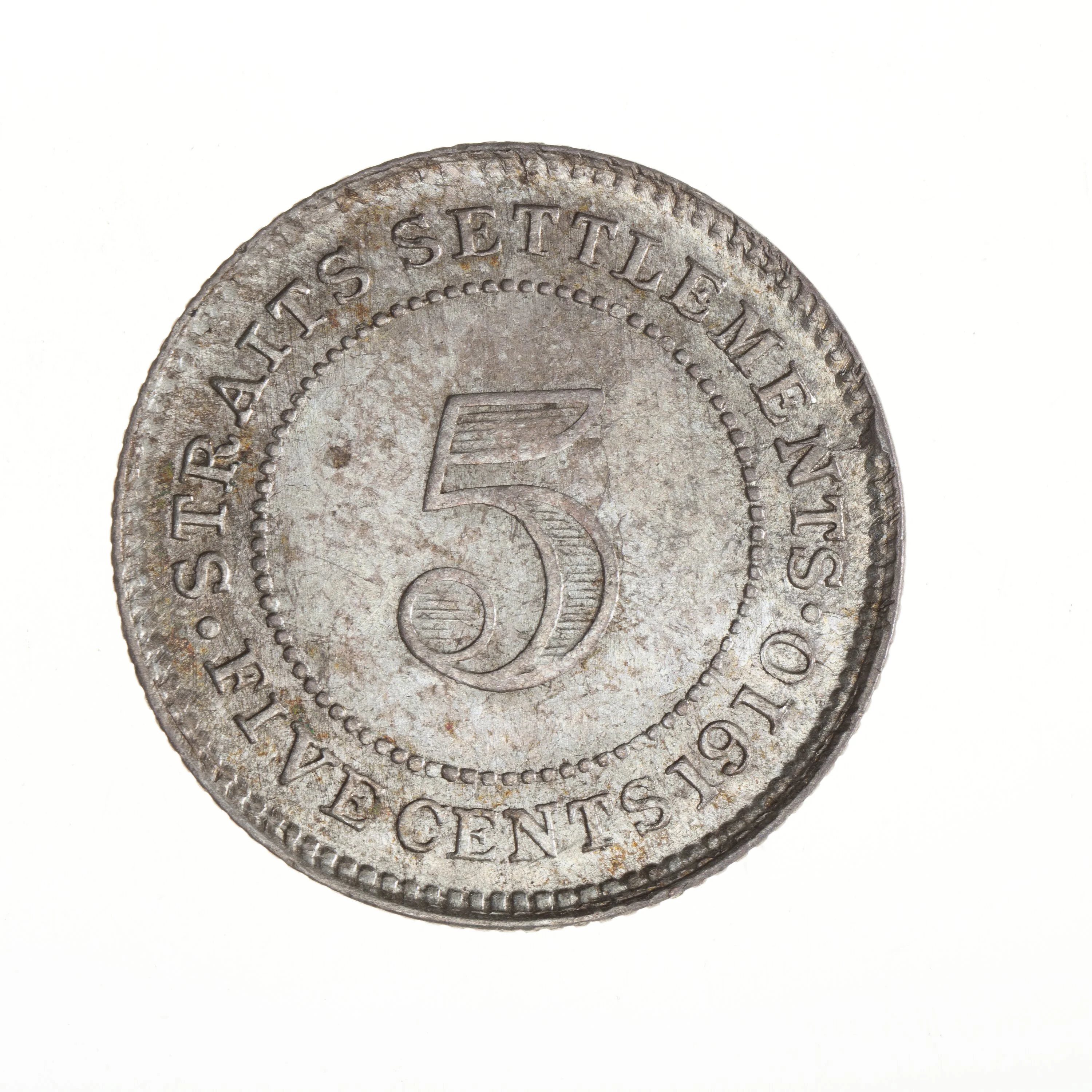
Reverse
Description:
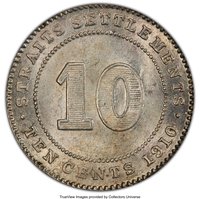
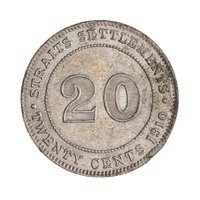
Denomination in beaded circle, date at lower right.
Inscription:
STRAITS SETTLEMENTS
5
·FIVE CENTS 1910·
5
·FIVE CENTS 1910·
Script: Latin
Edge
Reeded
Mints
| Name | Mark |
|---|---|
| Mumbai / Bombay | B |
Historical background
By 1910, the currency situation in the Straits Settlements (comprising Singapore, Penang, and Malacca) was one of relative stability and consolidation under British colonial administration. The cornerstone of the system was the Straits dollar, a silver-based currency introduced in 1903 to replace the earlier fragmented system of various silver Mexican and Spanish dollars, as well as Indian rupees. This move was formalized by the Straits Settlements (Currency) Order in Council of 1903, which established a Board of Commissioners of Currency, creating a unified and government-managed currency for the colony.
The Straits dollar was on a sterling exchange standard, with its value effectively pegged to the British pound at a fixed rate of 2 shillings and 4 pence. While the coinage itself was silver, the guarantee of its sterling value was backed by the colony's reserves held in London, primarily in British government securities. This link to sterling facilitated trade and financial transactions with the British Empire, which was crucial for the Settlements' role as a major entrepôt. Notably, the currency was also legal tender in the neighbouring Federated Malay States, further cementing its economic dominance in the region.
Despite this formal stability, the system faced an underlying vulnerability common to silver-based currencies: fluctuations in the global price of silver. The fixed sterling exchange rate meant that the Currency Commissioners had to actively manage the coinage and note issue to maintain parity, buying or selling sterling drafts as required. This period, therefore, represented a managed transitionary phase, where the physical currency was silver but its value was governed by a gold-exchange standard via sterling. This hybrid system would remain in place until the dramatic fall in silver prices after World War I ultimately forced the colony onto a pure gold-exchange standard in 1920.
The Straits dollar was on a sterling exchange standard, with its value effectively pegged to the British pound at a fixed rate of 2 shillings and 4 pence. While the coinage itself was silver, the guarantee of its sterling value was backed by the colony's reserves held in London, primarily in British government securities. This link to sterling facilitated trade and financial transactions with the British Empire, which was crucial for the Settlements' role as a major entrepôt. Notably, the currency was also legal tender in the neighbouring Federated Malay States, further cementing its economic dominance in the region.
Despite this formal stability, the system faced an underlying vulnerability common to silver-based currencies: fluctuations in the global price of silver. The fixed sterling exchange rate meant that the Currency Commissioners had to actively manage the coinage and note issue to maintain parity, buying or selling sterling drafts as required. This period, therefore, represented a managed transitionary phase, where the physical currency was silver but its value was governed by a gold-exchange standard via sterling. This hybrid system would remain in place until the dramatic fall in silver prices after World War I ultimately forced the colony onto a pure gold-exchange standard in 1920.
🌱 Common