

50 pennia – Finland
Add to wishlist
Finland
Context
Material
Diameter: 18.5 mm
Weight: 2.55 g
Thickness: 1.25 mm
Shape: Round
Composition: Copper-nickel
Technique: Milled
Alignment: Medal alignment
flip
References
KM: #
Numista: #7144
Obverse
Description:
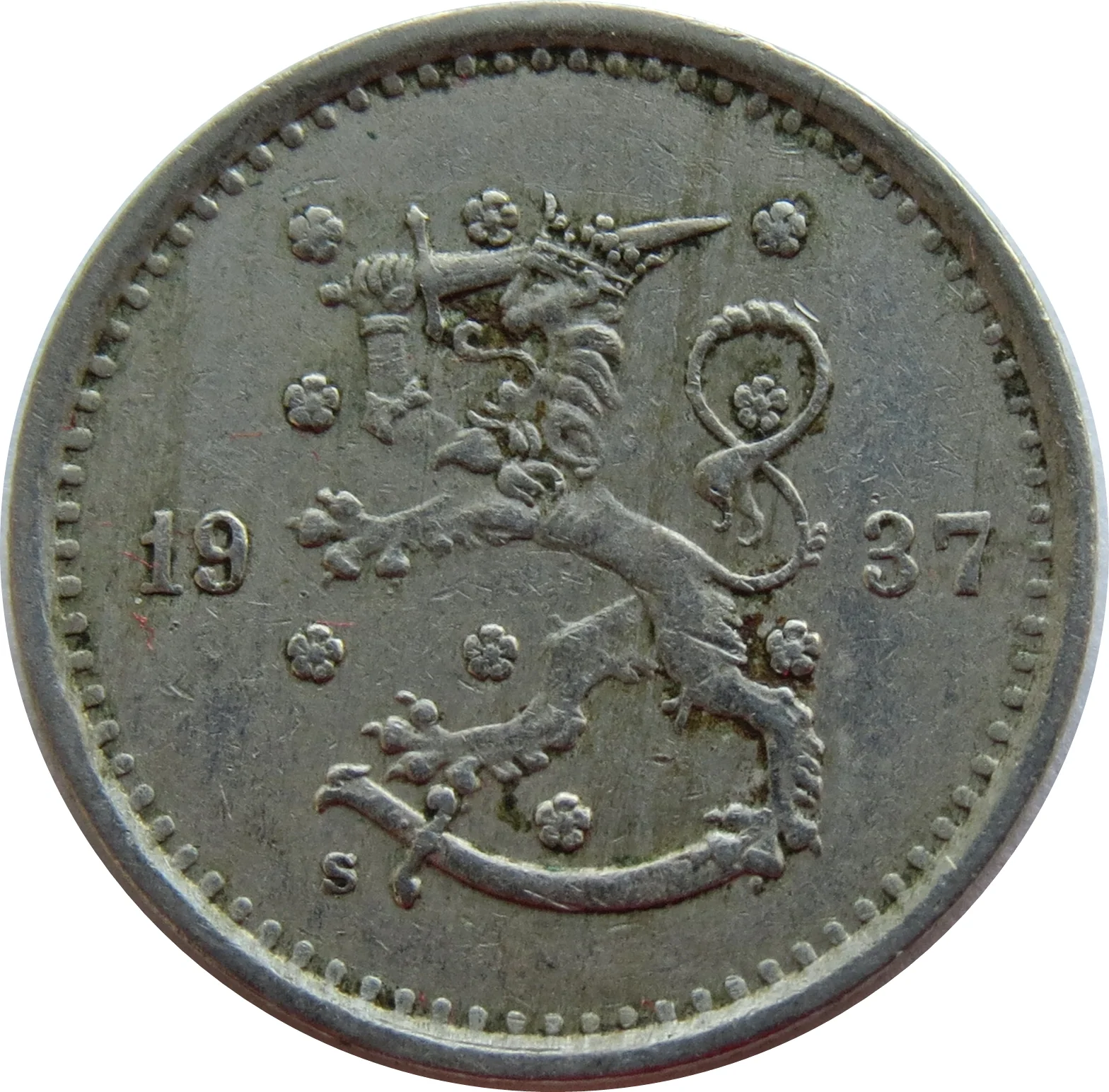
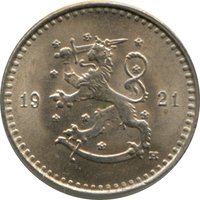
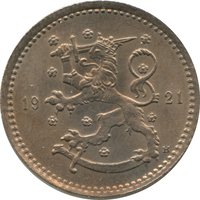
Finnish coat of arms: a rampant lion with an armored hand wielding a sword, trampling a sabre. Date flanking the shield.
Inscription:
1937
S
S
Script: Latin
Engraver: Isak Gustaf Sundell
Reverse
Description:
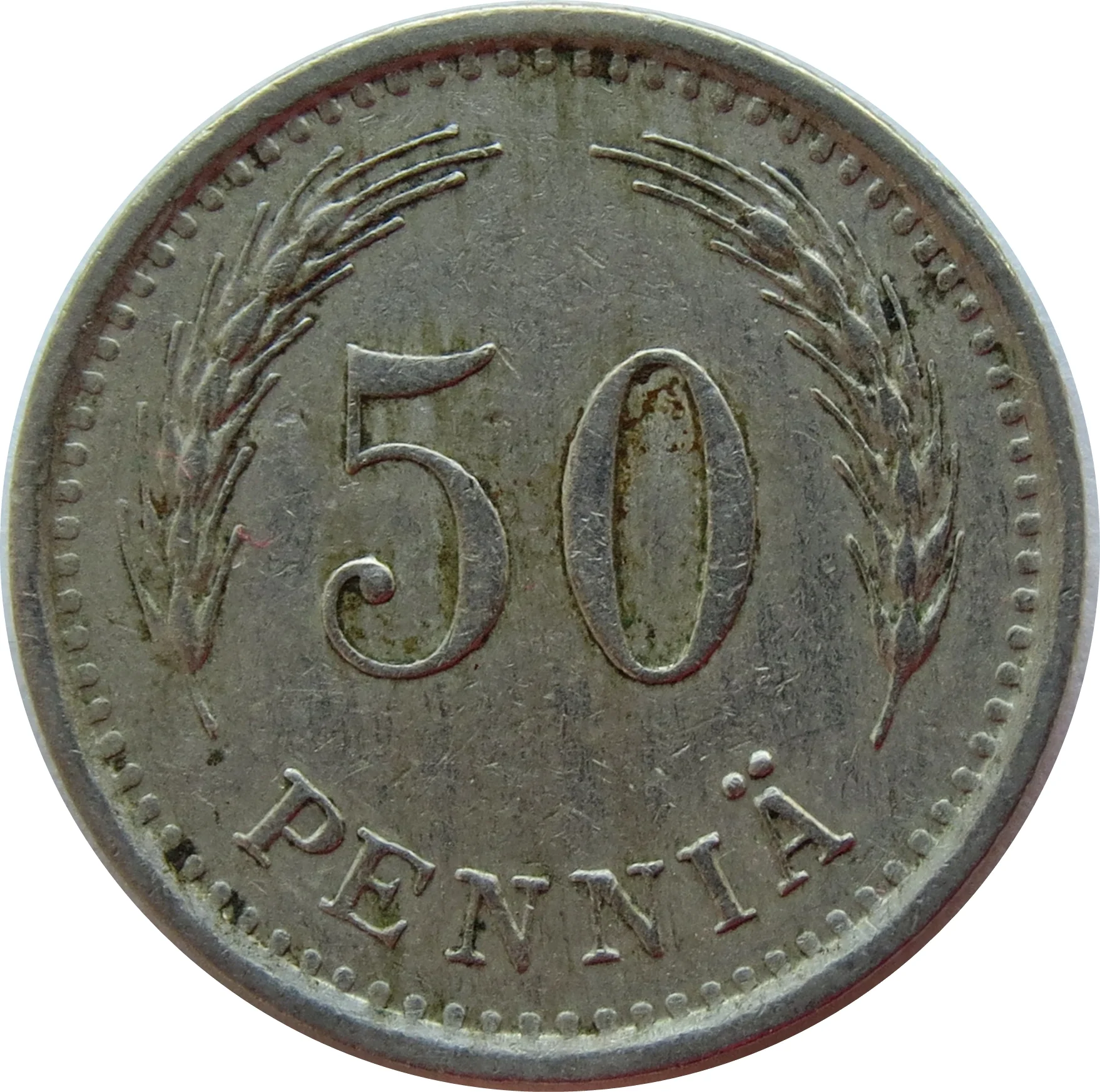
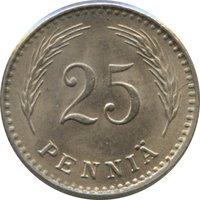
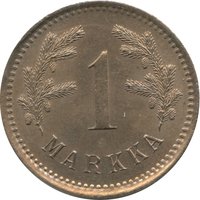
Denomination between grain sprigs.
Inscription:
50
PENNIÄ
PENNIÄ
Translation:
50 Penniä
Script: Latin
Language: Finnish
Engraver: Isak Gustaf Sundell
Edge
Reeded
Categories
| Object> Cold weapons |
| Animal> Feline |
| Plants> Flower |
| Symbols> Coat of Arms |
Mints
| Name | Mark |
|---|---|
| Mint of Finland | — |
| Heaton and Sons / The Mint Birmingham | H |
Mintings
| Year | Mint Mark | Mintage | Quality | Collection |
|---|---|---|---|---|
| 1921 | H | 10,072,000 | ||
| 1923 | — | 6,000,000 | ||
| 1929 | — | 984,000 | ||
| 1934 | — | 612,000 | ||
| 1935 | — | 610,000 | ||
| 1936 | — | 1,520,000 | ||
| 1937 | — | 2,350,000 | ||
| 1938 | — | 2,330,000 | ||
| 1939 | — | 1,280,000 | ||
| 1940 | — | 3,152,000 |
Historical background
In 1921, Finland was navigating the complex aftermath of its independence (1917) and a bitter civil war (1918). The currency situation was defined by the continued circulation of the Finnish Markka, which was still pegged to the gold standard but in a state of severe instability. During the First World War, Finland, as part of the Russian Empire, had abandoned the gold standard, leading to significant inflation and the printing of money to cover state expenses. This legacy of war finance left the new nation with a depreciated currency and a pressing need for monetary reform to establish economic sovereignty and stability.
The immediate post-independence period saw a lack of confidence in the markka, exacerbated by a trade deficit and reliance on foreign loans, particularly from Germany. However, a pivotal shift occurred in 1920-1921 with the passing of the Temporary Bank Act of 1920. This law granted the newly established Bank of Finland greater independence and a clear mandate to stabilize the currency. Under its first governor, Otto Stenroth, the bank pursued a deliberate policy of deflation throughout 1921-1922, tightening credit and accumulating gold and foreign exchange reserves to restore the markka's pre-war gold parity.
Therefore, the currency situation in 1921 was one of transition and deliberate hardship. The markka was not yet stable, but the foundational legal and policy framework for its stabilization was actively being implemented. The deflationary policy, while successful in eventually returning the markka to the gold standard in 1925, came at a significant short-term social cost, including high unemployment and economic contraction, as Finland rigorously disciplined its finances to build a credible and independent monetary system.
The immediate post-independence period saw a lack of confidence in the markka, exacerbated by a trade deficit and reliance on foreign loans, particularly from Germany. However, a pivotal shift occurred in 1920-1921 with the passing of the Temporary Bank Act of 1920. This law granted the newly established Bank of Finland greater independence and a clear mandate to stabilize the currency. Under its first governor, Otto Stenroth, the bank pursued a deliberate policy of deflation throughout 1921-1922, tightening credit and accumulating gold and foreign exchange reserves to restore the markka's pre-war gold parity.
Therefore, the currency situation in 1921 was one of transition and deliberate hardship. The markka was not yet stable, but the foundational legal and policy framework for its stabilization was actively being implemented. The deflationary policy, while successful in eventually returning the markka to the gold standard in 1925, came at a significant short-term social cost, including high unemployment and economic contraction, as Finland rigorously disciplined its finances to build a credible and independent monetary system.
🌱 Very Common