

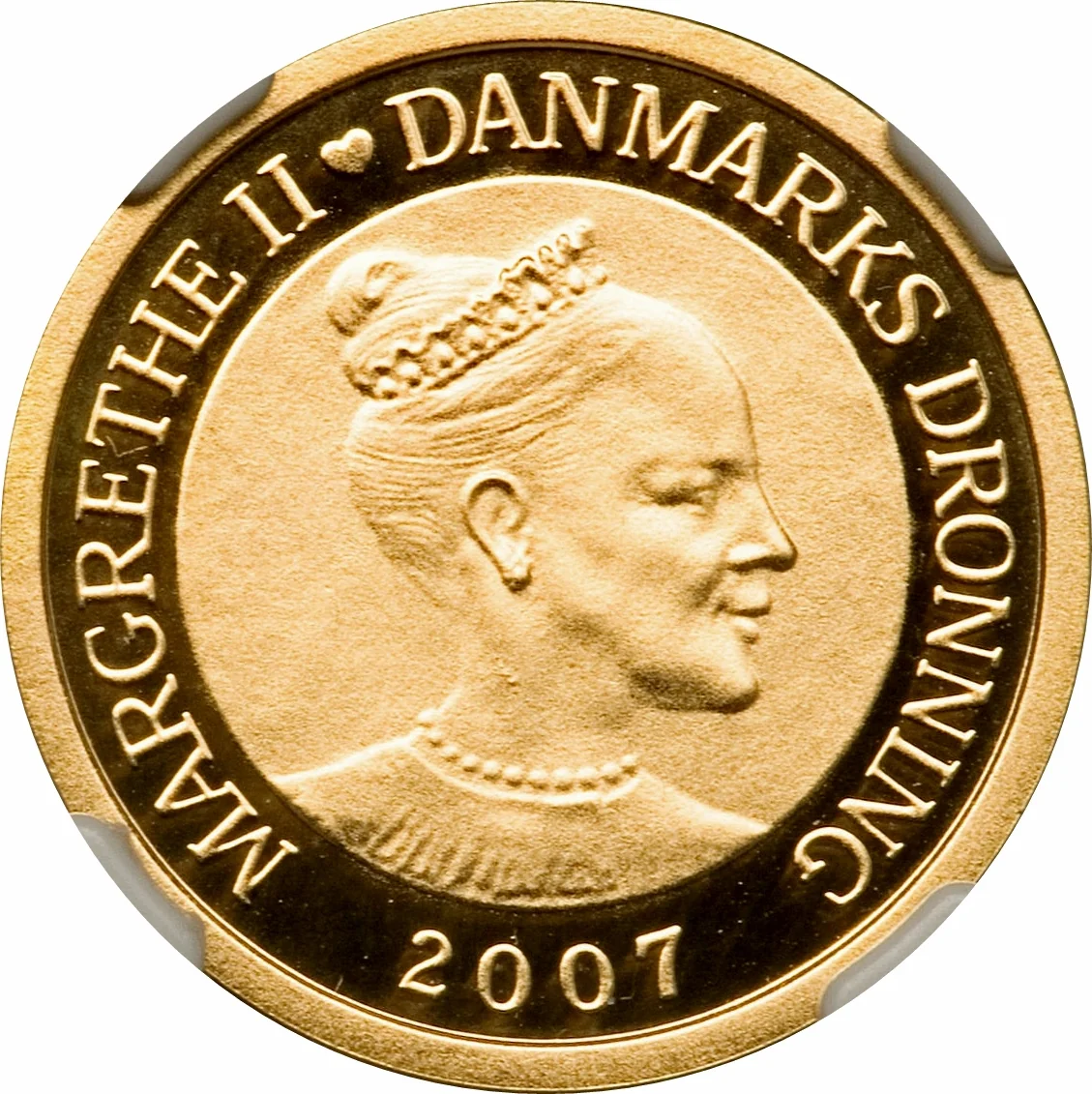
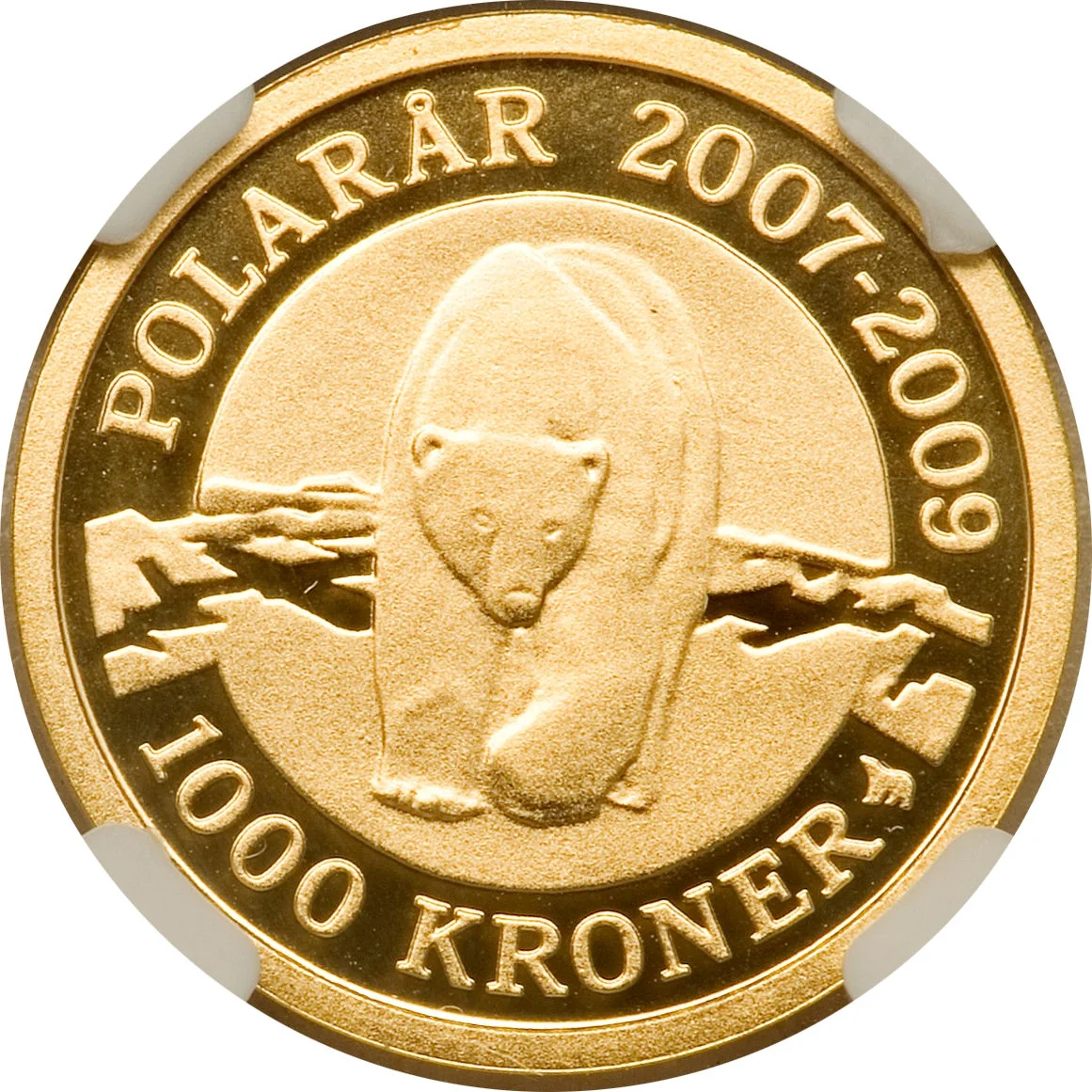
1000 kroner – Denmark
Add to wishlist
Denmark
Context
Year: 2007
Issuer: Denmark
Issuing organization: National Bank of Denmark
Ruler: Margrethe II
Currency:
(since 1873)
Total mintage: 6,000
Material
References
KM: #
Numista: #71437
Value
Exchange value: 1000 DKK
Bullion value: $1191.07
Inflation-adjusted value: 1390.97 DKK
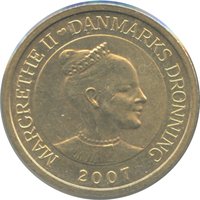
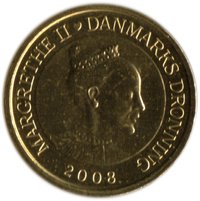
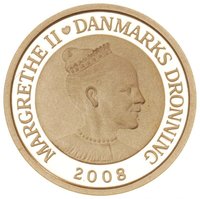
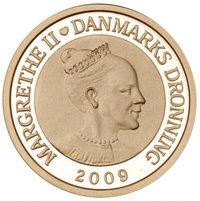
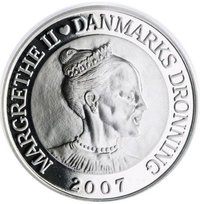
Obverse
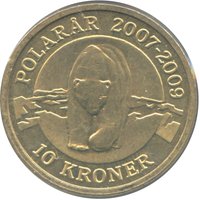
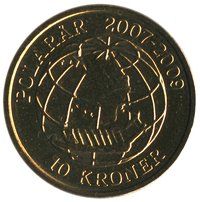
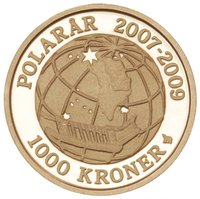
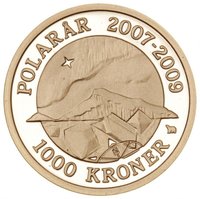
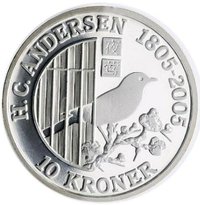
Reverse
Edge
Plain
Mints
| Name | Mark |
|---|---|
| Royal Danish Mint | — |
Mintings
| Year | Mint Mark | Mintage | Quality | Collection |
|---|---|---|---|---|
| 2007 | — | 6,000 | Proof |
Historical background
In 2007, Denmark's currency situation was defined by its long-standing and stable membership of the European Exchange Rate Mechanism II (ERM II). Since 1999, the Danish krone (DKK) had been pegged to the euro with a central rate of 7.46038 krone per euro, allowed to fluctuate within a narrow band of ±2.25%. This policy was a political compromise following the 2000 referendum where Danes rejected adopting the euro, choosing instead to maintain their national currency while tightly aligning its value to the single currency. The primary objective was to ensure monetary stability, low inflation, and predictability for trade and investment, given that the European Union was Denmark's dominant trading partner.
The Danish central bank, Danmarks Nationalbank, actively managed this peg through interest rate policy and currency interventions. Its key interest rates were set primarily to maintain the krone's parity with the euro, often shadowing the interest rate decisions of the European Central Bank (ECB) rather than focusing solely on domestic economic conditions. This system functioned smoothly in 2007, with the krone trading stably near its central rate. Denmark enjoyed solid economic growth, low unemployment, and a housing market that, while showing signs of peaking, had not yet entered the crisis seen in other countries.
However, by late 2007, the first tremors of the impending global financial crisis began to emerge. While not yet causing immediate strain on the currency peg, the international liquidity crunch and rising risk aversion started to create subtle pressures in financial markets. Denmark's economy, with its large banking sector and significant household debt, was becoming vulnerable. The stability of the krone in 2007 thus represented the calm before the storm, with the well-established peg providing a shield of stability that would be severely tested in the following year as the crisis intensified and capital flows became volatile.
The Danish central bank, Danmarks Nationalbank, actively managed this peg through interest rate policy and currency interventions. Its key interest rates were set primarily to maintain the krone's parity with the euro, often shadowing the interest rate decisions of the European Central Bank (ECB) rather than focusing solely on domestic economic conditions. This system functioned smoothly in 2007, with the krone trading stably near its central rate. Denmark enjoyed solid economic growth, low unemployment, and a housing market that, while showing signs of peaking, had not yet entered the crisis seen in other countries.
However, by late 2007, the first tremors of the impending global financial crisis began to emerge. While not yet causing immediate strain on the currency peg, the international liquidity crunch and rising risk aversion started to create subtle pressures in financial markets. Denmark's economy, with its large banking sector and significant household debt, was becoming vulnerable. The stability of the krone in 2007 thus represented the calm before the storm, with the well-established peg providing a shield of stability that would be severely tested in the following year as the crisis intensified and capital flows became volatile.
Series: Polar Year
💎 Extremely Rare