

5 perpera – Montenegro
Add to wishlist
Montenegro
Context
Year: 1909
Issuer: Montenegro
Ruler: Nicholas I
Currency:
(1906—1918)
Demonetized: Yes
Total mintage: 60,000
Material
References
KM: #
Numista: #71326
Value
Bullion value: $52.51
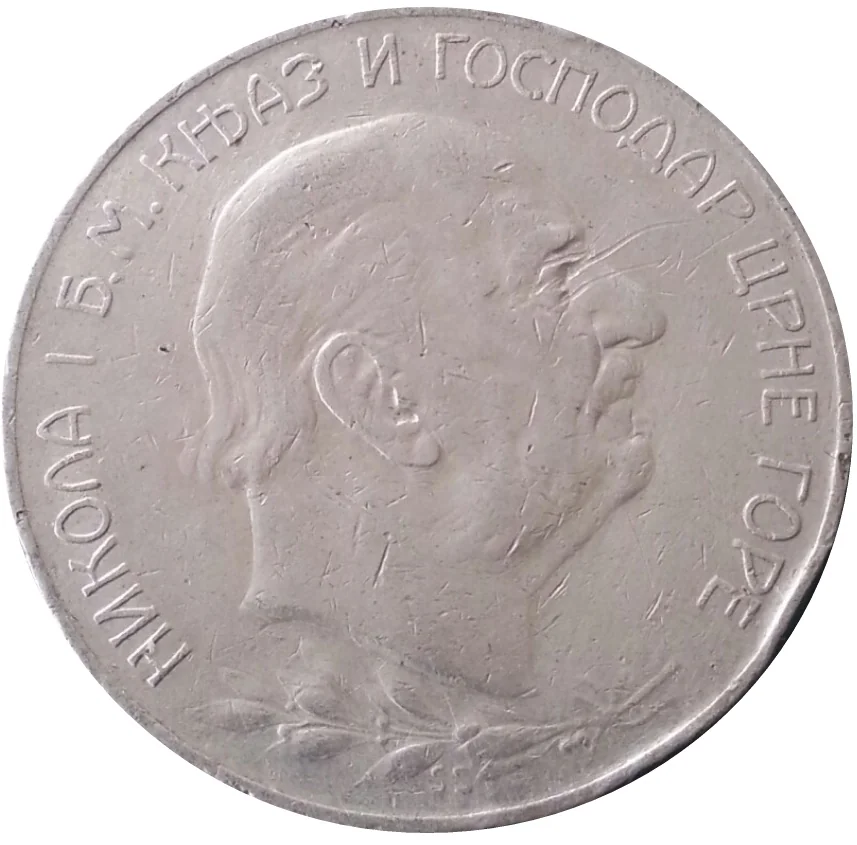
Obverse
Description:
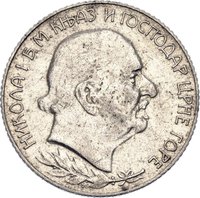
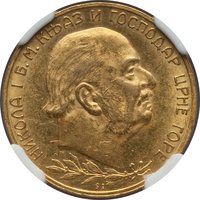
Bare head left, legend around, dates below.
Inscription:
НИКОЛА I Б. М. КЊАЗ И ГОСПОДАР ЦРНЕ ГОРЕ SS
Translation:
NICHOLAS I BY THE GRACE OF GOD PRINCE AND SOVEREIGN OF MONTENEGRO SS
Engraver: Stephan Schwartz
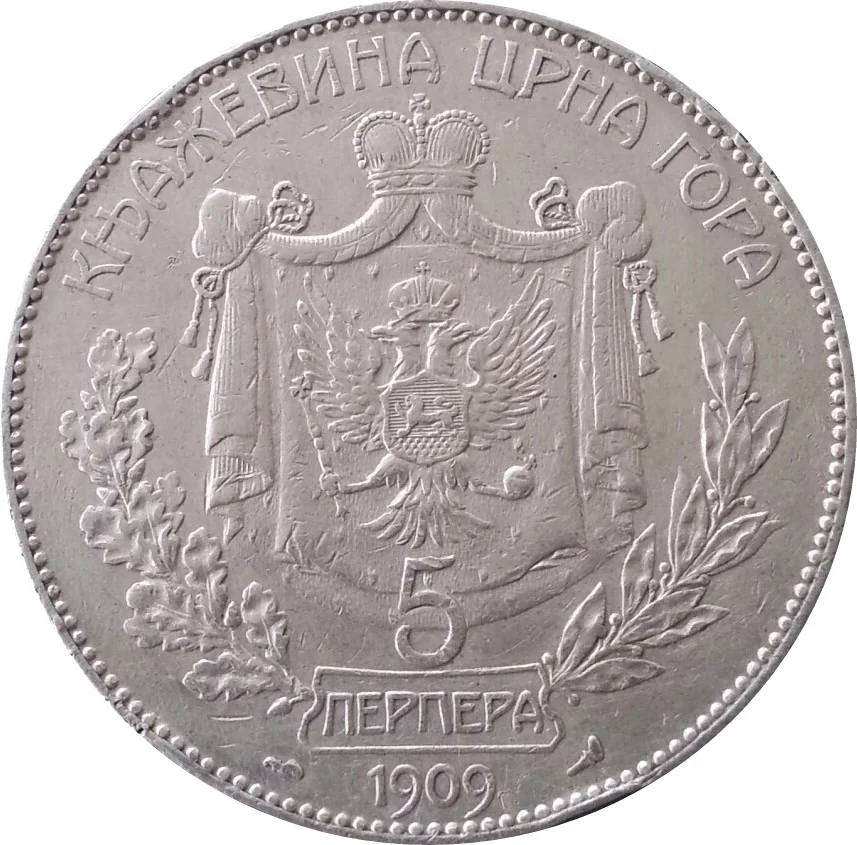
Reverse
Description:
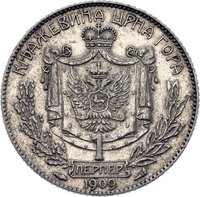
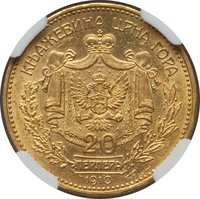
Arms with crown and sprigs above date and value.
Inscription:
КЊАЖЕВИНА ЦРНА ГОРА
5
ПЕРПЕРA
1909
5
ПЕРПЕРA
1909
Translation:
PRINCIPALITY OF MONTENEGRO
5
PERPERA
1909
5
PERPERA
1909
Script: Cyrillic
Language: Serbian
Engraver: Stephan Schwartz
Edge
Reeded
Categories
| Symbol> Double-headed eagle |
| Object> Globus cruciger |
| Animal> Bird |
| Person> Monarch |
| Mustache/Beard |
| Symbol> Crown |
| Symbols> Coat of Arms |
Mints
| Name | Mark |
|---|---|
| Monnaie de Paris | — |
Mintings
| Year | Mint Mark | Mintage | Quality | Collection |
|---|---|---|---|---|
| 1909 | — | 60,000 |
Historical background
In 1909, Montenegro existed as an independent principality (soon to be kingdom, in 1910) under the rule of Prince Nikola I Petrović-Njegoš. Its currency situation was a direct reflection of its complex geopolitical and economic position, caught between the spheres of influence of the Austro-Hungarian and Ottoman Empires, yet asserting its own sovereignty. The state lacked a unique, nationally minted currency. Instead, its monetary system was characterized by the concurrent circulation of several foreign currencies, a common condition in the Balkans at the time.
The primary currency in everyday use was the Austro-Hungarian krone (or crown), a testament to the powerful economic and trade links Montenegro maintained with the Dual Monarchy. Alongside this, the Ottoman lira (gold) and its subdivisions, the kuruş and para, remained in circulation, particularly in areas with historical ties to the Ottoman monetary zone. Furthermore, other foreign coins, including French gold Napoleons, Russian rubles, and Italian lire, could also be found, used in commerce or held as stores of value. This multiplicity created a complex environment for trade and state finance.
The Montenegrin government did not passively accept this situation. In 1909, it was actively pursuing monetary reform to modernize its economy and symbolize its full statehood. This effort culminated the following year, in 1910, with the introduction of the Montenegrin perper, a decimal currency divided into 100 para. The perper was pegged to the French franc, aligning Montenegro with the Latin Monetary Union and signaling a deliberate political and economic reorientation away from the Ottoman and Austro-Hungarian systems toward Western Europe. Thus, the currency situation of 1909 represents the final year of a heterogeneous monetary past, immediately preceding a significant, sovereignty-asserting reform.
The primary currency in everyday use was the Austro-Hungarian krone (or crown), a testament to the powerful economic and trade links Montenegro maintained with the Dual Monarchy. Alongside this, the Ottoman lira (gold) and its subdivisions, the kuruş and para, remained in circulation, particularly in areas with historical ties to the Ottoman monetary zone. Furthermore, other foreign coins, including French gold Napoleons, Russian rubles, and Italian lire, could also be found, used in commerce or held as stores of value. This multiplicity created a complex environment for trade and state finance.
The Montenegrin government did not passively accept this situation. In 1909, it was actively pursuing monetary reform to modernize its economy and symbolize its full statehood. This effort culminated the following year, in 1910, with the introduction of the Montenegrin perper, a decimal currency divided into 100 para. The perper was pegged to the French franc, aligning Montenegro with the Latin Monetary Union and signaling a deliberate political and economic reorientation away from the Ottoman and Austro-Hungarian systems toward Western Europe. Thus, the currency situation of 1909 represents the final year of a heterogeneous monetary past, immediately preceding a significant, sovereignty-asserting reform.
💎 Very Rare