

1 teston – Papal States
Add to wishlist
Vatican City
Context
Years: 1802–1803
Country: Vatican City
Issuer: Papal States
Ruler: Pius VII
Currency:
(1534—1835)
Demonetized: Yes
Total mintage: 8,100
Material
Diameter: 30 mm
Weight: 7.93 g
Silver Weight:: 7.27 g
Shape: Round
Composition: 91.7% Silver
Standard: Silver quarter ounce
Magnetic: No
Technique: Milled
References
KM: #
Numista: #112384
Value
Bullion value: $18.22
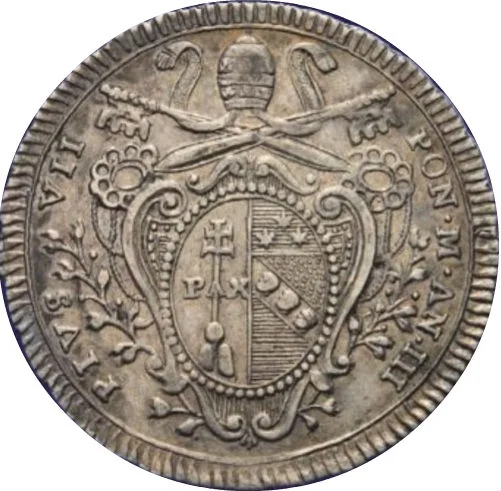
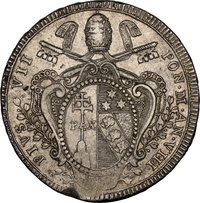
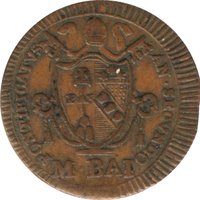
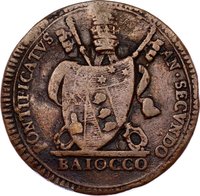
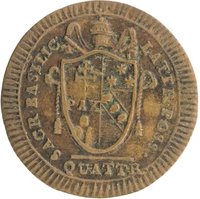
Obverse
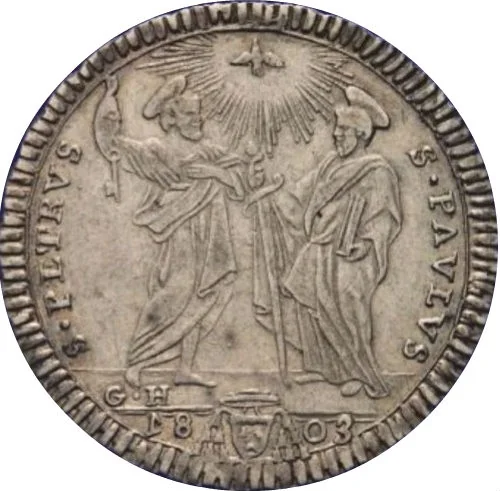
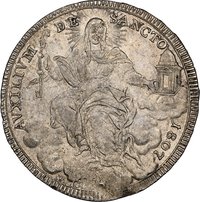
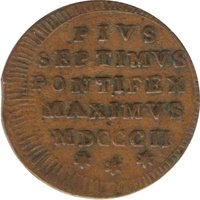
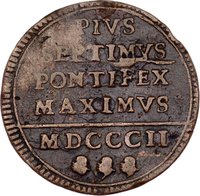
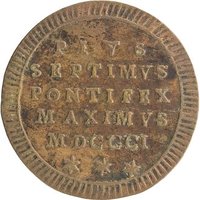
Reverse
Description:
Two figures beneath a radiant dove.
Inscription:
S·PETRVS S·PAVLVS
G·H
18 03
G·H
18 03
Script: Latin
Edge
Mintings
| Year | Mint Mark | Mintage | Quality | Collection |
|---|---|---|---|---|
| 1802 | — | — | ||
| 1803 | — | 8,100 |
Historical background
In 1802, the Papal States found themselves in a precarious monetary situation, caught between the legacy of ancient regimes and the disruptive forces of the Napoleonic era. The territory's currency system was a complex and fragmented mosaic, with different coinages circulating in various regions. The primary unit was the Papal Scudo, divided into 100 Baiocchi, but in practice, coins from previous pontificates, local issues from cities like Bologna, and even foreign currencies (particularly French and Austrian) circulated with fluctuating and unreliable exchange rates. This lack of uniformity hindered trade and created widespread confusion, reflecting the broader administrative disunity within the States.
This instability was directly exacerbated by the political and military turmoil of the preceding years. Following the French invasion of 1798-99, the Roman Republic had been proclaimed, severing the Papal monetary tradition. Although the French were expelled and Pope Pius VII restored in 1800, the treasury was severely depleted from war indemnities, looting, and the loss of revenue. The sudden reintroduction of older papal coinage alongside the residual revolutionary and foreign money created a chaotic bimetallic system where the value of silver to gold was unstable, leading to frequent arbitrage and hoarding, which further strained the economy.
Ultimately, the situation in 1802 was one of transitional fragility. The papal government under Pius VII sought to reassert monetary sovereignty and stabilize the economy, but its capacity was limited. The lingering French influence under the Consulate of Napoleon Bonaparte, who was consolidating power across Italy, cast a long shadow. Within a few years, this pressure would culminate in the French occupation of Rome in 1808 and the outright annexation of the Papal States into the French Empire, which would forcibly replace the entire monetary system with the French Franc, ending this period of papal currency uncertainty through imposition.
This instability was directly exacerbated by the political and military turmoil of the preceding years. Following the French invasion of 1798-99, the Roman Republic had been proclaimed, severing the Papal monetary tradition. Although the French were expelled and Pope Pius VII restored in 1800, the treasury was severely depleted from war indemnities, looting, and the loss of revenue. The sudden reintroduction of older papal coinage alongside the residual revolutionary and foreign money created a chaotic bimetallic system where the value of silver to gold was unstable, leading to frequent arbitrage and hoarding, which further strained the economy.
Ultimately, the situation in 1802 was one of transitional fragility. The papal government under Pius VII sought to reassert monetary sovereignty and stabilize the economy, but its capacity was limited. The lingering French influence under the Consulate of Napoleon Bonaparte, who was consolidating power across Italy, cast a long shadow. Within a few years, this pressure would culminate in the French occupation of Rome in 1808 and the outright annexation of the Papal States into the French Empire, which would forcibly replace the entire monetary system with the French Franc, ending this period of papal currency uncertainty through imposition.
✨ Legendary