

50 Pfennigs – German Democratic Republic
Germany
Context
Years: 1949–1950
Country: Germany 
Issuer: German Democratic Republic 
Period:
(1949—1990)
Currency:
(1948—1990)
Demonetization: 1 August 1958
Total mintage: 67,703,405
Material
Diameter: 20 mm
Weight: 3.38 g
Thickness: 1.62 mm
Shape: Round
Composition: Aluminium bronze
Magnetic: No
Technique: Milled
Alignment: Medal alignment
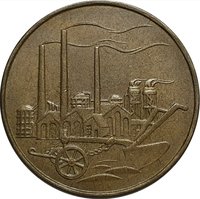
flip
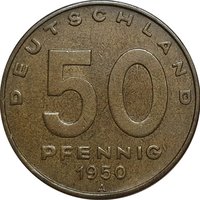
References
KM: #Click to copy to clipboard4
Numista: #7106
Value
Exchange value: 0.50 DDM
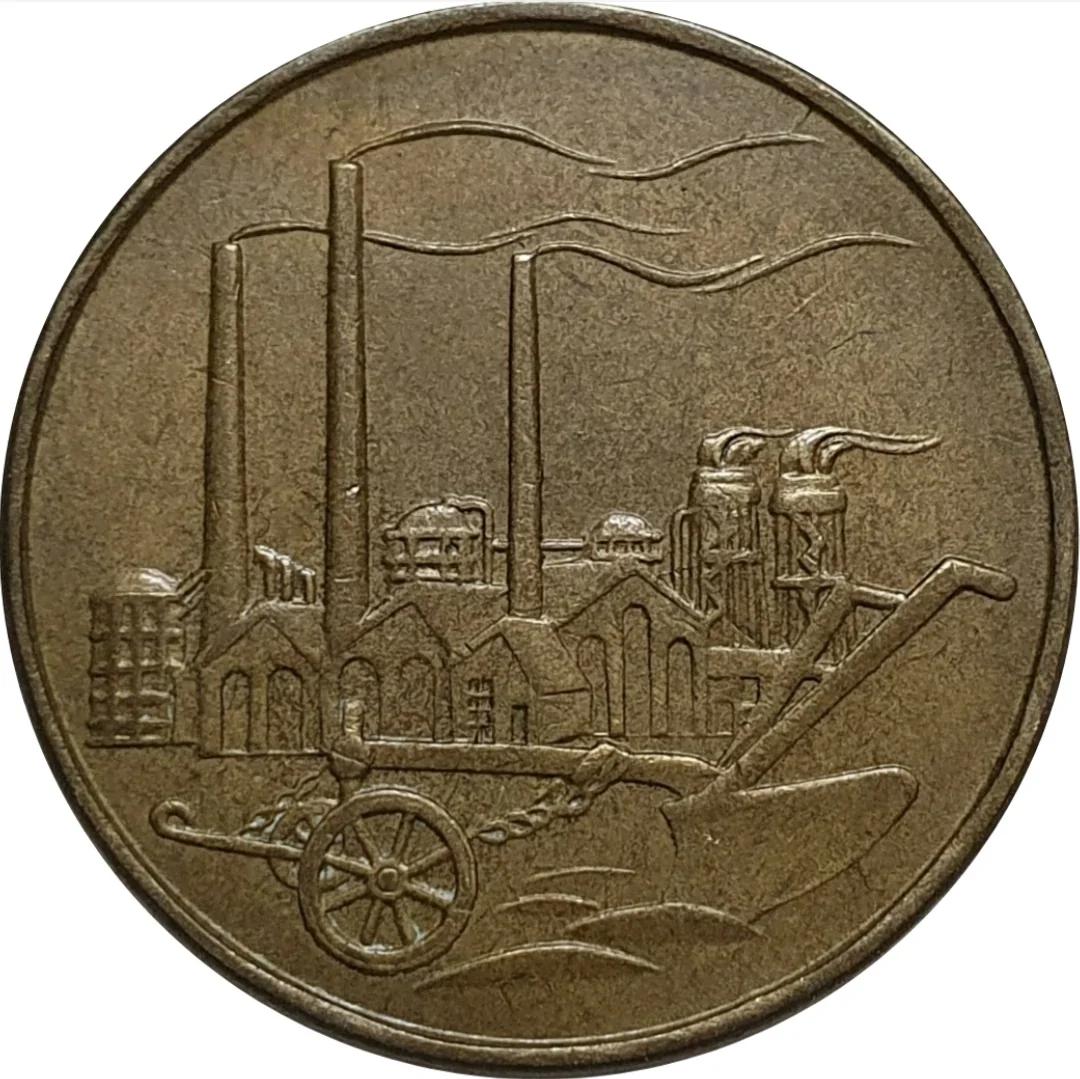
Obverse
Description:
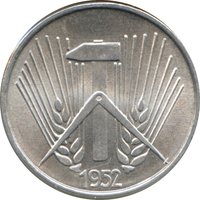
Factory plowcart
Engraver: Franz Paul Krischker
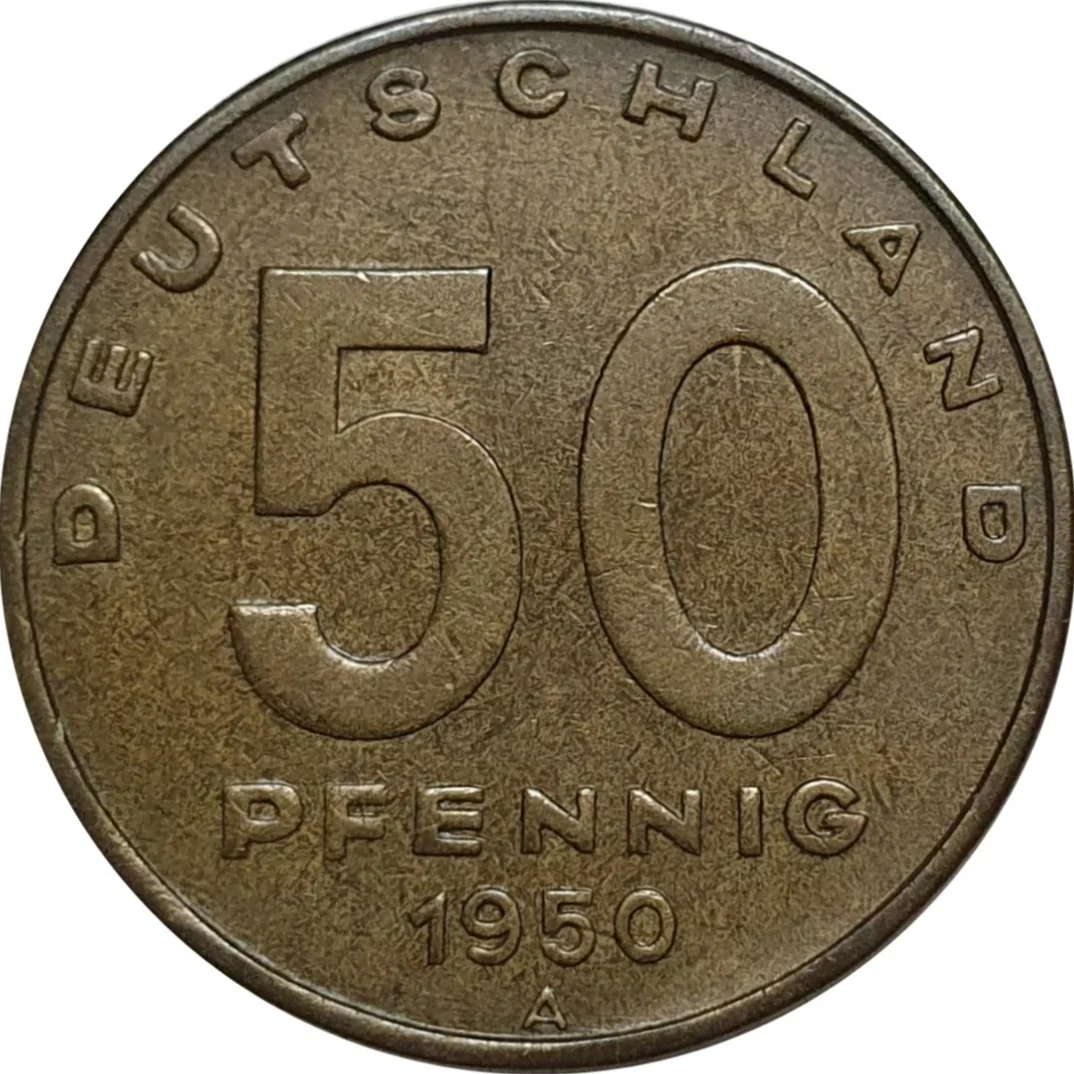
Reverse
Description:
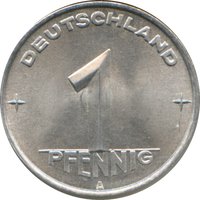
Valuable
Inscription:
DEUTSCHLAND
50
PFENNIG
1950
A
50
PFENNIG
1950
A
Translation:
Germany
50
Pfennig
1950
A
50
Pfennig
1950
A
Script: Latin
Language: German
Engraver: Franz Paul Krischker
Edge
Smooth with imprints (stylized leaves)
Categories
| Agriculture |
| Industry |
Mints
| Name | Mark |
|---|---|
| Berlin | A |
Historical background
Upon its founding in October 1949, the German Democratic Republic (GDR) inherited a complex and unstable currency situation directly shaped by postwar Allied occupation and the escalating Cold War. The legal currency across all occupation zones remained the Reichsmark (RM), but its value had been destroyed by war financing and inflation. To address this, a sweeping currency reform was enacted in the Western zones in June 1948, introducing the Deutsche Mark (DM). The Soviet Union responded immediately with its own reform in the East, creating the Deutsche Mark der Deutschen Notenbank (later renamed the Mark der DDR), which became the GDR's official currency at its founding.
This parallel reform cemented the economic division of Germany. While intended to stabilize the East German economy, the new Ostmark (as it was colloquially known) was fundamentally weaker than the West German DM from the outset. It was not freely convertible and its value was artificially maintained by state decree rather than market forces. A thriving black market for hard currency emerged, where West German DMs commanded a significantly higher exchange rate, reflecting a lack of public confidence and the growing economic disparity between the two states.
Thus, from day one, the GDR's currency system was defined by its defensive origins, its role as a tool of state-controlled economic planning, and its inherent weakness compared to the Western DM. This established a pattern of currency instability and a "hard currency" obsession that would persist throughout the state's history, as the government implemented strict laws against owning or trading Western money while simultaneously needing it to purchase vital imports from the West.
This parallel reform cemented the economic division of Germany. While intended to stabilize the East German economy, the new Ostmark (as it was colloquially known) was fundamentally weaker than the West German DM from the outset. It was not freely convertible and its value was artificially maintained by state decree rather than market forces. A thriving black market for hard currency emerged, where West German DMs commanded a significantly higher exchange rate, reflecting a lack of public confidence and the growing economic disparity between the two states.
Thus, from day one, the GDR's currency system was defined by its defensive origins, its role as a tool of state-controlled economic planning, and its inherent weakness compared to the Western DM. This established a pattern of currency instability and a "hard currency" obsession that would persist throughout the state's history, as the government implemented strict laws against owning or trading Western money while simultaneously needing it to purchase vital imports from the West.
🌱 Very Common