

50 Dollars – Cook Islands
Non-circulating coins
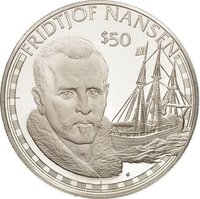
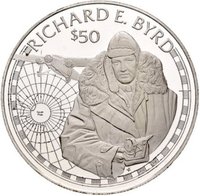
Series: Great Explorers
Context
Material
References
KM: #Click to copy to clipboard65
Numista: #71012
Value
Exchange value: 50 NZD = $29.95
Bullion value: $55.41
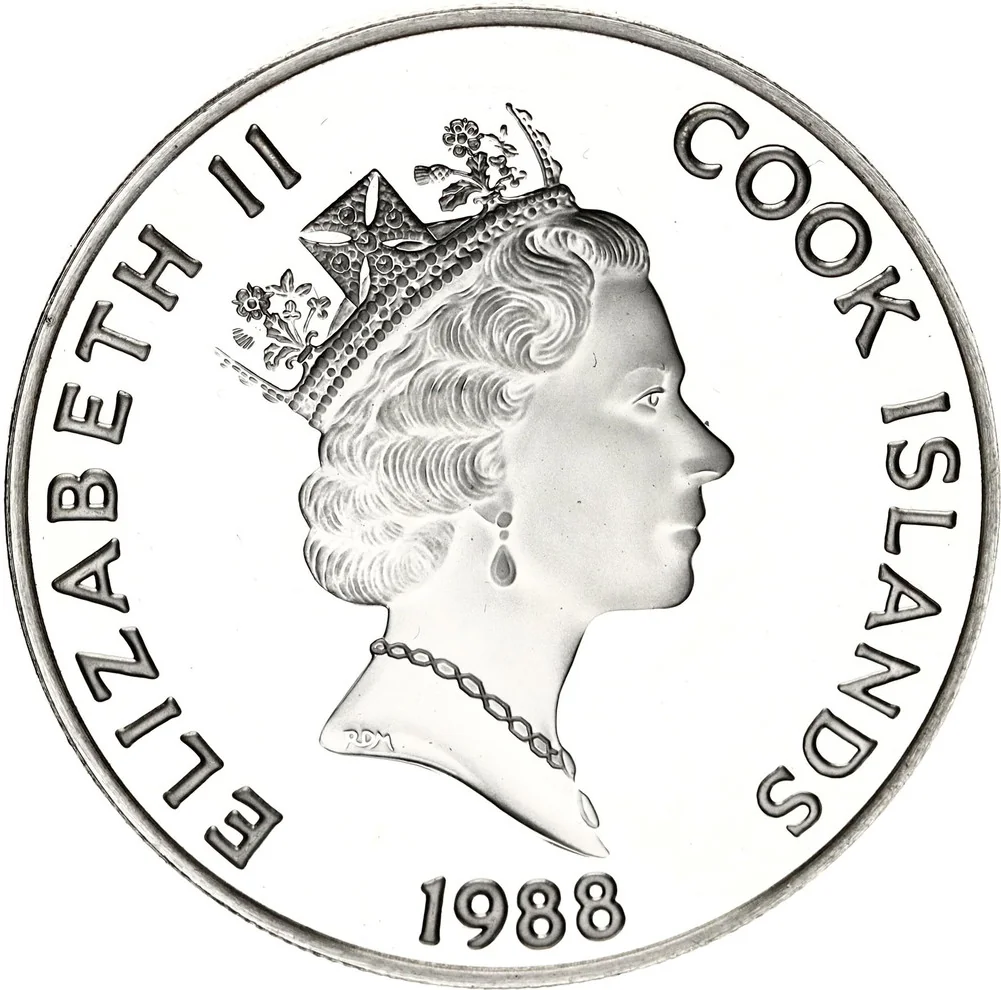
Obverse
Description:
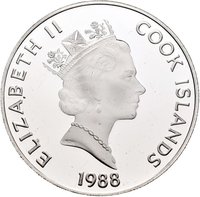
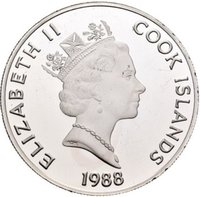
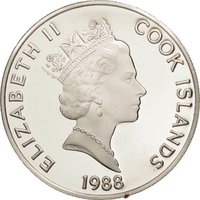
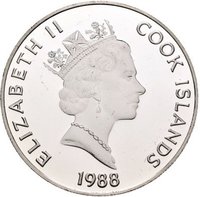
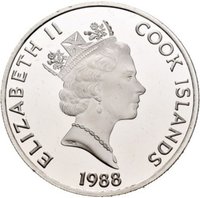
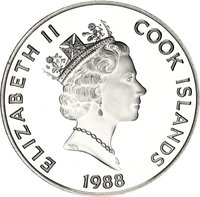
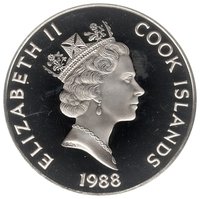
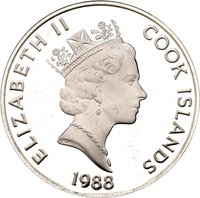
Queen Elizabeth II facing right, date beneath.
Inscription:
ELIZABETH II COOK ISLANDS
RDM
1988
RDM
1988
Translation:
ELIZABETH II COOK ISLANDS
RDM
1988
RDM
1988
Script: Latin
Language: English
Engraver: Raphael David Maklouf
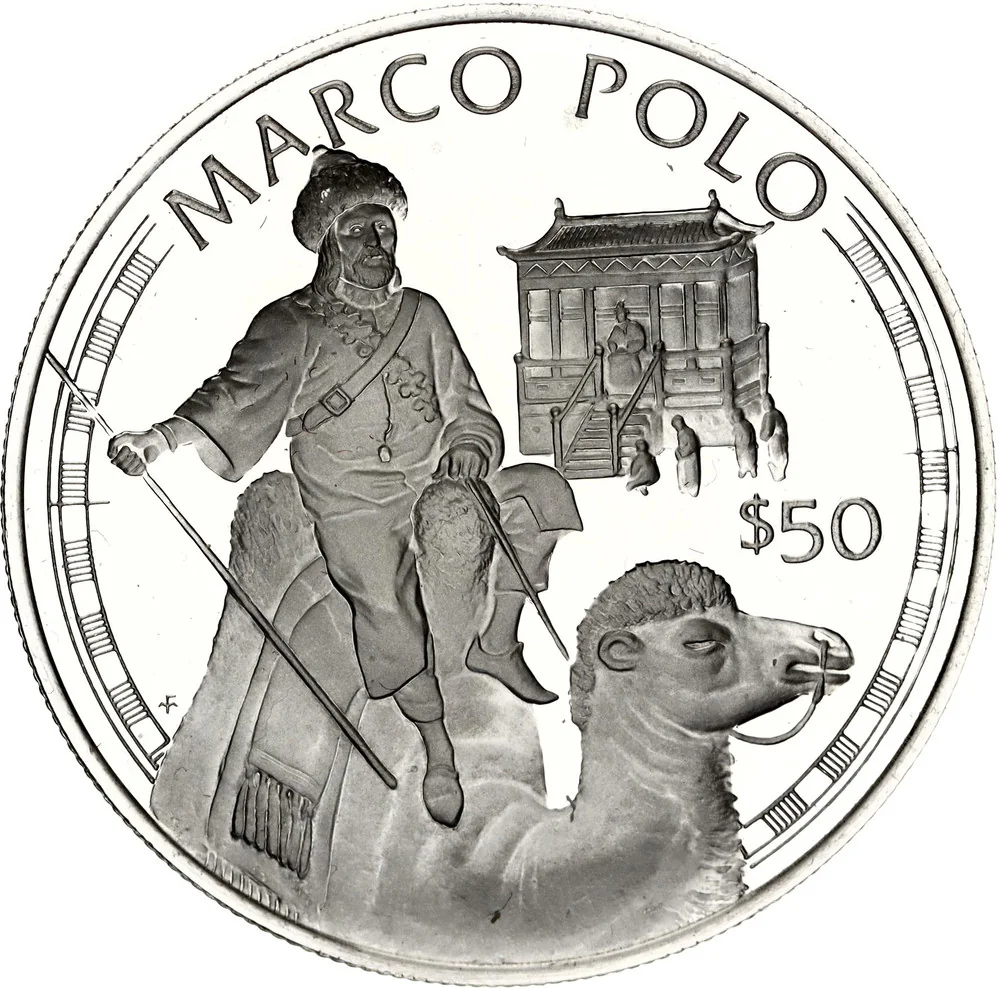
Reverse
Inscription:
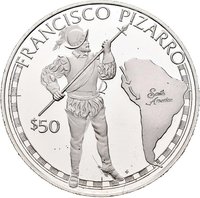
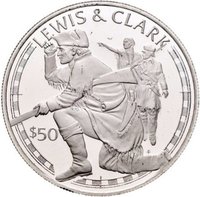
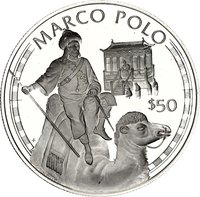
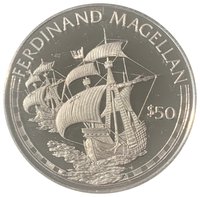
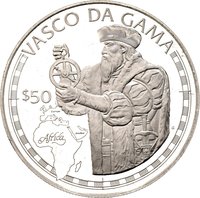
MARCO POLO
$50
FM
$50
FM
Script: Latin
Edge
Reeded
Mints
| Name | Mark |
|---|---|
| Franklin Mint | FM |
Mintings
| Year | Mint Mark | Mintage | Quality | Collection |
|---|---|---|---|---|
| 1988 | FM | — | Proof |
Historical background
In 1988, the Cook Islands was navigating a severe economic and currency crisis, the roots of which lay in the expansive and debt-fueled development policies of the previous decade. Under the government of Sir Thomas Davis, the country had embarked on ambitious infrastructure projects and established a large public sector, financed heavily by overseas borrowing, particularly from New Zealand. By the mid-1980s, this had led to unsustainable levels of external debt, a bloated public service wage bill, and a significant balance of payments deficit. The situation was exacerbated by a downturn in tourism and a series of cyclones, pushing the nation's finances to the brink of collapse.
The currency situation was directly impacted by this fiscal turmoil. The Cook Islands used (and continues to use) the New Zealand dollar as its official currency, but it also issued its own distinct coinage. More critically, the government's insolvency led to a severe liquidity crisis; the country simply ran out of convertible foreign exchange reserves to pay for essential imports and service its foreign debt. This effectively meant that while the New Zealand dollar remained the legal tender, access to it was crippled. The government was forced to implement import restrictions and was accumulating arrears with international creditors, threatening its vital economic links.
Consequently, 1988 marked a pivotal year of intervention and austerity. The Cook Islands government, facing bankruptcy, formally requested assistance from New Zealand. This led to the implementation of a stringent Economic and Structural Adjustment Programme, brokered and supported by New Zealand, which included drastic public sector reforms, mass layoffs, asset sales, and debt rescheduling. The currency situation was stabilized not by a change in the currency itself, but by this external financial lifeline and the severe restructuring that restored a degree of fiscal balance and renewed access to foreign exchange through disciplined economic management.
The currency situation was directly impacted by this fiscal turmoil. The Cook Islands used (and continues to use) the New Zealand dollar as its official currency, but it also issued its own distinct coinage. More critically, the government's insolvency led to a severe liquidity crisis; the country simply ran out of convertible foreign exchange reserves to pay for essential imports and service its foreign debt. This effectively meant that while the New Zealand dollar remained the legal tender, access to it was crippled. The government was forced to implement import restrictions and was accumulating arrears with international creditors, threatening its vital economic links.
Consequently, 1988 marked a pivotal year of intervention and austerity. The Cook Islands government, facing bankruptcy, formally requested assistance from New Zealand. This led to the implementation of a stringent Economic and Structural Adjustment Programme, brokered and supported by New Zealand, which included drastic public sector reforms, mass layoffs, asset sales, and debt rescheduling. The currency situation was stabilized not by a change in the currency itself, but by this external financial lifeline and the severe restructuring that restored a degree of fiscal balance and renewed access to foreign exchange through disciplined economic management.
Series: Great Explorers
💎 Extremely Rare