

4 Paisas – Bombay Presidency
India
Context

Material
References
KM: #Click to copy to clipboard201
Numista: #70943
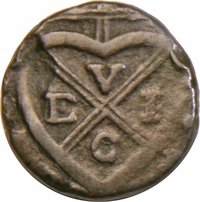
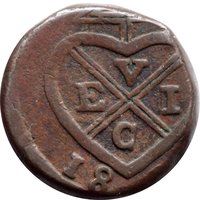
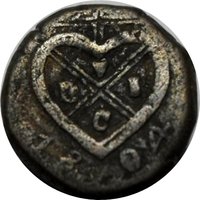
Obverse
Description:
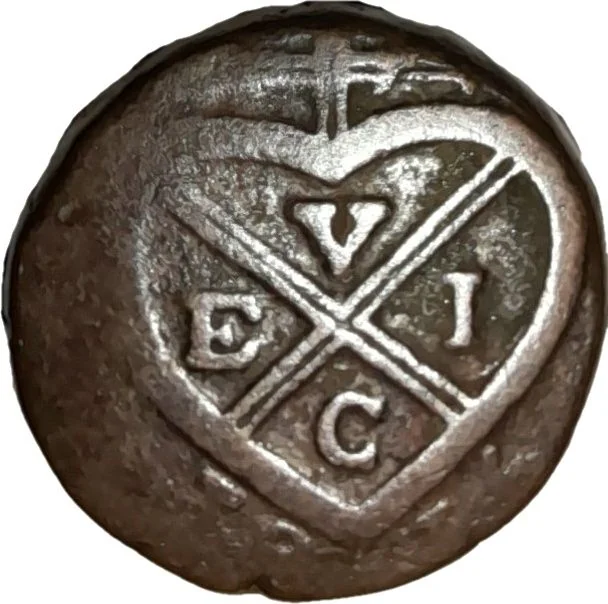
United East India Company balemark with date. Toothed border (typically not visible).
Inscription:
VEIC
1804
1804
Translation:
In the Year of Our Lord 1804
Language: Latin
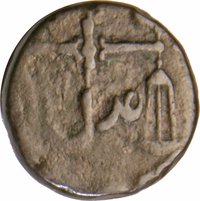
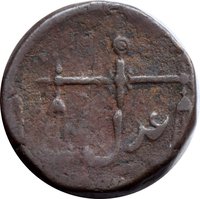
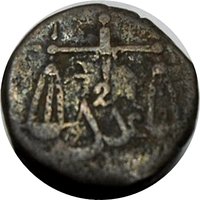
Reverse
Description:
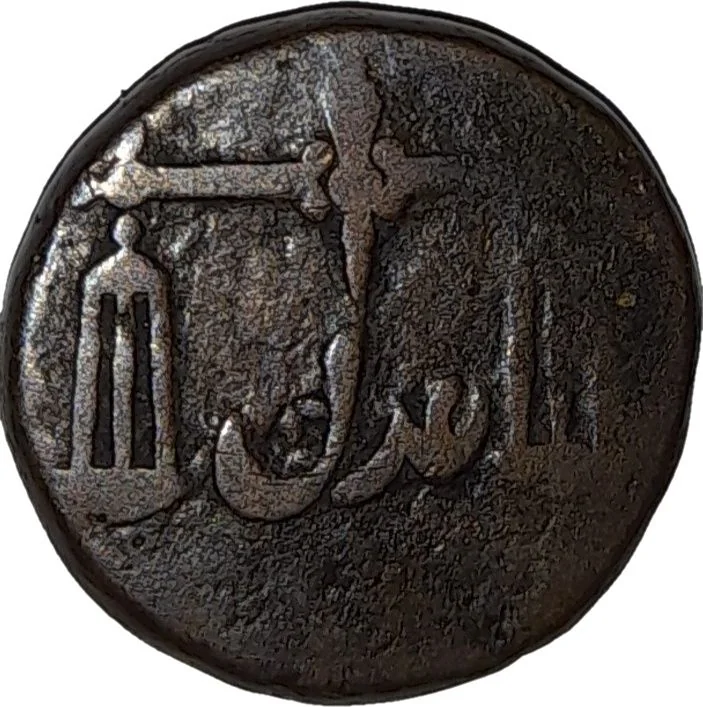
Balanced scales: Persian legend "Adil." Value above it.
Inscription:
4
عادل
عادل
Translation:
Just
Language: Arabic
Edge
Plain
Mintings
| Year | Mint Mark | Mintage | Quality | Collection |
|---|---|---|---|---|
| 1802 | — | — | ||
| 1803 | — | — | ||
| 1804 | — | — | ||
| 1816 | — | — |
Historical background
In 1802, the Bombay Presidency's currency situation was a complex and chaotic tapestry of multiple circulating mediums, reflecting its diverse economic networks. The official currency was the Bombay rupee, a silver coin minted by the East India Company, but it competed with a plethora of other coins. These included Mughal silver rupees (like the sicca), gold mohurs, and coins from other European trading companies, as well as a vast array of local and regional issues from Indian rulers. Crucially, the value of these coins was not fixed by a single standard but varied based on weight, purity (often suspect due to clipping and adulteration), and fluctuating exchange rates between silver and gold.
This monetary confusion created significant obstacles to trade and administration. Merchants and the colonial government had to constantly refer to "shroffs" (expert money-changers and assayers) to verify coins and determine their relative values, leading to transaction delays and uncertainty. The problem was exacerbated by a chronic shortage of small change for everyday transactions, which was partially filled by low-quality copper coins and even cowrie shells in some markets. Furthermore, the Presidency's financial health was strained by the ongoing Second Anglo-Maratha War (1803-1805), which increased military expenditures and disrupted regional economies, putting additional pressure on the currency system.
Recognising this instability as a barrier to secure revenue collection and commercial growth, the East India Company was actively moving towards reform. The turn of the century marked a period of transition, with the Company seeking to impose greater uniformity. While a comprehensive standardisation would come later (notably with the Coinage Act of 1835), the years around 1802 saw the consolidation of Company authority setting the stage for the eventual suppression of local currencies and the establishment of a single, Company-controlled rupee as the sole legal standard, a process driven from the administrative centre of Bombay.
This monetary confusion created significant obstacles to trade and administration. Merchants and the colonial government had to constantly refer to "shroffs" (expert money-changers and assayers) to verify coins and determine their relative values, leading to transaction delays and uncertainty. The problem was exacerbated by a chronic shortage of small change for everyday transactions, which was partially filled by low-quality copper coins and even cowrie shells in some markets. Furthermore, the Presidency's financial health was strained by the ongoing Second Anglo-Maratha War (1803-1805), which increased military expenditures and disrupted regional economies, putting additional pressure on the currency system.
Recognising this instability as a barrier to secure revenue collection and commercial growth, the East India Company was actively moving towards reform. The turn of the century marked a period of transition, with the Company seeking to impose greater uniformity. While a comprehensive standardisation would come later (notably with the Coinage Act of 1835), the years around 1802 saw the consolidation of Company authority setting the stage for the eventual suppression of local currencies and the establishment of a single, Company-controlled rupee as the sole legal standard, a process driven from the administrative centre of Bombay.
✨ Legendary