

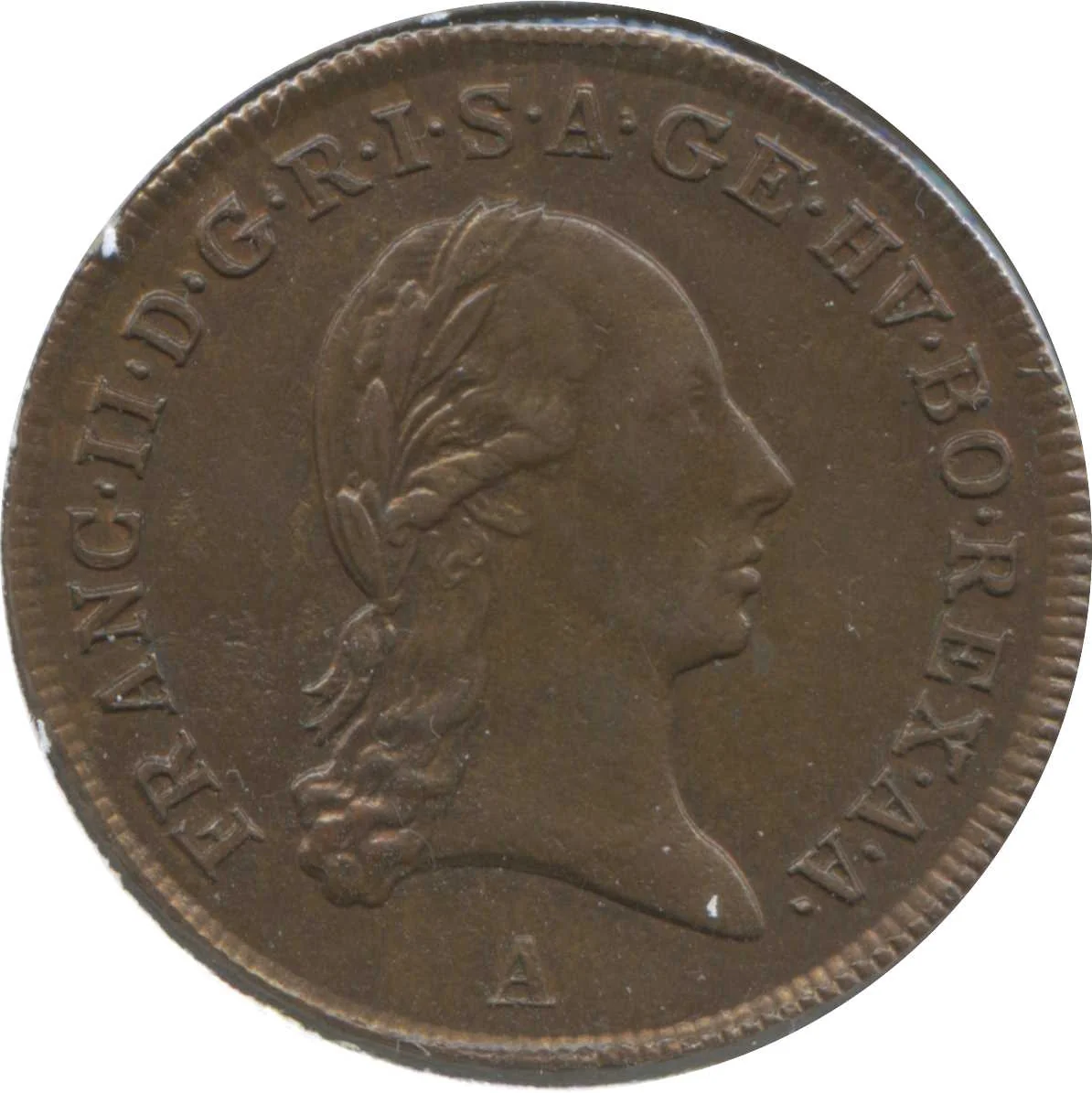
1 Kreuzer – Austrian Empire
Austria
Context
Year: 1800
Country: Austria 
Issuer: Austrian Empire
Ruler: Francis II
Currency:
(1754—1857)
Demonetized: Yes
Total mintage: 86,919,000
Material
References
KM: #Click to copy to clipboard2111
Numista: #7075
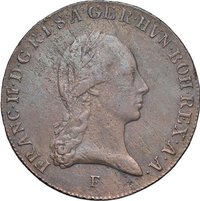
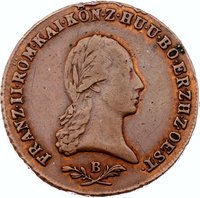
Obverse
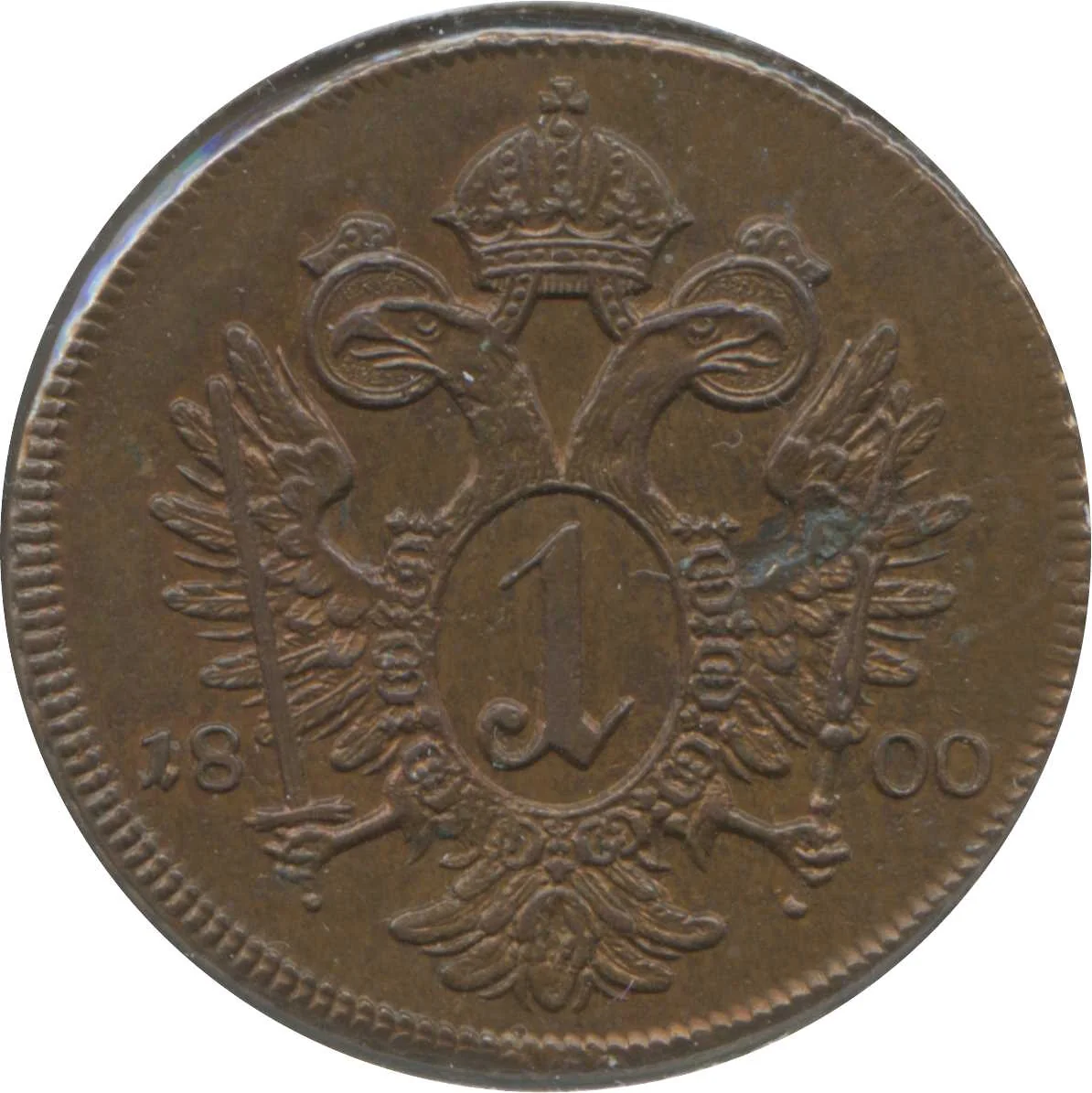
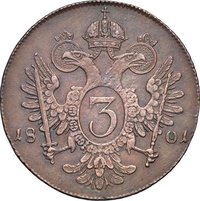
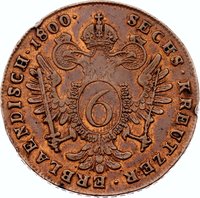
Reverse
Description:
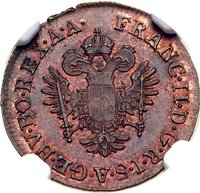
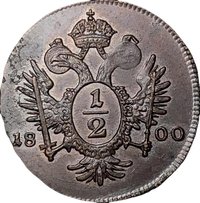
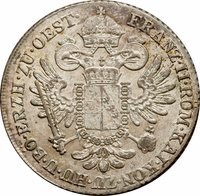
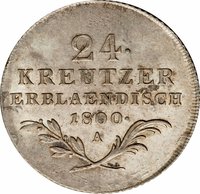
Imperial eagle with two heads, date split above, value on breast replacing coat of arms.
Inscription:
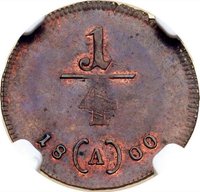
1
18 00
18 00
Script: Latin
Edge
Categories
| Symbol> Double-headed eagle |
| Symbol> Crown |
Mints
| Name | Mark |
|---|---|
| Münze Österreich | A |
| Kremnica | B |
| Prague | C |
| Salzburg | D |
| Alba Iulia | E |
| Hall | F |
| Baia Mare | G |
| Smolník / Szomolnok / Schmöllnitz | S |
Mintings
Historical background
In 1800, the currency situation in the Austrian Empire was characterized by profound instability and financial strain, a direct legacy of the costly wars of the late 18th century, particularly against Revolutionary France. To finance these conflicts, the state had increasingly relied on issuing paper money, known as Bancozettel, through the Vienna City Bank. Initially convertible to silver, these notes became a forced fiat currency after 1797, leading to a rapid and severe depreciation. By the turn of the century, the paper gulden had already lost a significant portion of its nominal value against silver, creating a chaotic system of dual circulation where goods often had two prices: one in paper and a much higher one in specie.
This monetary disorder was exacerbated by the existence of multiple regional currency standards across the Habsburg lands. While the Conventionsthaler (based on a 1753 convention) was the official silver standard, everyday accounting was done in gulden (florins) and kreuzers. The Austrian Netherlands (modern Belgium) used yet another system. The simultaneous circulation of depreciating paper money alongside scarce silver and copper coins, plus these regional differences, crippled trade and created widespread confusion. Prices soared, and public confidence in the state's finances eroded, as the government struggled with massive debt and a structural budget deficit.
Consequently, the year 1800 found the empire in a precarious position, with its currency crisis undermining both economic stability and the state's capacity to fund the ongoing Napoleonic Wars. Attempts at reform, such as the establishment of the Einlösungs- und Tilgungsanstalt (Redemption and Amortization Institute) in 1798, had failed to halt the downward spiral. The persistent depreciation of the Bancozettel would continue for over a decade, culminating in a state bankruptcy in 1811, making the currency situation one of the most critical and destabilizing domestic challenges facing the Austrian Empire at the dawn of the 19th century.
This monetary disorder was exacerbated by the existence of multiple regional currency standards across the Habsburg lands. While the Conventionsthaler (based on a 1753 convention) was the official silver standard, everyday accounting was done in gulden (florins) and kreuzers. The Austrian Netherlands (modern Belgium) used yet another system. The simultaneous circulation of depreciating paper money alongside scarce silver and copper coins, plus these regional differences, crippled trade and created widespread confusion. Prices soared, and public confidence in the state's finances eroded, as the government struggled with massive debt and a structural budget deficit.
Consequently, the year 1800 found the empire in a precarious position, with its currency crisis undermining both economic stability and the state's capacity to fund the ongoing Napoleonic Wars. Attempts at reform, such as the establishment of the Einlösungs- und Tilgungsanstalt (Redemption and Amortization Institute) in 1798, had failed to halt the downward spiral. The persistent depreciation of the Bancozettel would continue for over a decade, culminating in a state bankruptcy in 1811, making the currency situation one of the most critical and destabilizing domestic challenges facing the Austrian Empire at the dawn of the 19th century.
🌱 Very Common