

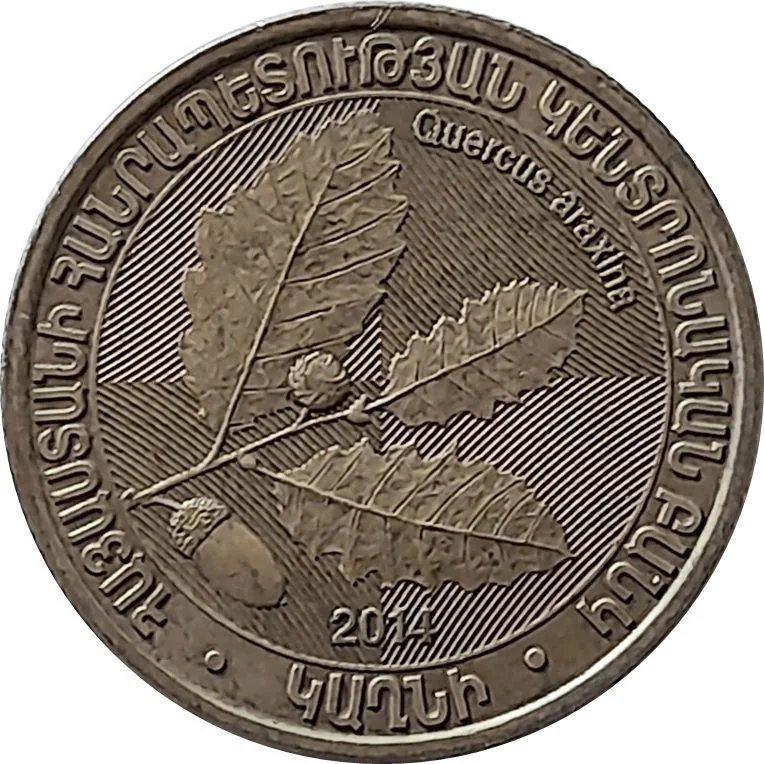
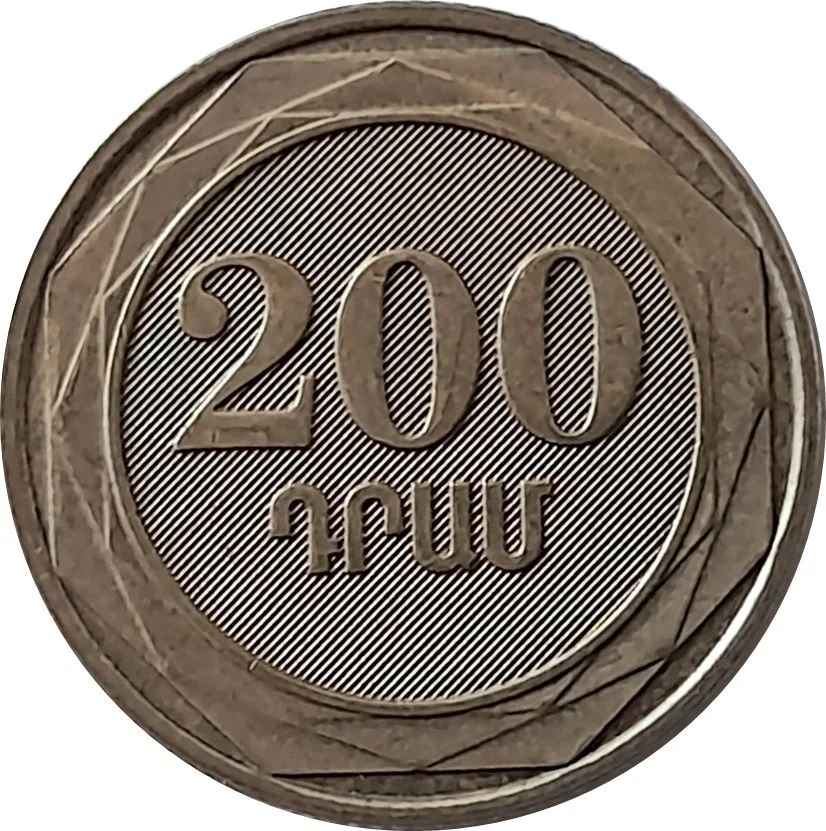
200 Dram – Armenia
Armenia
Context
Year: 2014
Issuer: Armenia 
Issuing organization: Central Bank of Armenia
Period:
(since 1991)
Currency:
(since 1993)
Material
Diameter: 24 mm
Weight: 4.5 g
Thickness: 1.5 mm
Shape: Round
Composition: Aluminium bronze
Magnetic: No
Technique: Milled
Alignment: Medal alignment
flip
References
KM: #Click to copy to clipboard282
Numista: #70569
Value
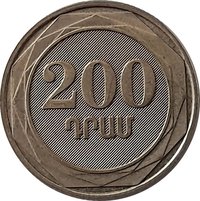
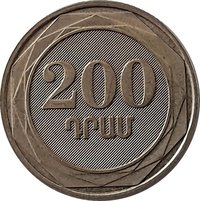
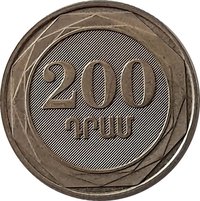
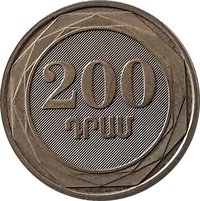
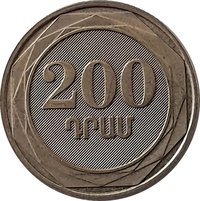
Exchange value: 200 AMD
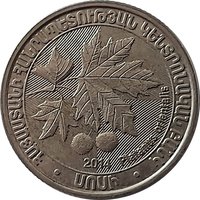
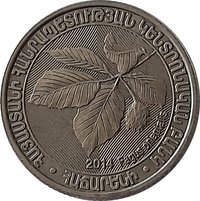
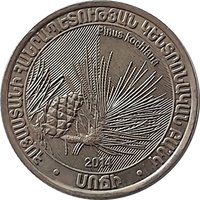
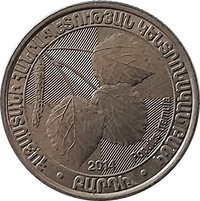
Obverse
Reverse
Edge
Reeded
Mintings
| Year | Mint Mark | Mintage | Quality | Collection |
|---|---|---|---|---|
| 2014 | — | — |
Historical background
In 2014, Armenia's currency, the dram (AMD), faced significant external pressures, primarily driven by the economic downturn in Russia, its largest trading partner and a critical source of remittances. The Russian ruble collapsed dramatically in late 2014 due to falling oil prices and international sanctions following the annexation of Crimea. This created a dual shock for Armenia: a sharp decline in the vital money transfers from Armenian workers in Russia, which constituted a major portion of GDP, and reduced demand for Armenian exports. Consequently, the dram came under heavy selling pressure as households and businesses converted their ruble earnings into drams or dollars, while export revenues fell.
The Central Bank of Armenia (CBA) initially intervened heavily in foreign exchange markets to defend the dram's value, spending hundreds of millions of dollars from its reserves in an attempt to stabilize the exchange rate. However, by late November 2014, facing sustained pressure and depleting reserves, the CBA shifted to a floating exchange rate regime. This decision led to an immediate and sharp devaluation, with the dram losing roughly 17% of its value against the US dollar between November and the end of the year. The move aimed to absorb the external shocks, preserve foreign reserves, and allow the exchange rate to act as an automatic stabilizer for the economy.
The devaluation had immediate domestic consequences, sharply increasing the cost of imports—particularly for food and essential goods—and fueling inflation. It also raised the burden of foreign currency-denominated loans for many households and businesses. While the floating rate helped to correct external imbalances, 2014 ended as a year of economic hardship for many Armenians, marked by currency instability, rising prices, and slowed economic growth, all underscoring the country's vulnerability to regional economic crises.
The Central Bank of Armenia (CBA) initially intervened heavily in foreign exchange markets to defend the dram's value, spending hundreds of millions of dollars from its reserves in an attempt to stabilize the exchange rate. However, by late November 2014, facing sustained pressure and depleting reserves, the CBA shifted to a floating exchange rate regime. This decision led to an immediate and sharp devaluation, with the dram losing roughly 17% of its value against the US dollar between November and the end of the year. The move aimed to absorb the external shocks, preserve foreign reserves, and allow the exchange rate to act as an automatic stabilizer for the economy.
The devaluation had immediate domestic consequences, sharply increasing the cost of imports—particularly for food and essential goods—and fueling inflation. It also raised the burden of foreign currency-denominated loans for many households and businesses. While the floating rate helped to correct external imbalances, 2014 ended as a year of economic hardship for many Armenians, marked by currency instability, rising prices, and slowed economic growth, all underscoring the country's vulnerability to regional economic crises.
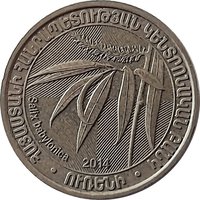
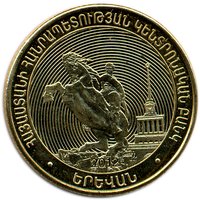
Series: Wild Trees of Armenia

🌱 Common