

1⁄16 Real – Mexico
Mexico
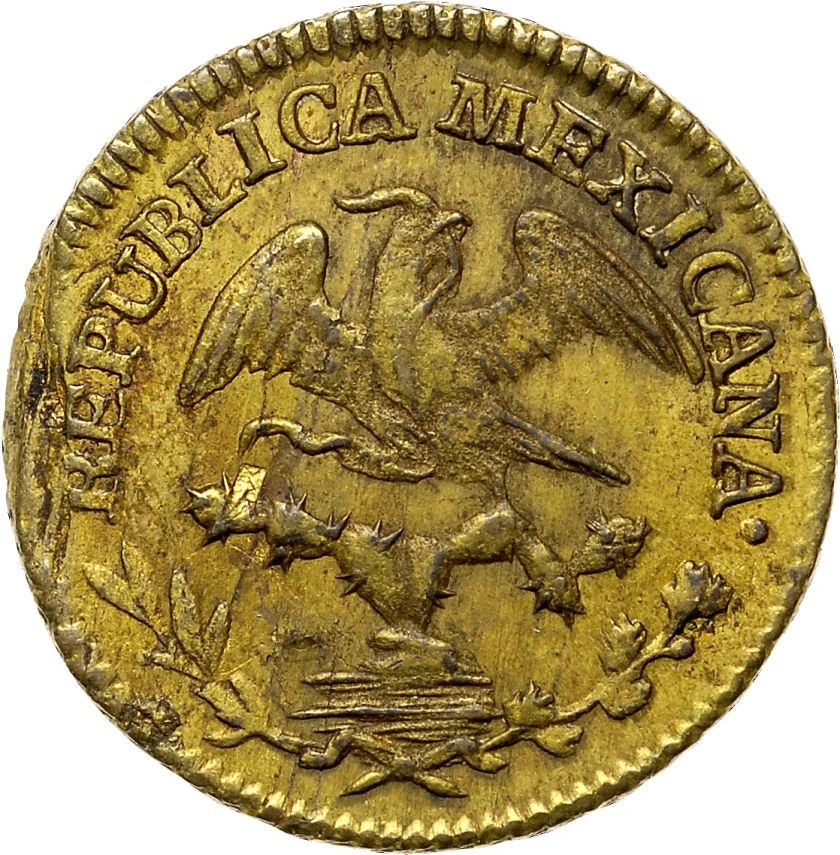
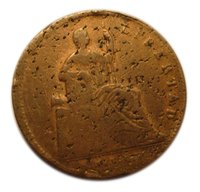
Obverse
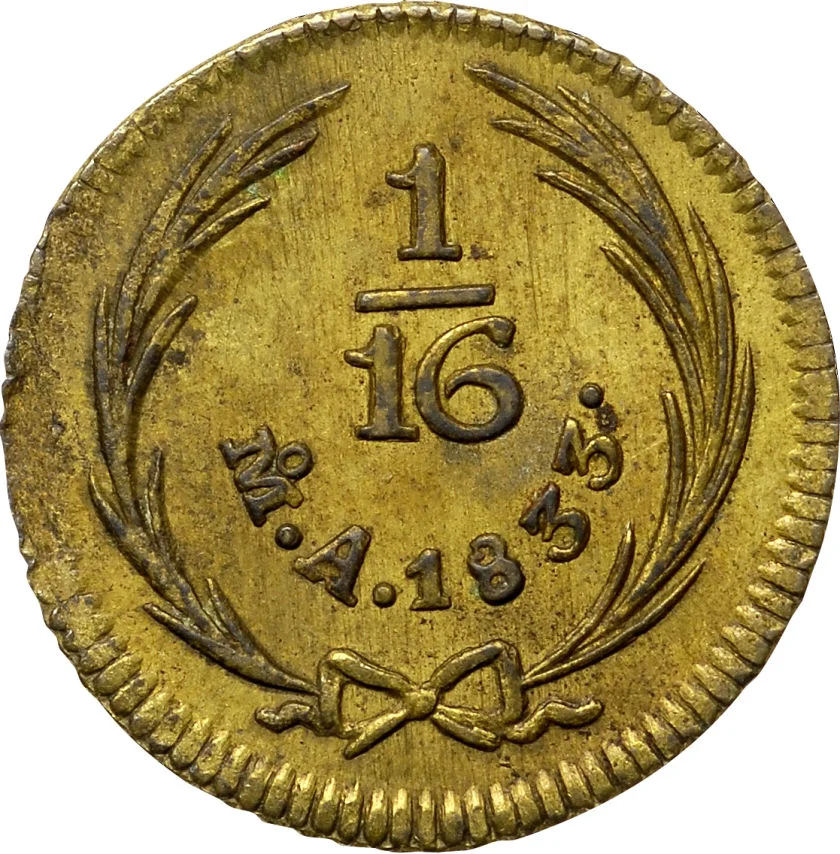
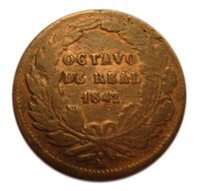
Reverse
Description:
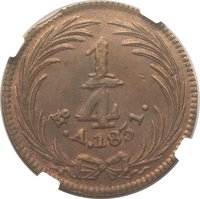
Denomination, date, and mint mark encircled by a palm wreath.
Inscription:
1/16
Mo•A•1833•
Mo•A•1833•
Script: Latin
Edge
Incuse Rectangles
Mintings
| Year | Mint Mark | Mintage | Quality | Collection |
|---|---|---|---|---|
| 1832 | Mo | — | ||
| 1833 | Mo | — | ||
| 1835 | Mo | — |
Historical background
In 1832, Mexico's currency system was in a state of profound disorder, a direct legacy of the independence war (1810-1821) and the political instability that followed. The collapse of Spanish colonial authority had dismantled the relatively stable monetary system based on silver pesos, replacing it with a chaotic mix of currencies. The new republican government, perpetually on the brink of bankruptcy, lacked the bullion reserves to mint sufficient coinage. Consequently, the economy relied heavily on a confusing array of foreign coins—primarily Spanish, but also British, French, and others—alongside a flood of debased copper coins issued by both the federal government and individual states to meet daily transactional needs.
This monetary fragmentation was exacerbated by the government's desperate fiscal measures. To finance its operations and pay its armies during the ongoing power struggles between centralists and federalists (culminating in the overthrow of President Anastasio Bustamante in late 1832), authorities resorted to issuing paper money known as billetes. These bills, issued without public confidence or solid backing, depreciated rapidly and were widely rejected outside major cities, especially by a rural populace that trusted only silver. The result was a multi-tiered system where transactions in silver commanded a significant premium over payments in copper or paper, crippling commerce and creating widespread economic uncertainty.
Ultimately, the currency chaos of 1832 was a symptom of Mexico's fragile state-building process. The lack of a unified national currency undermined economic integration and federal authority, as states issued their own tokens. This financial instability discouraged investment, fueled inflation for basic goods, and placed a heavy burden on the poor, who were often paid in depreciating copper. The situation would not see meaningful resolution until the late 1860s, but the crises of the 1830s, exemplified by the conditions of 1832, starkly illustrated how monetary policy and political stability were inextricably linked in the early Mexican republic.
This monetary fragmentation was exacerbated by the government's desperate fiscal measures. To finance its operations and pay its armies during the ongoing power struggles between centralists and federalists (culminating in the overthrow of President Anastasio Bustamante in late 1832), authorities resorted to issuing paper money known as billetes. These bills, issued without public confidence or solid backing, depreciated rapidly and were widely rejected outside major cities, especially by a rural populace that trusted only silver. The result was a multi-tiered system where transactions in silver commanded a significant premium over payments in copper or paper, crippling commerce and creating widespread economic uncertainty.
Ultimately, the currency chaos of 1832 was a symptom of Mexico's fragile state-building process. The lack of a unified national currency undermined economic integration and federal authority, as states issued their own tokens. This financial instability discouraged investment, fueled inflation for basic goods, and placed a heavy burden on the poor, who were often paid in depreciating copper. The situation would not see meaningful resolution until the late 1860s, but the crises of the 1830s, exemplified by the conditions of 1832, starkly illustrated how monetary policy and political stability were inextricably linked in the early Mexican republic.
✨ Legendary