

5 Centavos – Dominican Republic
Dominican Republic
Context
Years: 1937–1974
Issuer: Dominican Republic 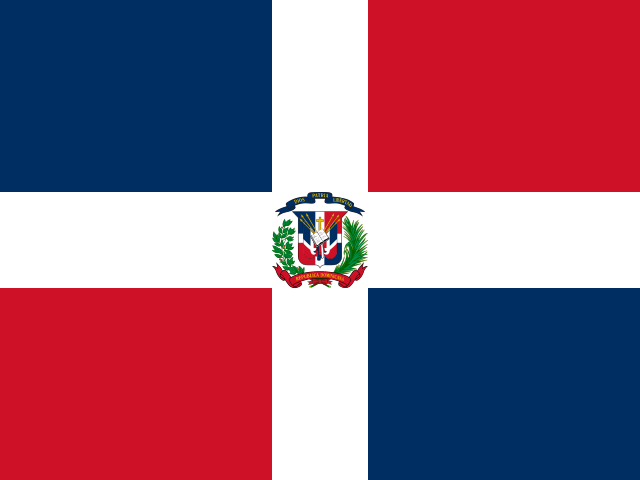
Period:
(1922—1965)
Currency:
(since 1937)
Total mintage: 17,641,010
Material
References
KM: #Click to copy to clipboard18
Numista: #7036
Value
Exchange value: 0.05 DOP
Obverse
Description:
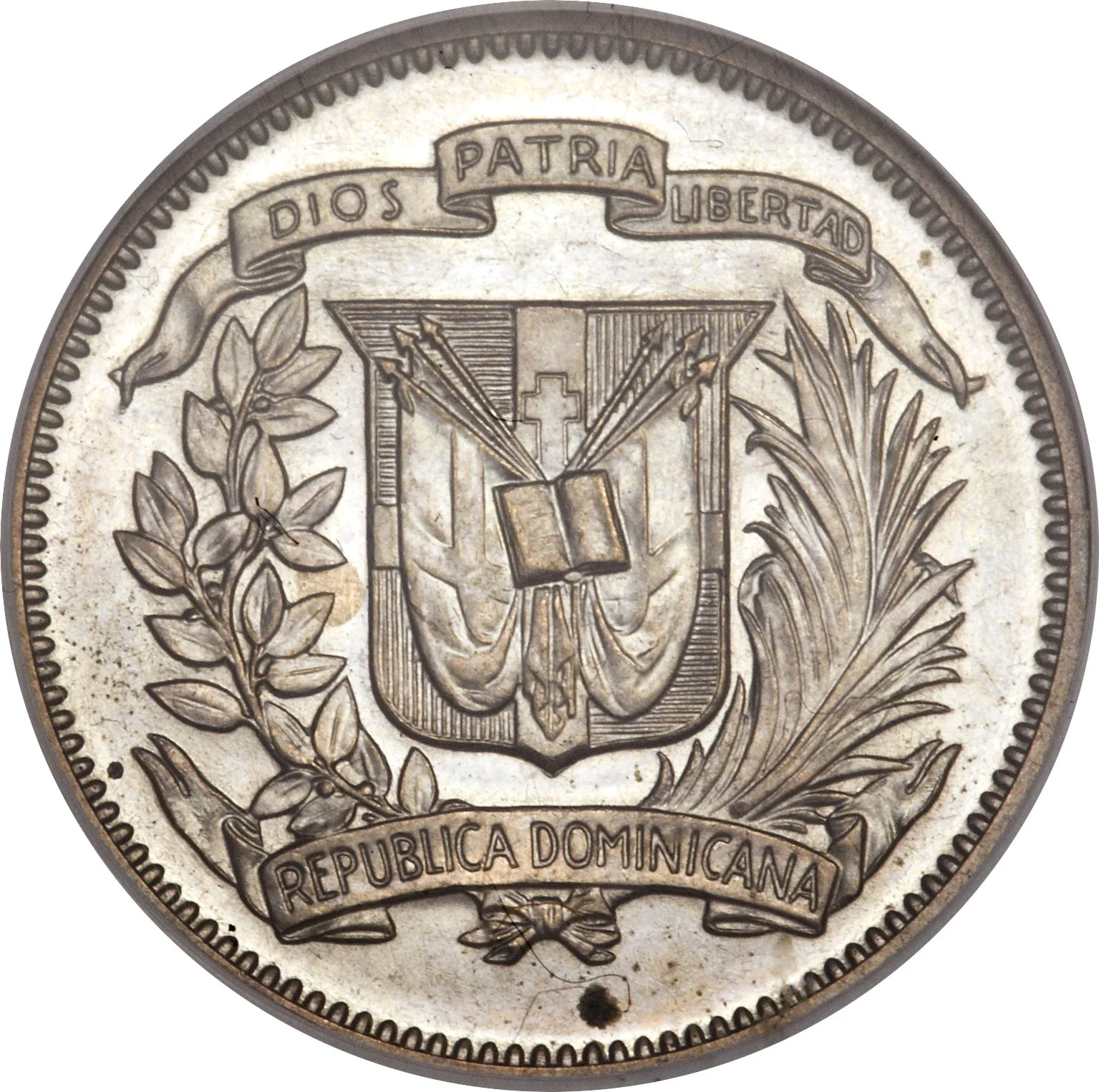
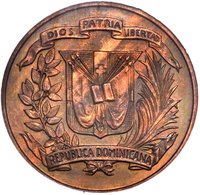
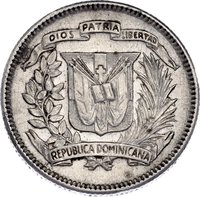
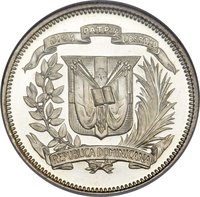
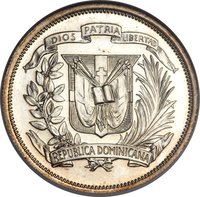
Heraldic emblem
Inscription:
DIOS PATRIA LIBERTAD
REPUBLICA DOMINICANA
REPUBLICA DOMINICANA
Translation:
God, Fatherland, Liberty
Dominican Republic
Dominican Republic
Script: Latin
Language: Spanish
Engraver: Casimiro Nemesio de Moya
Reverse
Description:
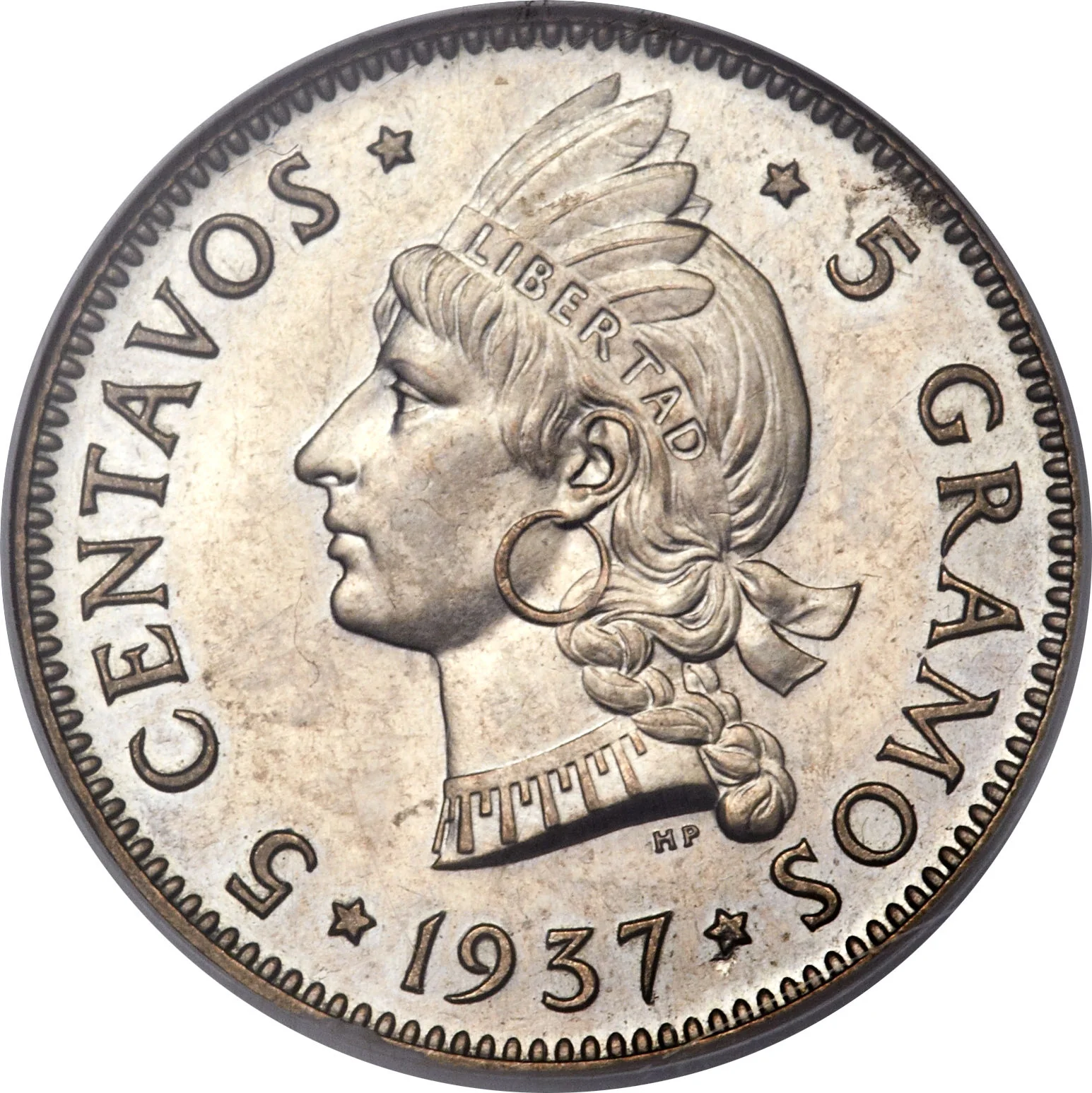
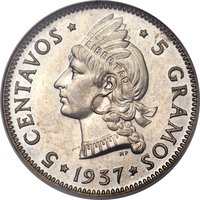
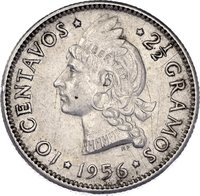
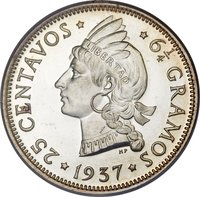
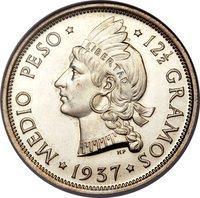
Indian "Liberty" head left. Denomination, weight, year.
Inscription:
* 5 CENTAVOS *
* 5 GRAMOS *
LIBERTAD
HP
1937
* 5 GRAMOS *
LIBERTAD
HP
1937
Translation:
5 CENTAVOS
5 GRAMS
LIBERTY
HP
1937
5 GRAMS
LIBERTY
HP
1937
Script: Latin
Language: Spanish
Engraver: Thomas Humphrey Paget
Edge
Plain
Categories
| Symbol> Allegory |
| Symbols> Coat of Arms |
Mints
| Name | Mark |
|---|---|
| Royal Canadian Mint of Ottawa | — |
| Royal Mint (Tower Hill) | — |
| United States Mint of Philadelphia | — |
Mintings
| Year | Mint Mark | Mintage | Quality | Collection |
|---|---|---|---|---|
| 1937 | — | — | Proof | |
| 1937 | — | 2,000,000 | ||
| 1939 | — | 200,000 | ||
| 1951 | — | 2,000,000 | ||
| 1956 | — | 1,000,000 | ||
| 1959 | — | 1,000,000 | ||
| 1961 | — | 4,000,000 | ||
| 1961 | — | 10 | Proof | |
| 1971 | — | 440,000 | ||
| 1972 | — | 2,000,000 | ||
| 1972 | — | 500 | Proof | |
| 1974 | — | 5,000,000 | ||
| 1974 | — | 500 | Proof |
Historical background
In 1937, the Dominican Republic operated under a unique monetary system established by the Monetary Law of 1937, which was enacted under the authoritarian rule of Rafael Trujillo. This law officially placed the country on a gold exchange standard, but in practice, it created a managed currency system centered on the Dominican peso (RD$), which was pegged to the U.S. dollar at a fixed rate of 1 USD = 1 RD$. This peg was maintained not by free convertibility, but through strict exchange controls administered by the newly created Central Reserve Bank of the Dominican Republic (Banco de Reservas), which held the nation's gold and foreign exchange reserves. The primary goal was to stabilize the currency, attract foreign investment, and centralize economic control under the state, which was effectively an instrument of the Trujillo regime.
The context for this reform was a period of significant economic strain and consolidation of power. The global Great Depression had severely impacted Dominican exports, particularly sugar, and the country had defaulted on its foreign debt in 1931. Trujillo, having taken power in 1930, sought to modernize the economy and assert national sovereignty, which included untangling the country from the direct financial oversight of the United States that had been in place since 1905 under a customs receivership. The 1937 law and the creation of a central bank were key steps in this process, replacing the U.S. dollar, which had circulated widely, with a national currency and giving the government direct command over monetary policy.
Consequently, the currency situation was one of state-imposed stability with underlying political control. While the fixed peg provided a facade of solidity for international trade and the regime's prestige, the exchange controls and centralized reserves allowed the Trujillo government to direct credit to favored industries and projects, often for political gain. This system effectively monetized the regime's authority, tying economic management directly to Trujillo's personalist rule and his drive for national development—and self-enrichment—while insulating the currency from market pressures through strict regulation rather than through robust independent reserves.
The context for this reform was a period of significant economic strain and consolidation of power. The global Great Depression had severely impacted Dominican exports, particularly sugar, and the country had defaulted on its foreign debt in 1931. Trujillo, having taken power in 1930, sought to modernize the economy and assert national sovereignty, which included untangling the country from the direct financial oversight of the United States that had been in place since 1905 under a customs receivership. The 1937 law and the creation of a central bank were key steps in this process, replacing the U.S. dollar, which had circulated widely, with a national currency and giving the government direct command over monetary policy.
Consequently, the currency situation was one of state-imposed stability with underlying political control. While the fixed peg provided a facade of solidity for international trade and the regime's prestige, the exchange controls and centralized reserves allowed the Trujillo government to direct credit to favored industries and projects, often for political gain. This system effectively monetized the regime's authority, tying economic management directly to Trujillo's personalist rule and his drive for national development—and self-enrichment—while insulating the currency from market pressures through strict regulation rather than through robust independent reserves.
🌱 Very Common