

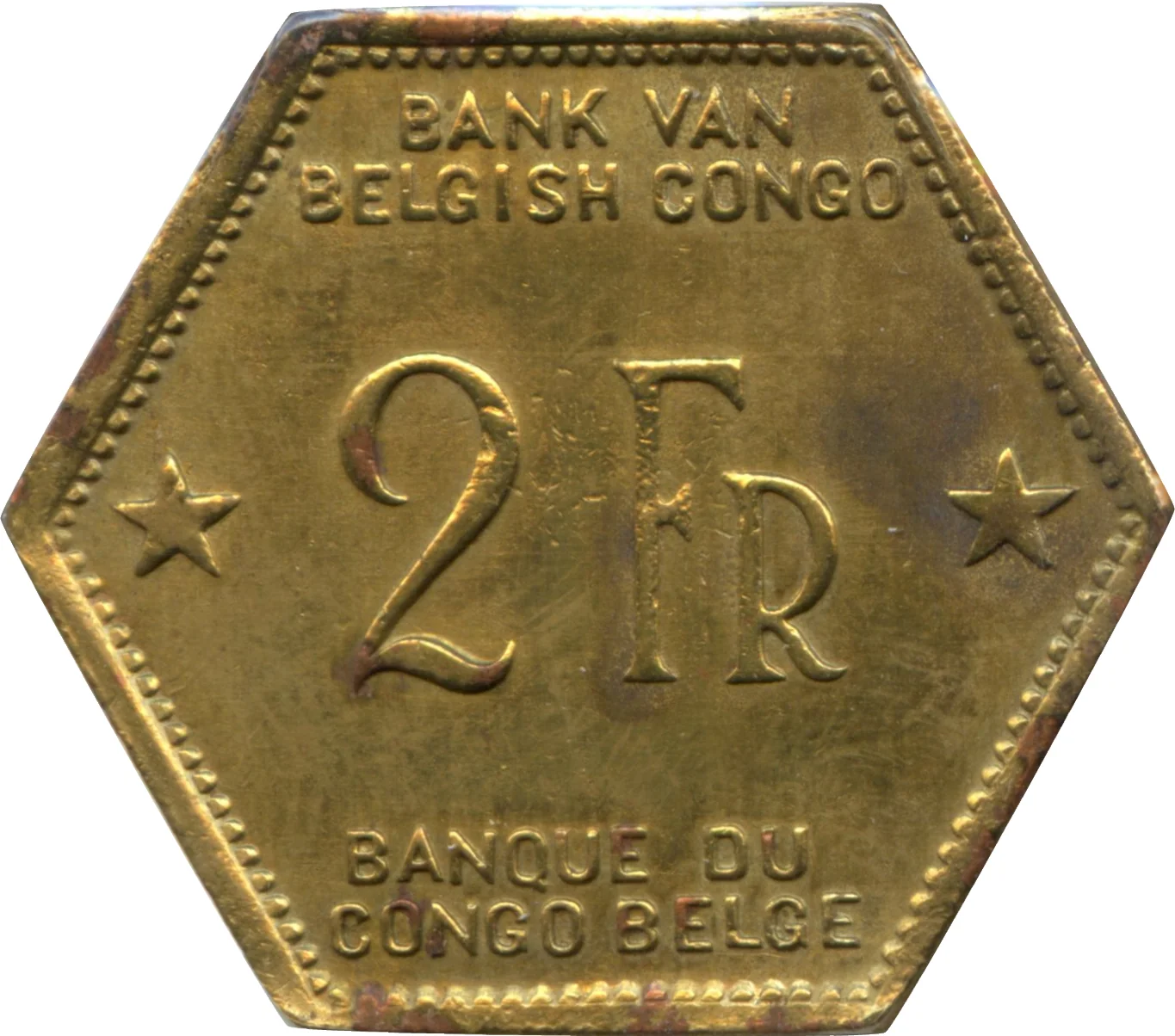
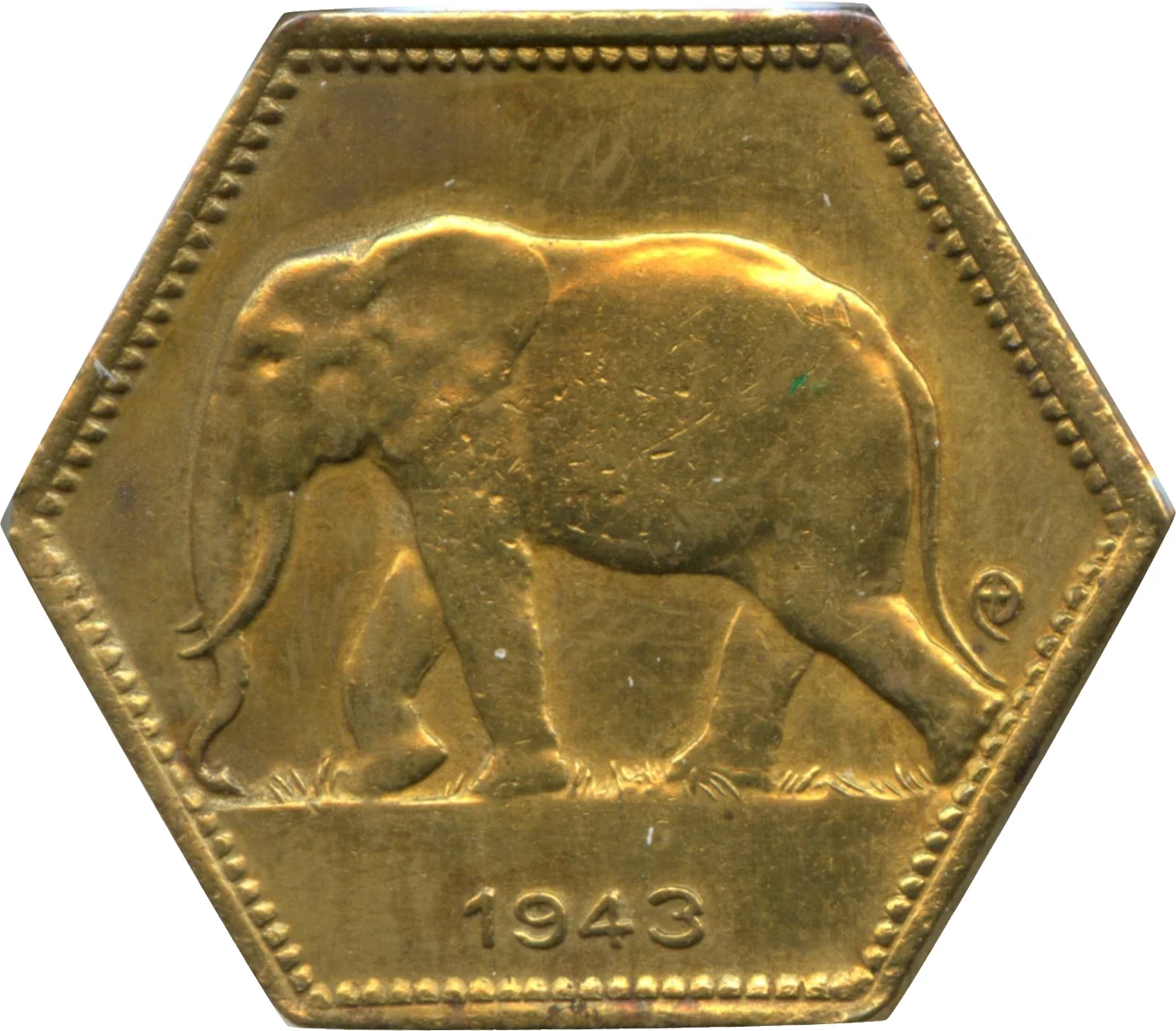
2 francs – Belgian Congo
Add to wishlist
Context
Year: 1943
Country: Rwanda and Urundi Belgian Congo
Issuer: Belgian Congo
Issuing organization: Bank of the Belgian Congo
Ruler: Leopold III
Currency:
(1908—1960)
Demonetized: Yes
Total mintage: 25,000,000
Material
References
KM: #
Numista: #7011
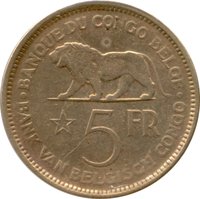
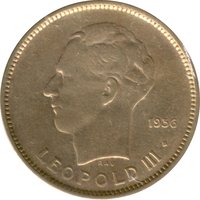
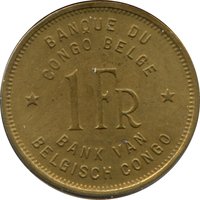
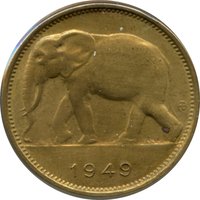
Obverse
Reverse
Edge
Plain
Mints
| Name | Mark |
|---|---|
| United States Mint of Philadelphia | — |
Mintings
| Year | Mint Mark | Mintage | Quality | Collection |
|---|---|---|---|---|
| 1943 | — | 25,000,000 |
Historical background
In 1943, the currency situation in the Belgian Congo was defined by its integration into the Allied war effort and its unique monetary autonomy from occupied Belgium. Since the Belgian franc in Europe was under Nazi control, the Congolese franc, issued by the Banque du Congo Belge (BCB), operated as a fully separate and stable currency. This stability was underpinned by the colony's booming export economy, which supplied the Allies with vital raw materials like copper, uranium, rubber, and palm oil, generating substantial dollar and sterling reserves.
The colony's financial system was effectively managed from London, where the Belgian government-in-exile, in agreement with the BCB, oversaw monetary policy. A key feature was the fixed parity of the Congolese franc to the Belgian franc, maintained at 1:1, which provided psychological continuity and facilitated post-war economic planning. However, in practice, the Congolese franc's real backing came from its link to the British pound sterling as part of the sterling area, with its value effectively secured by the colony's strong balance of payments and hard currency reserves held in London.
Consequently, the wartime currency situation was one of remarkable strength and contrast. While occupied Belgium suffered from inflation and a compromised currency, the Congolese franc was a hard, reliable currency within Central Africa. This financial power allowed the colony to finance its own administration and military contributions (like the Force Publique) without support from the exiled government, and even to grant substantial loans to the Allies, positioning the Belgian Congo as a significant and creditor entity within the Allied war economy.
The colony's financial system was effectively managed from London, where the Belgian government-in-exile, in agreement with the BCB, oversaw monetary policy. A key feature was the fixed parity of the Congolese franc to the Belgian franc, maintained at 1:1, which provided psychological continuity and facilitated post-war economic planning. However, in practice, the Congolese franc's real backing came from its link to the British pound sterling as part of the sterling area, with its value effectively secured by the colony's strong balance of payments and hard currency reserves held in London.
Consequently, the wartime currency situation was one of remarkable strength and contrast. While occupied Belgium suffered from inflation and a compromised currency, the Congolese franc was a hard, reliable currency within Central Africa. This financial power allowed the colony to finance its own administration and military contributions (like the Force Publique) without support from the exiled government, and even to grant substantial loans to the Allies, positioning the Belgian Congo as a significant and creditor entity within the Allied war economy.
🌱 Common