

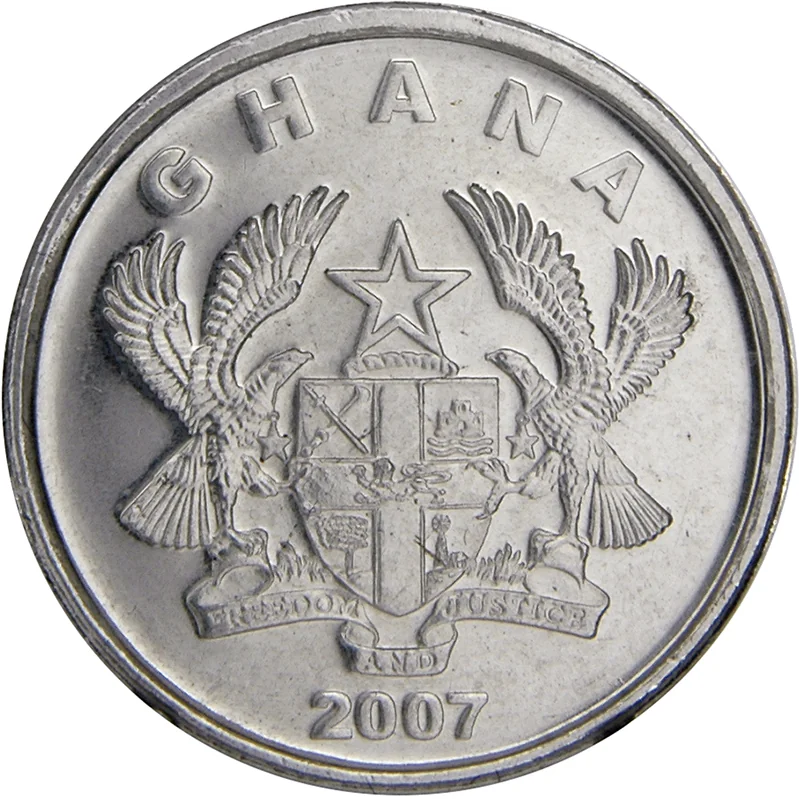
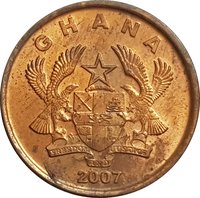
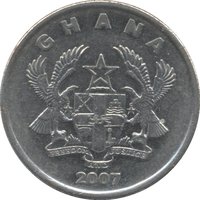
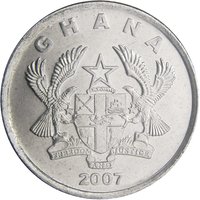
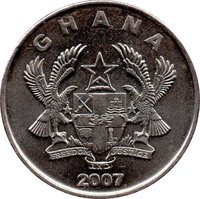
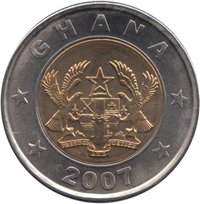
Obverse
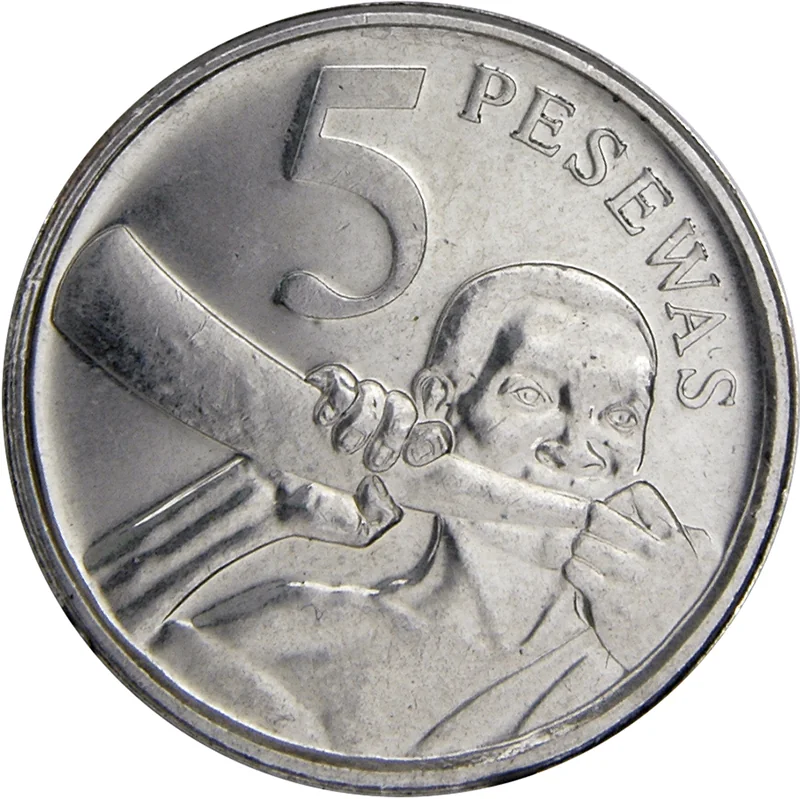
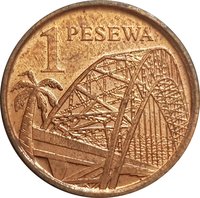
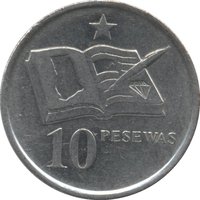
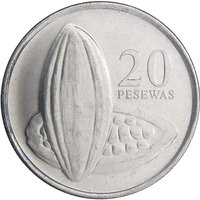
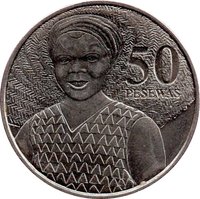
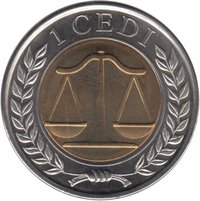
Reverse
Edge
Plain
Mints
| Name | Mark |
|---|---|
| Royal Canadian Mint of Winnipeg | — |
Mintings
| Year | Mint Mark | Mintage | Quality | Collection |
|---|---|---|---|---|
| 2007 | — | — | ||
| 2012 | — | — | ||
| 2016 | — | — |
Historical background
In 2007, Ghana's currency, the cedi (GHS), was under significant pressure, marking a period of instability that would set the stage for future economic challenges. The year was characterized by a sharp depreciation against major trading currencies, particularly the US dollar. This decline was driven by a combination of a widening trade and current account deficit, high crude oil import costs, and strong demand for foreign exchange to service the import needs of a growing and consumption-driven economy. Despite being on the path to becoming a significant oil producer, Ghana was still a net importer of petroleum, which heavily drained foreign reserves.
The government, under President John Kufuor, was implementing a broad reform agenda, but fiscal discipline remained a concern. Public spending, particularly in the lead-up to the 2008 general election, contributed to macroeconomic pressures. The Bank of Ghana attempted to manage the situation through direct intervention in the foreign exchange market and by tightening monetary policy, including increasing the prime rate. However, these measures provided only temporary relief, as underlying structural issues—such as reliance on primary commodity exports (cocoa and gold) and a high propensity for imported goods—continued to expose the economy to external shocks.
This currency weakness in 7 had profound effects, fueling inflation which eroded purchasing power and increased the cost of living for ordinary Ghanaians. It also increased the domestic cost of repaying foreign-denominated debt. The situation in 2007 was a critical precursor to the more severe economic difficulties Ghana would face in the following years, especially after the global financial crisis of 2008. It highlighted the vulnerabilities of the economy and underscored the urgent need for structural reforms to diversify exports and strengthen fiscal management, challenges that would persist long after the year ended.
The government, under President John Kufuor, was implementing a broad reform agenda, but fiscal discipline remained a concern. Public spending, particularly in the lead-up to the 2008 general election, contributed to macroeconomic pressures. The Bank of Ghana attempted to manage the situation through direct intervention in the foreign exchange market and by tightening monetary policy, including increasing the prime rate. However, these measures provided only temporary relief, as underlying structural issues—such as reliance on primary commodity exports (cocoa and gold) and a high propensity for imported goods—continued to expose the economy to external shocks.
This currency weakness in 7 had profound effects, fueling inflation which eroded purchasing power and increased the cost of living for ordinary Ghanaians. It also increased the domestic cost of repaying foreign-denominated debt. The situation in 2007 was a critical precursor to the more severe economic difficulties Ghana would face in the following years, especially after the global financial crisis of 2008. It highlighted the vulnerabilities of the economy and underscored the urgent need for structural reforms to diversify exports and strengthen fiscal management, challenges that would persist long after the year ended.
Series: 2007 Ghana circulation coins
🌱 Very Common