

100 Rubles – Russian Federation
Non-circulating coins
Series: Russian Ballet
Russia
Context
Year: 1997
Country: Russia 
Issuer: Russian Federation
Issuing organization: Central Bank of Russia
Period:
(since 1991)
Currency:
(1992—1997)
Demonetization: 1 January 1998
Total mintage: 1,000
Material
References
Value
Exchange value: 100 RUR
Bullion value: $2862.08
Inflation-adjusted value: 3398.36 RUR
Obverse
Description:
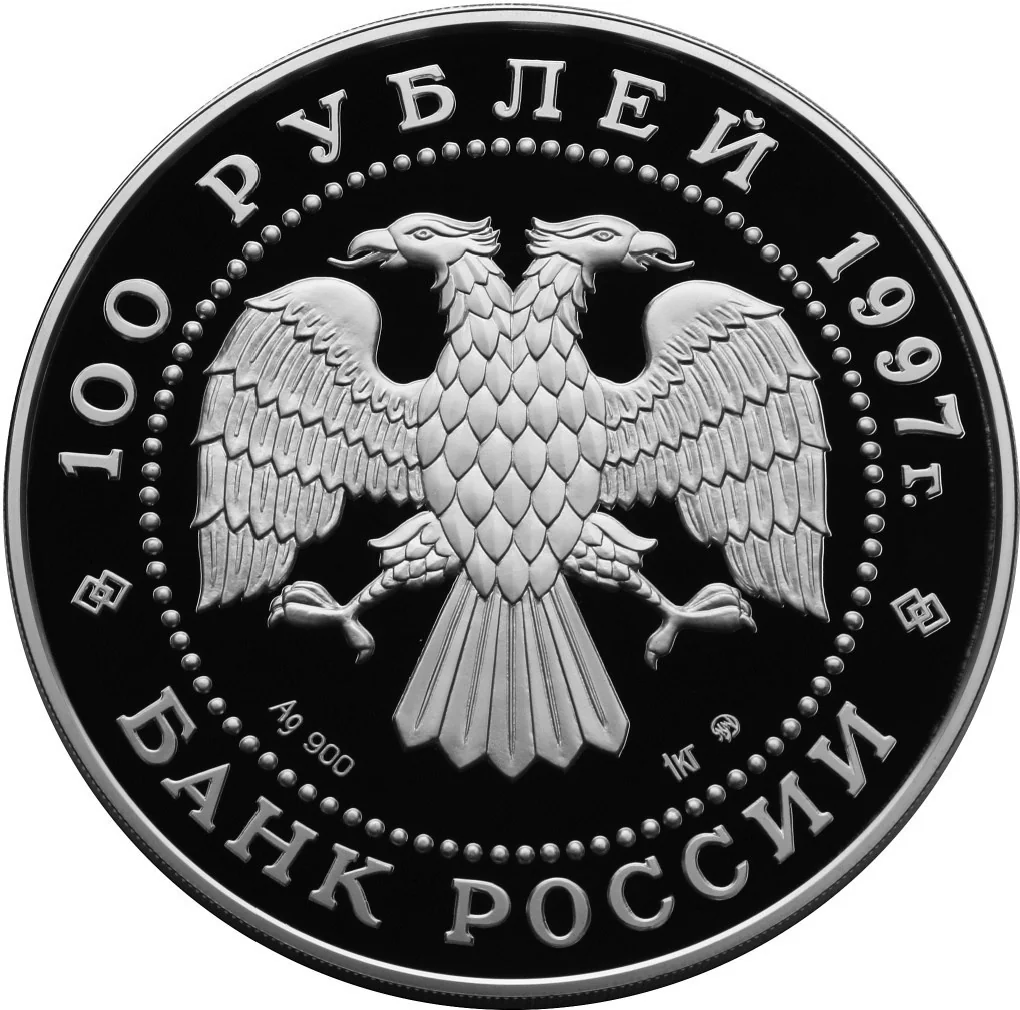
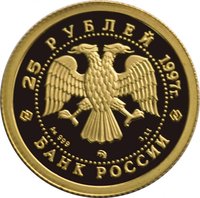
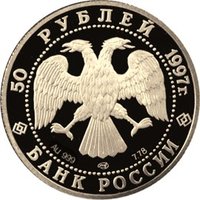
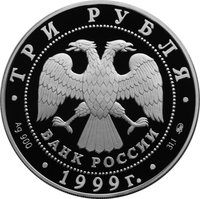
I. Bilibin's two-headed eagle design. Rim inscriptions: top—"100 РУБЛЕЙ 1997" (100 ROUBLES 1997), bottom—"БАНК РОССИИ" (BANK OF RUSSIA). Letters below denote the metal, fineness, weight, and mint mark.
Inscription:
100 РУБЛЕЙ 1997г.
Ag 900 1кг ММД
БАНК РОССИИ
Ag 900 1кг ММД
БАНК РОССИИ
Translation:
ONE HUNDRED RUBLES 1997
Ag 900 1kg MMD
BANK OF RUSSIA
Ag 900 1kg MMD
BANK OF RUSSIA
Language: Russian
Designer and engraver: Alexander Vasilyevich Baklanov
Reverse
Description:
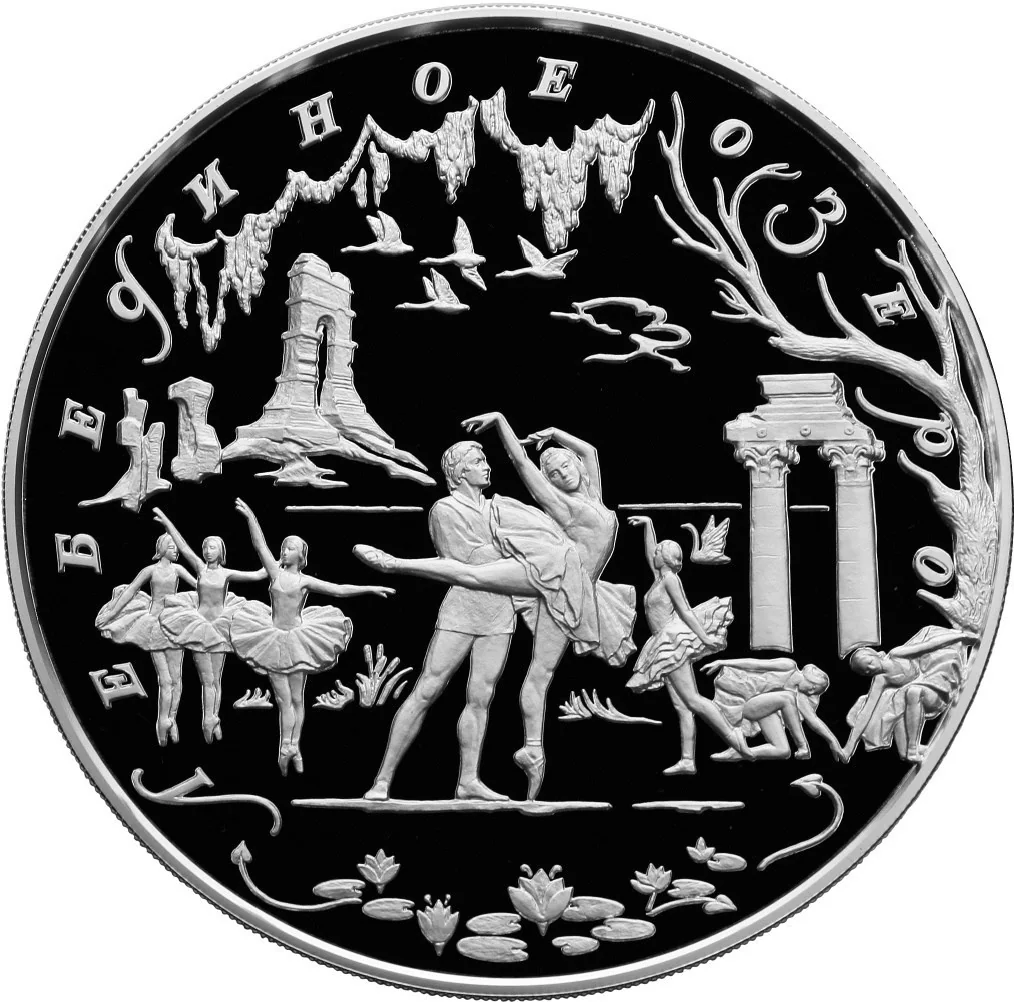
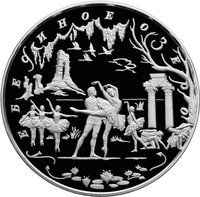
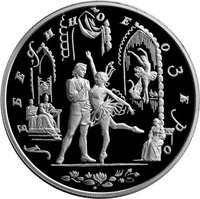
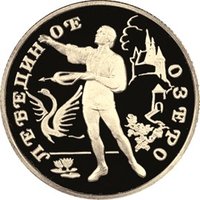
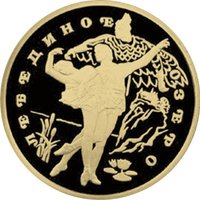
Siegfried and Odette meet by the lake in Act I. Rim inscription: «ЛЕБЕДИНОЕ ОЗЕРО» («SWAN LAKE»).
Inscription:
ЛЕБЕДИНОЕ ОЗЕРО
Translation:
Swan Lake
Script: Cyrillic
Language: Russian
Engraver: Alexandra Arsenyevna Dolgopolova
Edge
360 corrugations
Mints
| Name | Mark |
|---|---|
| Moscow Mint | (ММД) |
Mintings
| Year | Mint Mark | Mintage | Quality | Collection |
|---|---|---|---|---|
| 1997 | ММД | 1,000 | Proof |
Historical background
By 1997, the Russian Federation's currency situation appeared deceptively stable on the surface, following the turbulent hyperinflation of the early post-Soviet years. The government, under President Boris Yeltsin, had introduced a new ruble in 1998 (redenominating at a rate of 1,000 old rubles to 1 new ruble) and maintained a "crawling peg" exchange rate band. This policy, managed by the Central Bank of Russia (CBR), aimed to control inflation by tethering the ruble to the US dollar within a narrow corridor, which boosted public and investor confidence. Foreign capital flowed into high-yielding government short-term bonds (GKOs), creating an illusion of economic normalisation and monetary stability.
However, this stability was fragile and built on unsustainable foundations. The core problem was a severe fiscal crisis; the government was unable to collect sufficient taxes due to a weak economy, widespread evasion, and political resistance from powerful oligarchs and regions. To finance its persistent budget deficits, it relied heavily on issuing GKOs to foreign investors, creating a dangerous short-term debt pyramid. Simultaneously, a collapse in global commodity prices—particularly oil, a key export—dramatically worsened the trade balance, eroding the foreign currency reserves the CBR needed to defend the ruble's peg.
Consequently, by late 1997, the system was under acute strain. The contagion from the Asian Financial Crisis led foreign investors to rapidly reassess emerging market risks, triggering capital flight from Russia. Pressure on the ruble intensified, forcing the CBR to spend billions of its dwindling reserves in a futile defence of the exchange rate band. While the full-blown crisis—the devaluation and default of August 1998—would erupt the following year, the currency situation by the end of 1997 was a pressure cooker of overvalued exchange rates, unpayable short-term debt, and evaporating market confidence, setting the stage for the impending collapse.
However, this stability was fragile and built on unsustainable foundations. The core problem was a severe fiscal crisis; the government was unable to collect sufficient taxes due to a weak economy, widespread evasion, and political resistance from powerful oligarchs and regions. To finance its persistent budget deficits, it relied heavily on issuing GKOs to foreign investors, creating a dangerous short-term debt pyramid. Simultaneously, a collapse in global commodity prices—particularly oil, a key export—dramatically worsened the trade balance, eroding the foreign currency reserves the CBR needed to defend the ruble's peg.
Consequently, by late 1997, the system was under acute strain. The contagion from the Asian Financial Crisis led foreign investors to rapidly reassess emerging market risks, triggering capital flight from Russia. Pressure on the ruble intensified, forcing the CBR to spend billions of its dwindling reserves in a futile defence of the exchange rate band. While the full-blown crisis—the devaluation and default of August 1998—would erupt the following year, the currency situation by the end of 1997 was a pressure cooker of overvalued exchange rates, unpayable short-term debt, and evaporating market confidence, setting the stage for the impending collapse.
Series: Russian Ballet


✨ Legendary