

10 francs – France
Add to wishlist
France
Context
Years: 1861–1868
Issuer: France
Ruler: Napoleon III
Currency:
(1795—1959)
Demonetization: 25 June 1928
Total mintage: 26,689,610
Material
References
KM: #
Numista: #6929
Value
Bullion value: $446.60
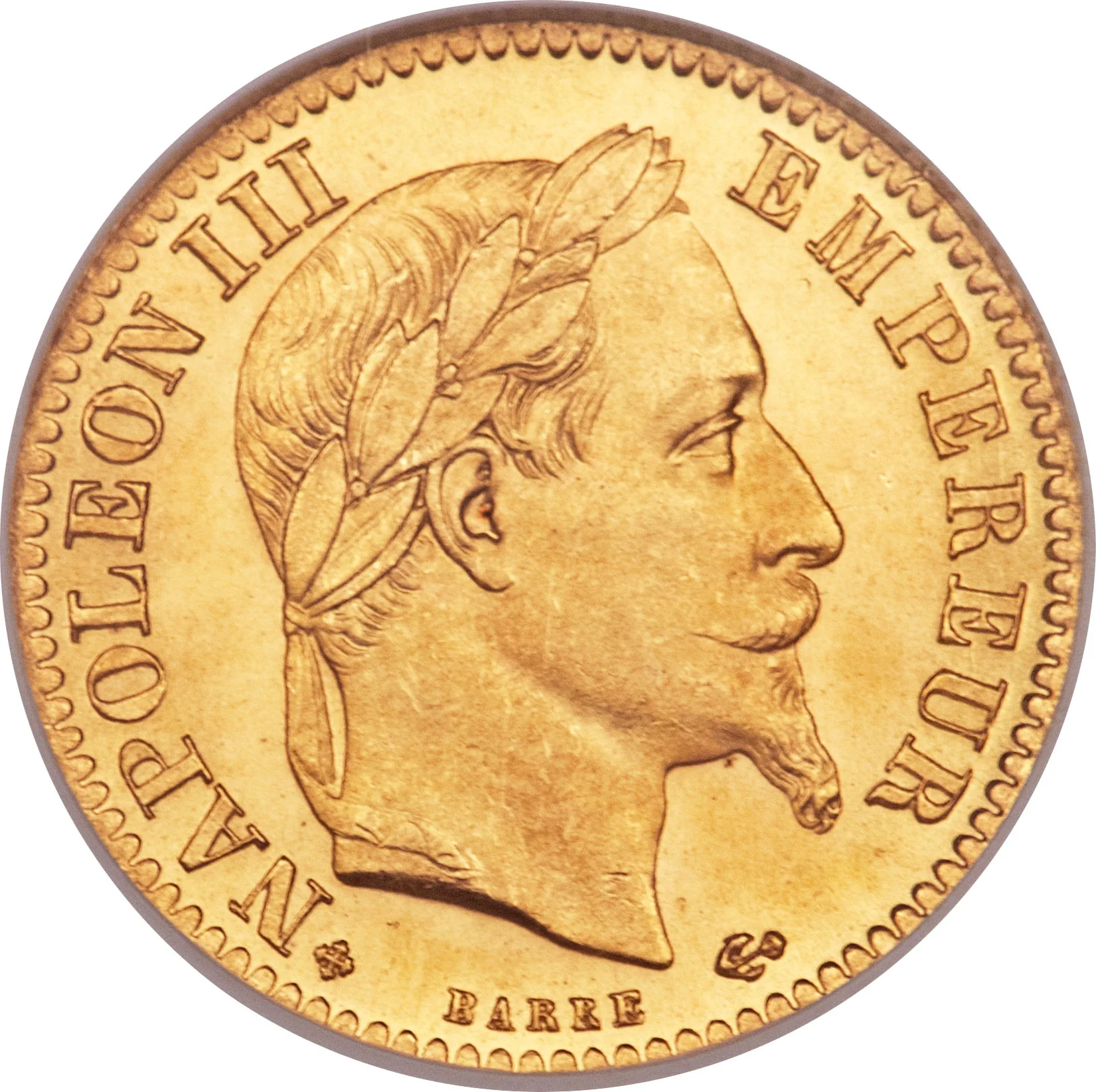
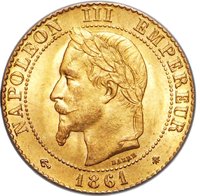
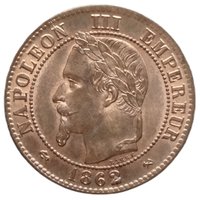
Obverse
Description:
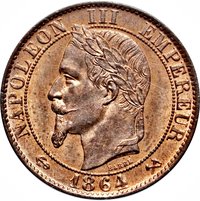
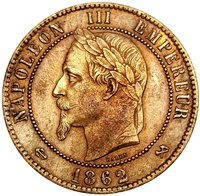
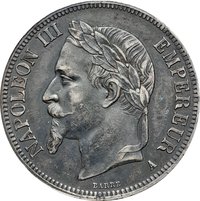
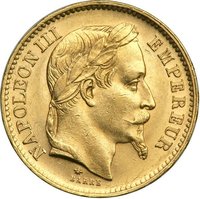
Tête laurée à droite; abeille. Signé BARRE sous l'ancre.
Inscription:
NAPOLEON III EMPEREUR
BARRE
BARRE
Translation:
NAPOLEON III EMPEROR
BARRE
BARRE
Script: Latin
Language: French
Engraver: Désiré-Albert Barre
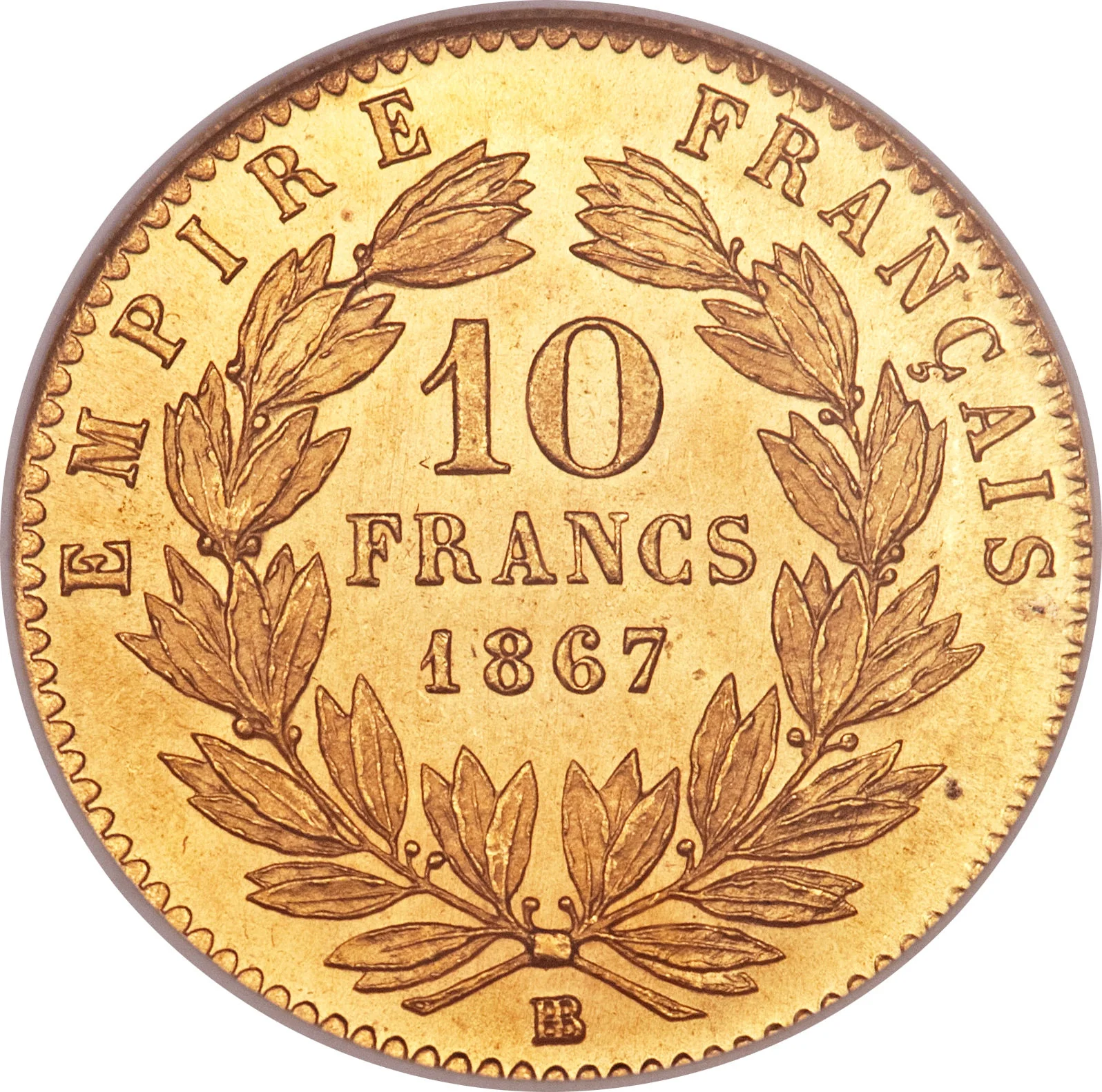
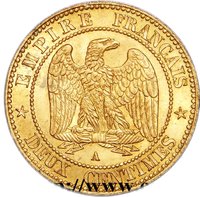
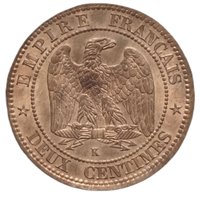
Reverse
Description:
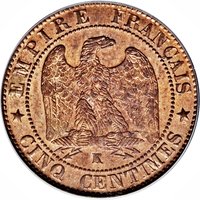
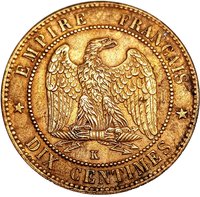
Laurel-wreathed denomination
Inscription:
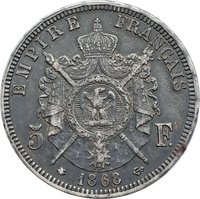
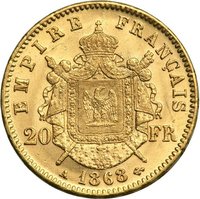
EMPIRE FRANÇAIS
10
FRANCS
1867
BB
10
FRANCS
1867
BB
Translation:
FRENCH EMPIRE
10
FRANCS
1867
BB
10
FRANCS
1867
BB
Script: Latin
Language: French
Engraver: Désiré-Albert Barre
Edge
Reeded
Mints
| Name | Mark |
|---|---|
| Monnaie de Paris | A |
| Strasbourg | BB |
Mintings
Historical background
In 1861, France operated under a bimetallic monetary system, as established by the Law of 7 Germinal Year XI (1803). This law fixed the value of the franc (the "franc germinal") and defined it in terms of both gold and silver at a fixed ratio: one gold Napoleon was worth 20 francs, and one kilogram of fine silver was worth 200 francs. The system was legally bimetallic, meaning both gold and silver coins were legal tender for unlimited amounts, and the mint stood ready to coin any amount of either metal brought to it. This placed France at the center of an international monetary mechanism, effectively stabilizing exchange rates between gold-standard and silver-standard nations.
However, this system faced growing strain by the 1860s due to fluctuations in the market values of the two metals. The discovery of vast silver deposits in the Americas, combined with increased European adoption of the gold standard (notably following the UK), began to depress the market price of silver relative to the fixed mint ratio. This created an arbitrage opportunity under Gresham's Law, where "bad money drives out good." Because silver was officially overvalued at the French mint compared to its market price, individuals would bring silver to be coined into francs, while hoarding or exporting the officially undervalued gold coins. This led to a gradual but concerning drain of gold from the French economy.
Consequently, while the system appeared stable on the surface in 1861, it was in a period of underlying tension. The Latin Monetary Union (LMU), a treaty to standardize coinage with Belgium, Italy, and Switzerland, was under negotiation and would be formally established in 1865. A key driver of this union was the need to address the instability of bimetallism and control the circulation of subsidiary silver coins, which were being exported for their bullion value. Thus, 1861 represents a pivotal moment just before formal multilateral action, as France sought to preserve its monetary influence and manage the creeping demonetization of gold within its borders.
However, this system faced growing strain by the 1860s due to fluctuations in the market values of the two metals. The discovery of vast silver deposits in the Americas, combined with increased European adoption of the gold standard (notably following the UK), began to depress the market price of silver relative to the fixed mint ratio. This created an arbitrage opportunity under Gresham's Law, where "bad money drives out good." Because silver was officially overvalued at the French mint compared to its market price, individuals would bring silver to be coined into francs, while hoarding or exporting the officially undervalued gold coins. This led to a gradual but concerning drain of gold from the French economy.
Consequently, while the system appeared stable on the surface in 1861, it was in a period of underlying tension. The Latin Monetary Union (LMU), a treaty to standardize coinage with Belgium, Italy, and Switzerland, was under negotiation and would be formally established in 1865. A key driver of this union was the need to address the instability of bimetallism and control the circulation of subsidiary silver coins, which were being exported for their bullion value. Thus, 1861 represents a pivotal moment just before formal multilateral action, as France sought to preserve its monetary influence and manage the creeping demonetization of gold within its borders.
Series: 1861 France circulation coins
🌱 Common