

1 Kreuzer – Further Austria
Austria
Context
Years: 1804–1805
Country: Austria 
Issuer: Further Austria
Ruler: Francis II
Currency:
Demonetized: Yes
Material
References
KM: #Click to copy to clipboard30
Numista: #69234
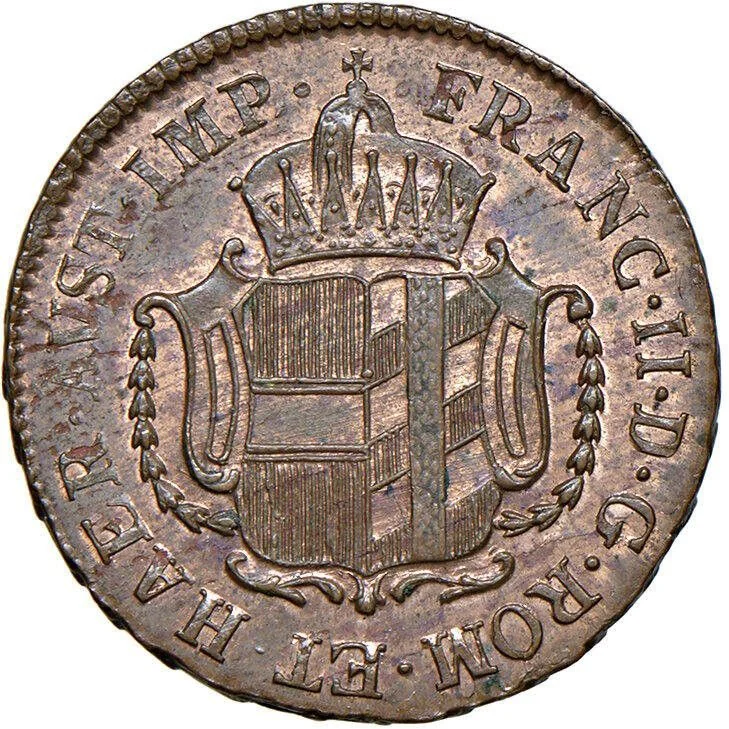
Obverse
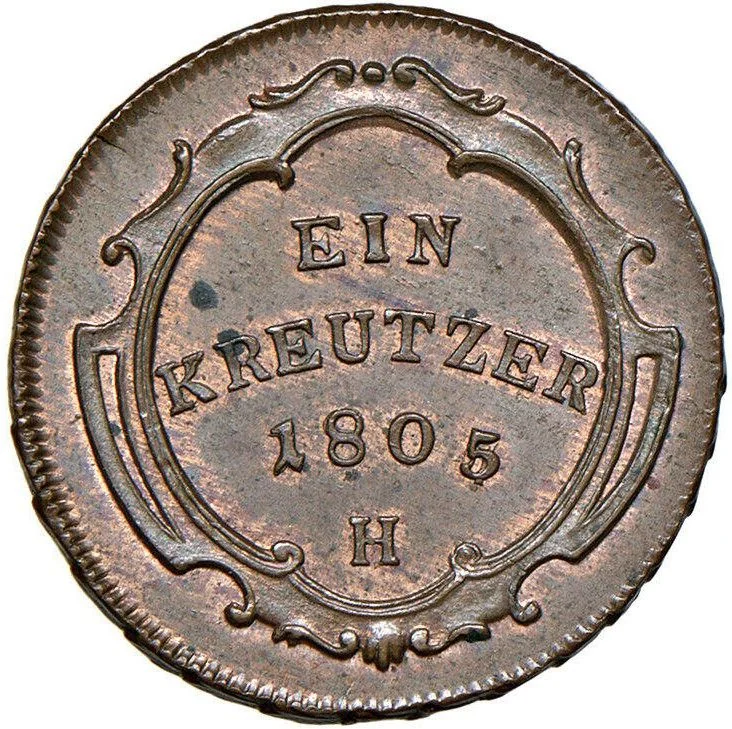
Reverse
Description:
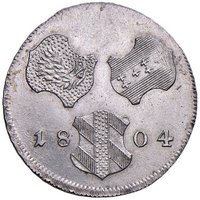
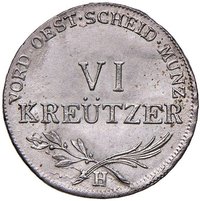
Frame with value and date. Mint mark H for Günzburg. 1805 is the final year for Further Austria before its post-Napoleonic division.
Inscription:
EIN
KREUTZER
1805
H
KREUTZER
1805
H
Script: Latin
Edge
Categories
| Symbols> Coat of Arms |
Mints
| Name | Mark |
|---|---|
| Günzburg | H |
Historical background
In 1804, the currency situation in Further Austria (the scattered Habsburg territories in southwestern Germany and Switzerland) was characterized by fragmentation and transition, deeply influenced by the broader upheavals of the Napoleonic Wars. The region did not have a unified currency of its own. Instead, circulation was a complex mix of coins from numerous German states, alongside the dominant Austrian Conventionsthaler and Conventionkreuzers from the Habsburg core. This created a cumbersome commercial environment where exchange rates and values fluctuated, complicating trade and taxation.
The political context was one of imminent dissolution. The Peace of Lunéville (1801) and the subsequent German Mediatisation had already begun the process of dismantling Further Austria. By 1804, Habsburg authority was waning, with territories like the Breisgau and the Swabian lands being eyed or already allocated to neighboring states such as Baden, Württemberg, and Bavaria. Consequently, Austrian monetary authority was weakening, and the currencies of these expanding neighboring states were increasingly circulating in anticipation of formal annexation.
Therefore, 1804 represents a final, unstable year under nominal Habsburg rule where the old Austrian monetary system persisted but was becoming obsolete. The currency situation was in a state of limbo, mirroring the political fate of the territories themselves. Within a year, following the Peace of Pressburg (1805), Further Austria would be dissolved and partitioned, with its constituent parts fully absorbed into new political entities that would impose their own uniform currency systems, ending centuries of Habsburg monetary influence in the region.
The political context was one of imminent dissolution. The Peace of Lunéville (1801) and the subsequent German Mediatisation had already begun the process of dismantling Further Austria. By 1804, Habsburg authority was waning, with territories like the Breisgau and the Swabian lands being eyed or already allocated to neighboring states such as Baden, Württemberg, and Bavaria. Consequently, Austrian monetary authority was weakening, and the currencies of these expanding neighboring states were increasingly circulating in anticipation of formal annexation.
Therefore, 1804 represents a final, unstable year under nominal Habsburg rule where the old Austrian monetary system persisted but was becoming obsolete. The currency situation was in a state of limbo, mirroring the political fate of the territories themselves. Within a year, following the Peace of Pressburg (1805), Further Austria would be dissolved and partitioned, with its constituent parts fully absorbed into new political entities that would impose their own uniform currency systems, ending centuries of Habsburg monetary influence in the region.
⭐ Rare