

20 Kwanzas – Angola
Circulating commemorative coins
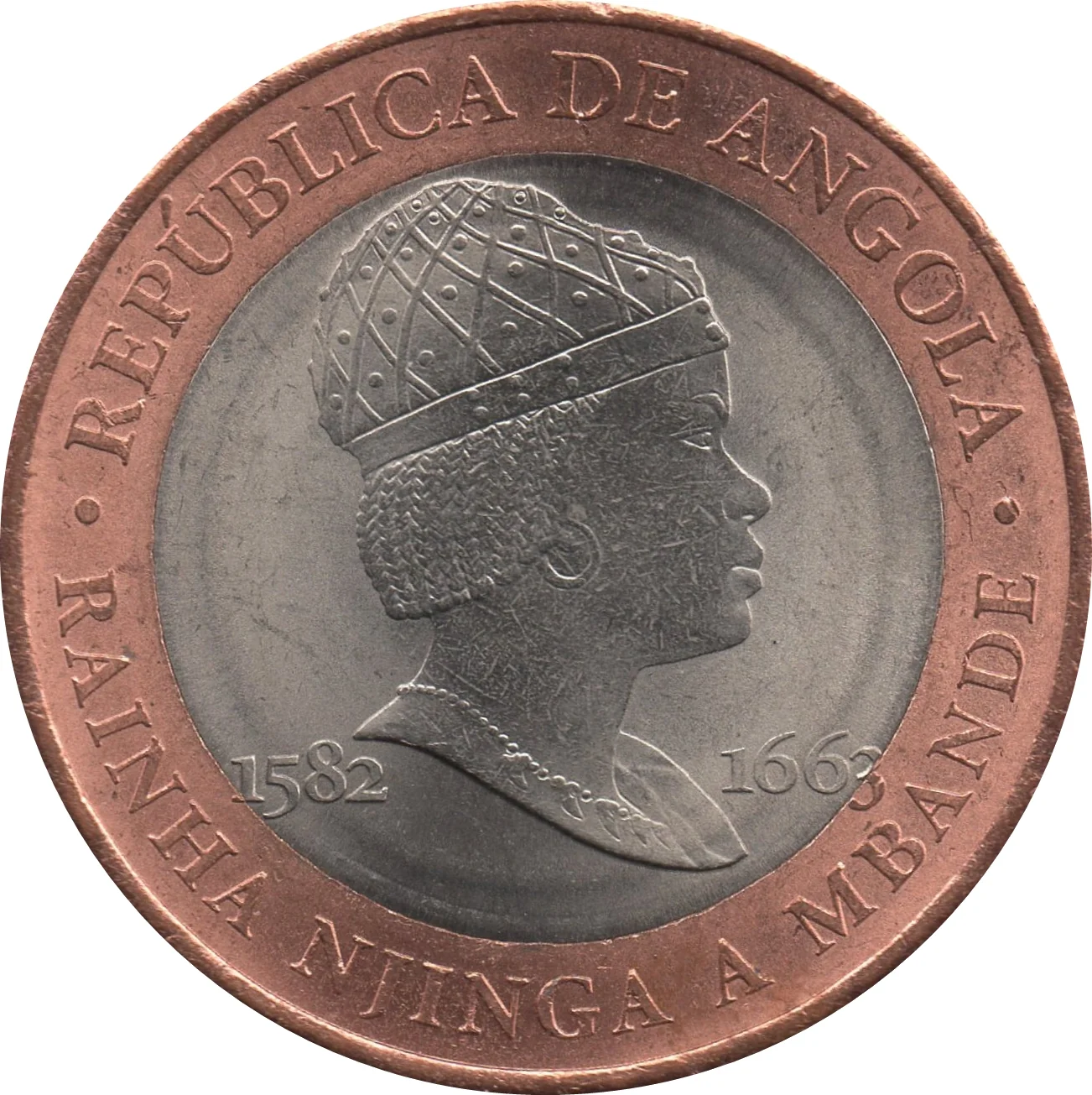
Commemoration: Queen Njinga A Mbande (1582-1663)
Angola
Obverse
Description:
Portrait of Queen Njinga facing right.
Inscription:
REPÚBLICA DE ANGOLA
1582 1663
RAINHA NJINGA A MBANGE
1582 1663
RAINHA NJINGA A MBANGE
Translation:
REPUBLIC OF ANGOLA
1582 1663
QUEEN NJINGA OF MBANDE
1582 1663
QUEEN NJINGA OF MBANDE
Script: Latin
Languages: Portuguese, Kimbundu
Reverse
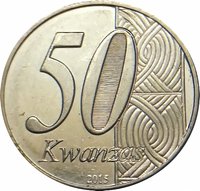
Description:
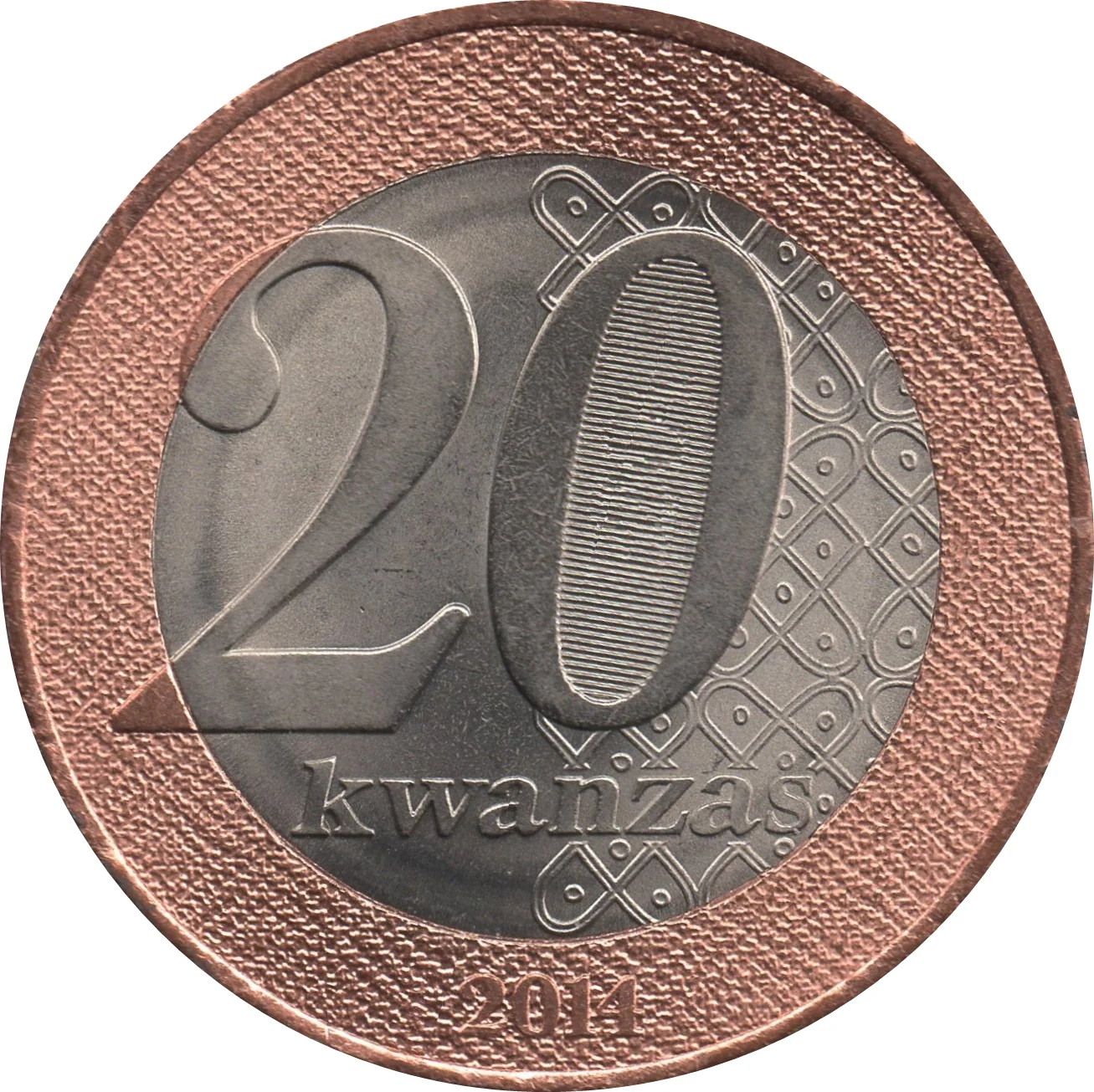
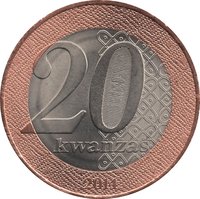
Large "20" with "BNA" inside the zero, set within a textile-patterned border.
Inscription:
20
kwanzas
2014
kwanzas
2014
Script: Latin
Edge
Reeded Sections
Categories
| Event> Death anniversary |
| Person> Monarch |
Mints
| Name | Mark |
|---|---|
| Moscow Mint | — |
Mintings
| Year | Mint Mark | Mintage | Quality | Collection |
|---|---|---|---|---|
| 2014 | — | — |
Historical background
In 2014, Angola's currency situation was defined by significant pressure on the kwanza (AOA) and a heavy reliance on oil revenues, which accounted for over 95% of export earnings and roughly 70% of government income. The year was marked by a sharp decline in global oil prices beginning in mid-2014, which exposed the structural vulnerabilities of the Angolan economy. This external shock rapidly depleted foreign exchange reserves and created a growing imbalance between the official exchange rate, pegged to the US dollar by the National Bank of Angola (BNA), and a thriving black-market rate where the kwanza was far weaker.
The government's response was a classic "defend the peg" strategy, which included draining reserves to support the official rate and implementing strict capital controls to limit dollar outflows. These controls made it extremely difficult for businesses to access foreign currency for importing essential goods, from machinery to foodstuffs, leading to widespread shortages and fueling inflation. Consequently, a large parallel market for dollars emerged, creating a multi-tiered currency system where the privileged with connections accessed dollars at the strong official rate while most others faced a much weaker informal rate, distorting the entire economy.
By the end of 2014, the unsustainable pressure was clear. The disparity between the official and parallel market rates widened dramatically, foreign reserves continued to fall, and inflation was accelerating. This tense environment set the stage for the major devaluations and monetary policy shifts that would follow in 2015, as the BNA began to reluctantly adjust the peg in the face of persistent low oil prices. The year 2014 thus represented the beginning of a prolonged currency crisis, highlighting the profound risks of an economy overwhelmingly dependent on a single volatile commodity.
The government's response was a classic "defend the peg" strategy, which included draining reserves to support the official rate and implementing strict capital controls to limit dollar outflows. These controls made it extremely difficult for businesses to access foreign currency for importing essential goods, from machinery to foodstuffs, leading to widespread shortages and fueling inflation. Consequently, a large parallel market for dollars emerged, creating a multi-tiered currency system where the privileged with connections accessed dollars at the strong official rate while most others faced a much weaker informal rate, distorting the entire economy.
By the end of 2014, the unsustainable pressure was clear. The disparity between the official and parallel market rates widened dramatically, foreign reserves continued to fall, and inflation was accelerating. This tense environment set the stage for the major devaluations and monetary policy shifts that would follow in 2015, as the BNA began to reluctantly adjust the peg in the face of persistent low oil prices. The year 2014 thus represented the beginning of a prolonged currency crisis, highlighting the profound risks of an economy overwhelmingly dependent on a single volatile commodity.
🌱 Common