

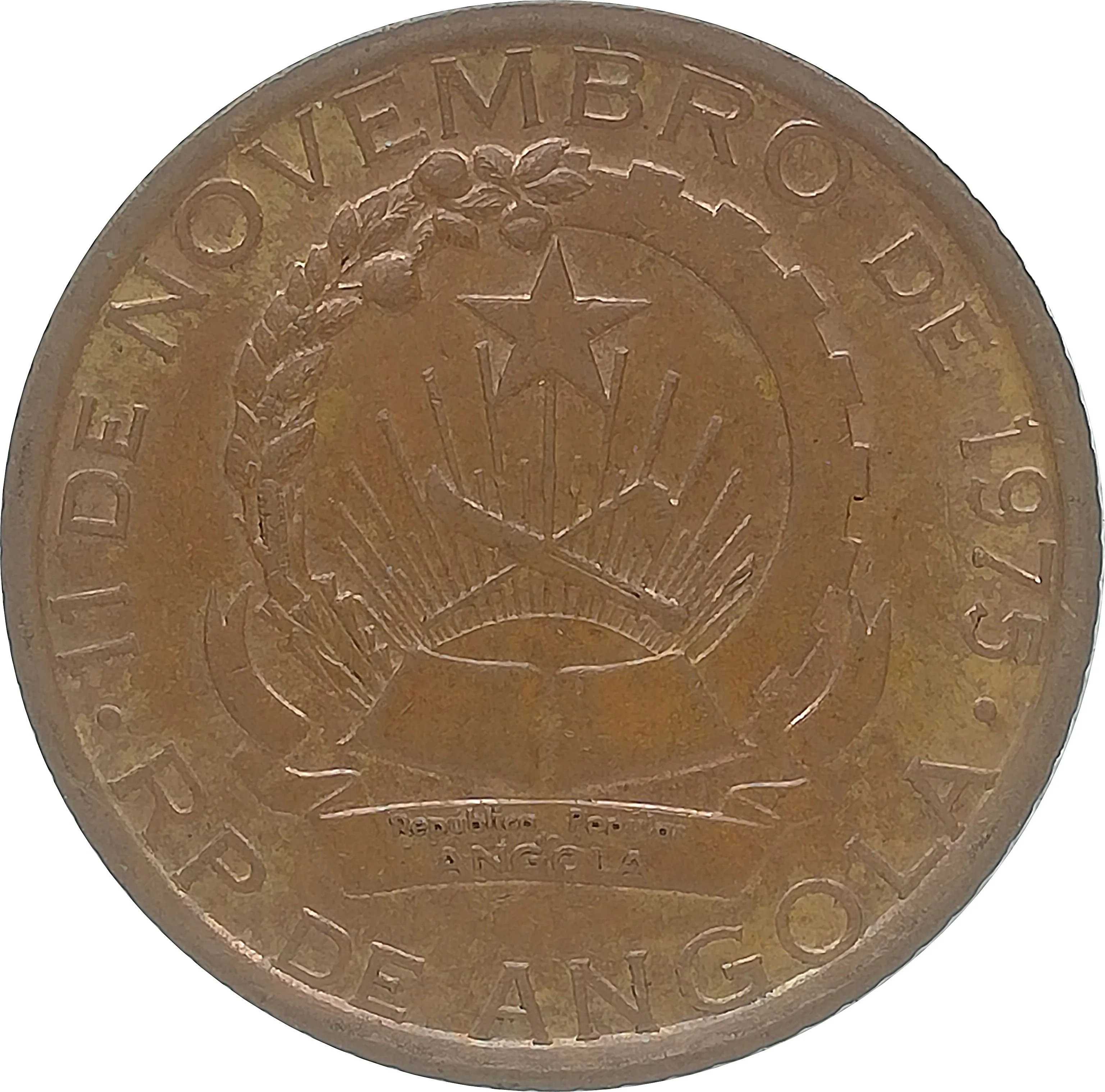
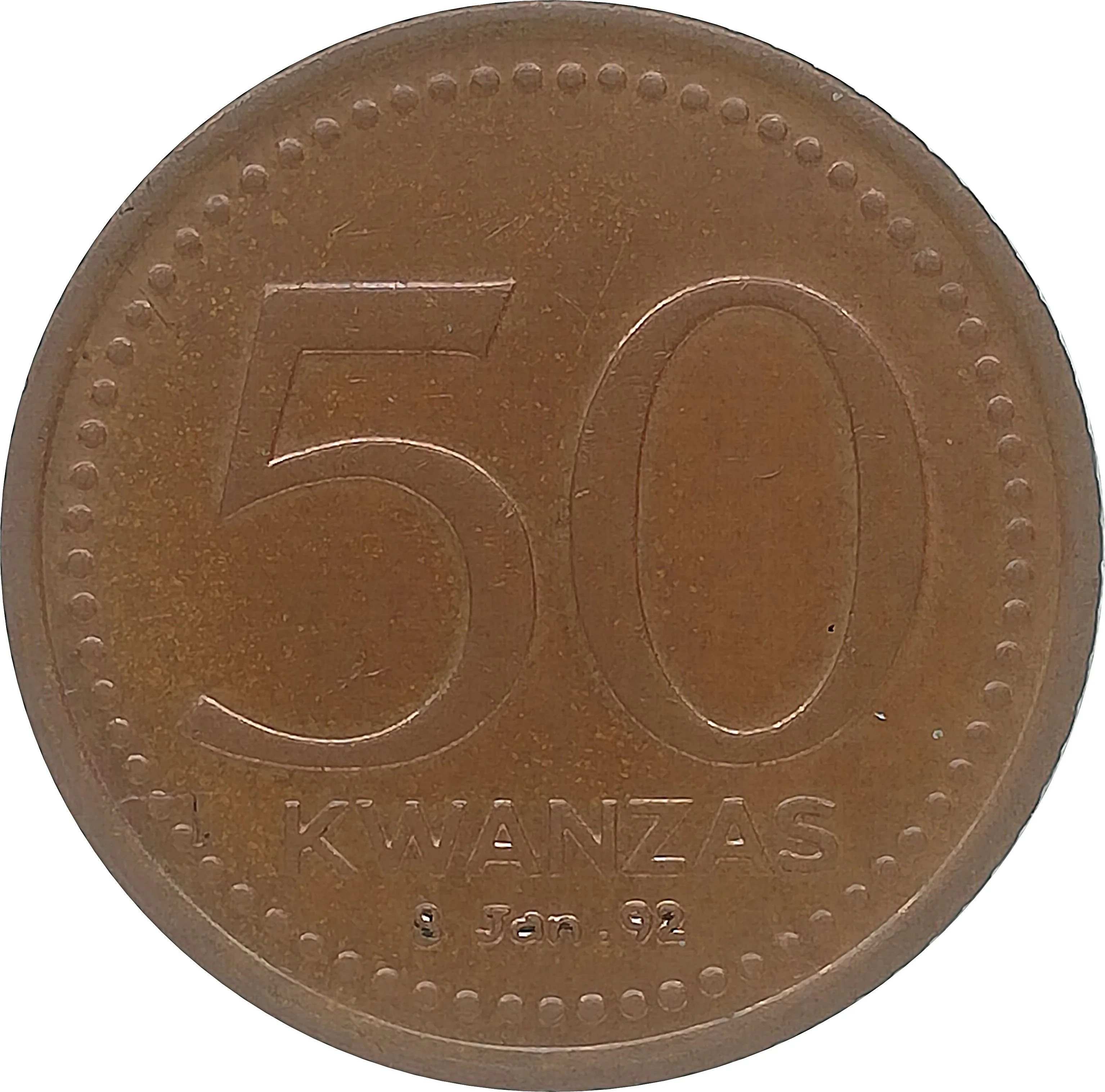
50 Kwanzas (Angolan Kwanza Currency) – Angola
Circulating commemorative coins
Commemoration: 15th Anniversary of the Angolan Kwanza Currency
Angola
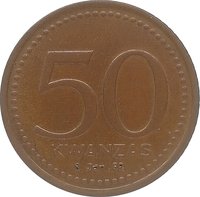
Obverse
Description:
National arms in legend.
Inscription:
11 DE NOVEMBRO DE 1975
Republica Popular ANGOLA
RP DE ANGOLA
Republica Popular ANGOLA
RP DE ANGOLA
Translation:
11th of November 1975
People's Republic of ANGOLA
People's Republic of Angola
People's Republic of ANGOLA
People's Republic of Angola
Script: Latin
Language: Portuguese
Reverse
Edge
Reeded
Categories
| Symbols> Coat of Arms |
| Symbol> Sun |
| Object> Cold weapons |
Mintings
| Year | Mint Mark | Mintage | Quality | Collection |
|---|---|---|---|---|
| 1992 | — | — |
Historical background
In 1992, Angola's currency situation was defined by severe hyperinflation and economic collapse, directly stemming from the resumption of the devastating civil war. The relative peace following the 1991 Bicesse Accords, which had set the stage for the country's first multi-party elections in September 1992, quickly unraveled. When UNITA rejected the election results, the conflict reignited with even greater ferocity, shattering any hope for economic stabilization. Government spending on the war effort became limitless, financed almost entirely by the Banco Nacional de Angola printing new kwanzas, utterly decimating the currency's value.
This massive expansion of the money supply, completely untethered from productive economic activity, triggered an inflationary spiral. Prices skyrocketed on a daily basis, rendering the kwanza nearly worthless and forcing the population to revert to barter for basic necessities. The formal economy crumbled, and a vast parallel market for foreign currency, primarily US dollars, became essential for any significant transaction. Savings were wiped out, and hyperinination effectively functioned as a catastrophic tax on the poor and fixed-income earners, deepening widespread humanitarian suffering.
The currency chaos of 1992 was therefore not a standalone monetary crisis but a core symptom of state failure and war. The government's reliance on seigniorage—printing money to fund itself—was a direct consequence of the collapse in tax revenue and the prioritization of military expenditure over all else. This period cemented a legacy of deep distrust in the national currency among Angolans, a trauma that would shape financial behavior and policy challenges for decades to come, long after the war's end.
This massive expansion of the money supply, completely untethered from productive economic activity, triggered an inflationary spiral. Prices skyrocketed on a daily basis, rendering the kwanza nearly worthless and forcing the population to revert to barter for basic necessities. The formal economy crumbled, and a vast parallel market for foreign currency, primarily US dollars, became essential for any significant transaction. Savings were wiped out, and hyperinination effectively functioned as a catastrophic tax on the poor and fixed-income earners, deepening widespread humanitarian suffering.
The currency chaos of 1992 was therefore not a standalone monetary crisis but a core symptom of state failure and war. The government's reliance on seigniorage—printing money to fund itself—was a direct consequence of the collapse in tax revenue and the prioritization of military expenditure over all else. This period cemented a legacy of deep distrust in the national currency among Angolans, a trauma that would shape financial behavior and policy challenges for decades to come, long after the war's end.
💎 Very Rare