

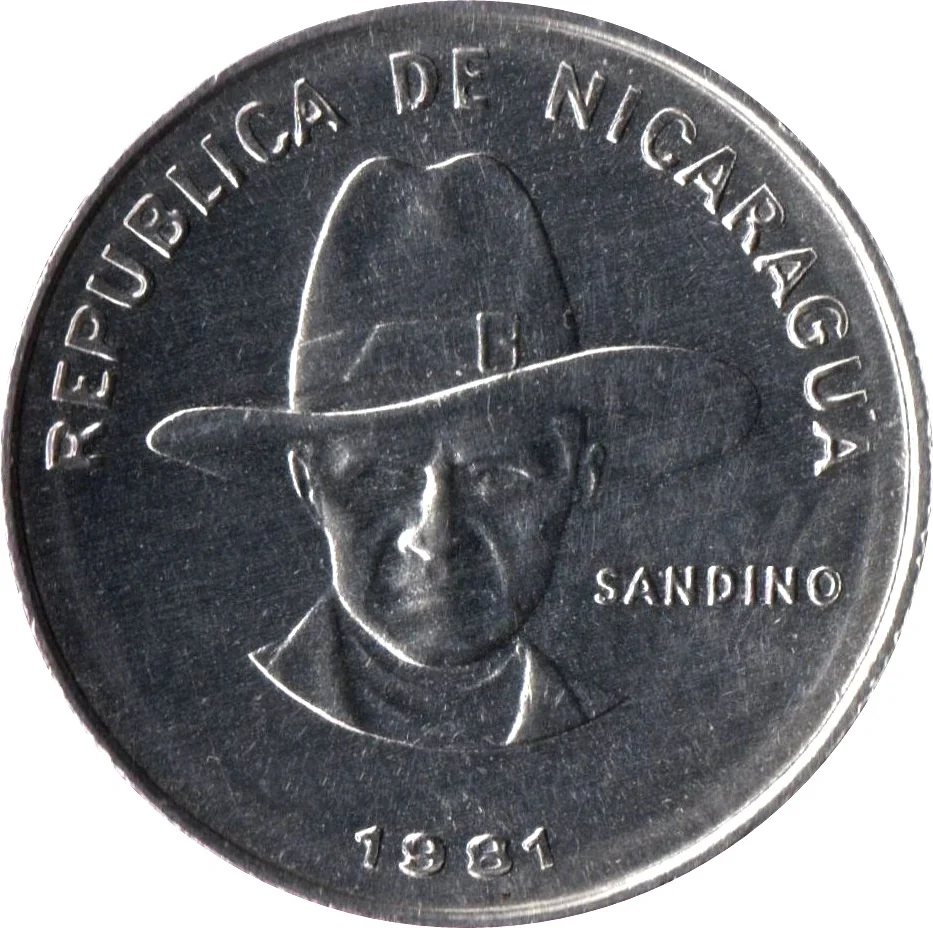
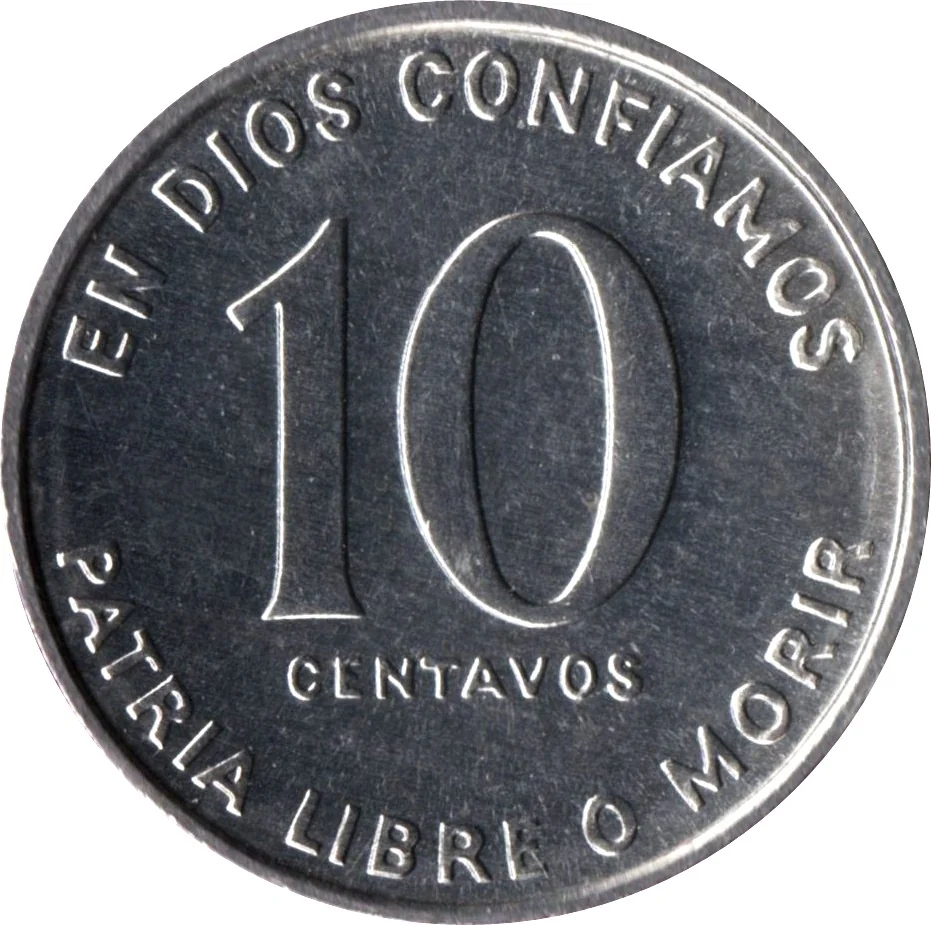
10 centavos – Nicaragua
Add to wishlist
Nicaragua
Context
Year: 1981
Issuer: Nicaragua
Issuing organization: Central Bank of Nicaragua
Period:
(since 1854)
Currency:
(1912—1987)
Demonetization: 15 February 1988
Total mintage: 10,000,000
Material
References
KM: #
Numista: #6876
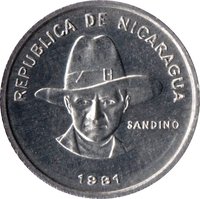
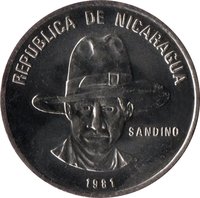
Obverse
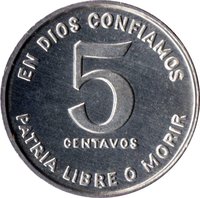
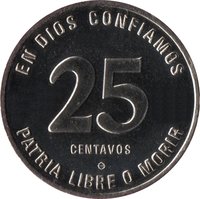
Reverse
Edge
Reeded
Categories
| Person> Military leader |
| Object> Hat |
Mints
| Name | Mark |
|---|---|
| Sherritt Mint | — |
Mintings
| Year | Mint Mark | Mintage | Quality | Collection |
|---|---|---|---|---|
| 1981 | — | 10,000,000 |
Historical background
In 1981, Nicaragua's currency situation was deeply unstable and inflationary, a direct consequence of the ongoing Contra War and the economic policies of the newly installed Sandinista government. The revolutionary government, which had taken power in 1979, inherited an economy devastated by the insurrection against the Somoza dictatorship and was immediately confronted with a U.S.-backed counter-revolutionary insurgency. This conflict demanded massive military spending, diverting resources from production and leading to severe shortages of basic goods. Furthermore, the United States suspended economic aid and began organizing a trade embargo, crippling the country's access to foreign exchange and essential imports.
The government's response to these crises included expansive fiscal and monetary policies, financing its budget and war effort largely by printing money. This led to a classic case of demand-pull inflation, as more currency chased fewer goods. While the official exchange rate of the córdoba was initially maintained at 10 to the U.S. dollar, a thriving black market emerged where the currency traded at a significant discount, revealing the true market lack of confidence. Price controls on basic commodities were implemented to shield the population, but these further distorted the market, exacerbating shortages and fueling a parallel informal economy.
Thus, by the end of 1981, Nicaragua was entrenched in an economic contradiction characteristic of a war economy: rigid official controls over prices and the exchange rate existed alongside a growing informal market that undermined them. The mounting fiscal deficit, scarcity of foreign reserves, and rampant money creation set the stage for the hyperinflation that would cripple the country later in the decade. The currency instability was not merely an economic issue but a central front in the political and military struggle for the nation's future.
The government's response to these crises included expansive fiscal and monetary policies, financing its budget and war effort largely by printing money. This led to a classic case of demand-pull inflation, as more currency chased fewer goods. While the official exchange rate of the córdoba was initially maintained at 10 to the U.S. dollar, a thriving black market emerged where the currency traded at a significant discount, revealing the true market lack of confidence. Price controls on basic commodities were implemented to shield the population, but these further distorted the market, exacerbating shortages and fueling a parallel informal economy.
Thus, by the end of 1981, Nicaragua was entrenched in an economic contradiction characteristic of a war economy: rigid official controls over prices and the exchange rate existed alongside a growing informal market that undermined them. The mounting fiscal deficit, scarcity of foreign reserves, and rampant money creation set the stage for the hyperinflation that would cripple the country later in the decade. The currency instability was not merely an economic issue but a central front in the political and military struggle for the nation's future.
🌱 Common