

25 Cents – Cayman Islands
United Kingdom
Context
Years: 1972–1986
Country: United Kingdom 
Issuer: Cayman Islands 
Issuing organization: Cayman Islands Currency Board
Ruler: Elizabeth II
Currency:
(since 1972)
Total mintage: 1,041,451
Material
References
KM: #Click to copy to clipboard4
Numista: #6872
Value
Exchange value: 0.25 KYD
Inflation-adjusted value: 4.52 KYD
Obverse
Description:
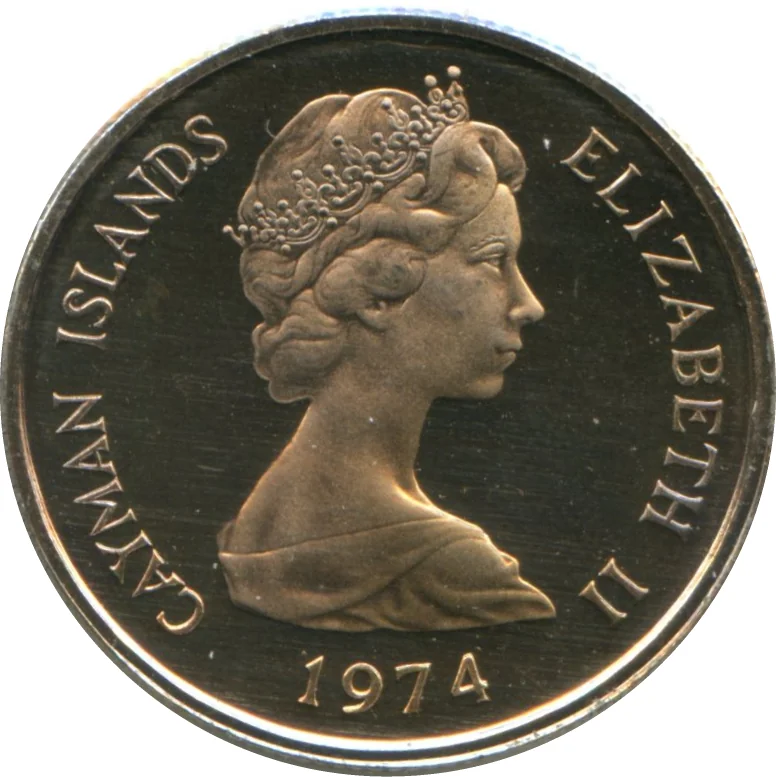
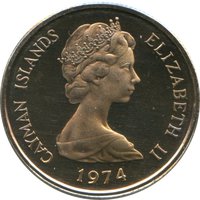
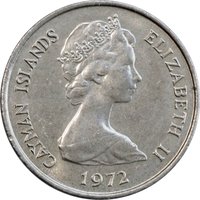
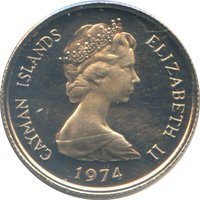
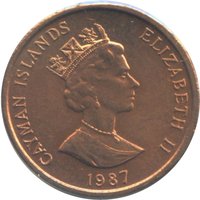
Second crowned portrait of Queen Elizabeth II, wearing the Girls of Great Britain and Ireland tiara, with legend around and date below.
Inscription:
CAYMAN ISLANDS ELIZABETH II
1974
1974
Script: Latin
Engraver: Arnold Machin
Reverse
Description:
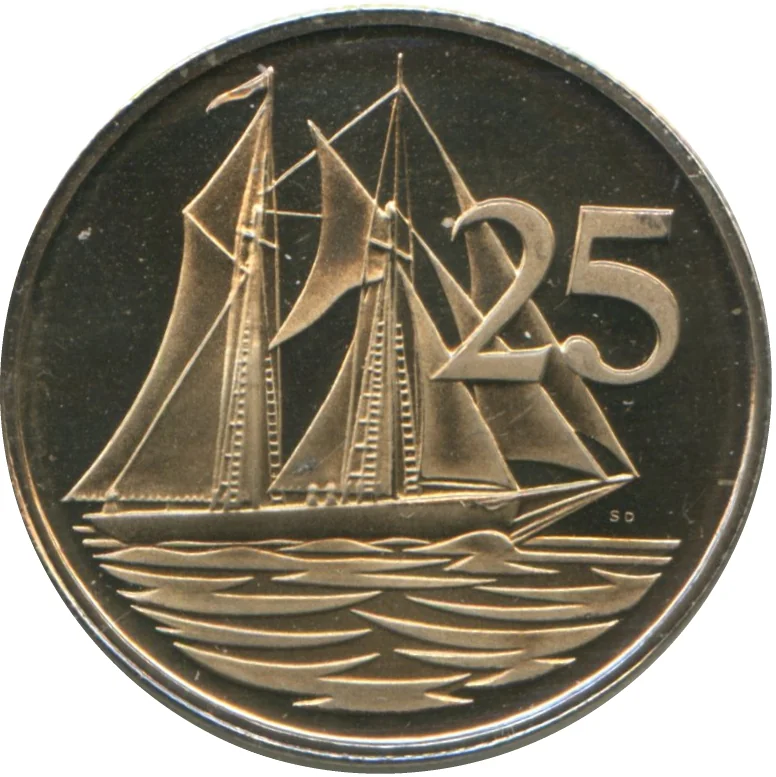
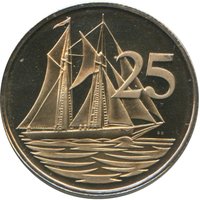
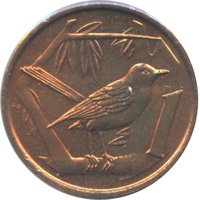
Schooner "Kirk B" sailing right.
Inscription:
25
SD
SD
Script: Latin
Engraver: Stuart Devlin
Edge
Reeded
Categories
| Transportation> Watercraft |
Mints
| Name | Mark |
|---|---|
| Royal Mint | — |
| Franklin Mint | FM |
Mintings
Historical background
In 1972, the Cayman Islands were navigating a pivotal transition in their monetary system, moving away from the Jamaican currency that had been their primary medium of exchange. Following Jamaica's independence from the United Kingdom in 1962, the Cayman Islands (which remained a British colony) continued to use the Jamaican pound and, after 1969, the new Jamaican dollar. However, Jamaica's economic policies and the devaluation of its currency created significant instability and concern for Cayman's burgeoning financial sector and tourism-driven economy, which demanded a more stable and independent monetary foundation.
Consequently, the Cayman Islands government, under the Currency Law of 1971, took decisive steps to introduce its own distinct currency. On May 1, 1972, the Cayman Islands dollar (KYD) was officially launched, replacing the Jamaican dollar at par. The new currency was pegged to the US dollar at a fixed rate of CI$1.00 = US$1.20, a deliberate and strategic rate that underscored the territory's deep economic ties with the United States, particularly in tourism and investment.
This move was a landmark assertion of economic sovereignty and a practical necessity for the islands' development. The introduction of the Cayman Islands dollar provided the stability required to foster confidence in the local financial services industry, which was in its early stages of becoming a global hub. The 1972 currency reform thus laid a critical cornerstone for the territory's future prosperity, decoupling its monetary fate from Jamaica's and directly anchoring its economy to the strong and reliable US dollar.
Consequently, the Cayman Islands government, under the Currency Law of 1971, took decisive steps to introduce its own distinct currency. On May 1, 1972, the Cayman Islands dollar (KYD) was officially launched, replacing the Jamaican dollar at par. The new currency was pegged to the US dollar at a fixed rate of CI$1.00 = US$1.20, a deliberate and strategic rate that underscored the territory's deep economic ties with the United States, particularly in tourism and investment.
This move was a landmark assertion of economic sovereignty and a practical necessity for the islands' development. The introduction of the Cayman Islands dollar provided the stability required to foster confidence in the local financial services industry, which was in its early stages of becoming a global hub. The 1972 currency reform thus laid a critical cornerstone for the territory's future prosperity, decoupling its monetary fate from Jamaica's and directly anchoring its economy to the strong and reliable US dollar.
🌱 Very Common