

100 Kyats – Myanmar
Myanmar
Context

Material
Diameter: 26.8 mm
Weight: 7.52 g
Thickness: 1.92 mm
Shape: Round
Composition: Copper-nickel
Technique: Milled
Alignment: Medal alignment

flip
References
KM: #Click to copy to clipboard64
Numista: #6867
Value
Exchange value: 100 MMK
Obverse
Reverse
Description:
Denom, date right
Inscription:
CENTRAL BANK OF MYANMAR 1999
100 KYATS
100 KYATS
Edge
Reeded
Mints
| Name | Mark |
|---|---|
| Security Printing Works Factory | — |
Mintings
| Year | Mint Mark | Mintage | Quality | Collection |
|---|---|---|---|---|
| 1999 | — | — |
Historical background
In 1999, Myanmar's currency situation was characterized by a complex and dysfunctional multi-tiered exchange rate system, a legacy of decades of socialist isolation and subsequent economic mismanagement under military rule. The official exchange rate, set by the government at around 6 kyat to the US dollar, was a grossly overvalued fiction used only for government accounting and some state-sector transactions. In stark contrast, the thriving black market rate, which reflected the currency's true value, traded at approximately 350 to 400 kyat per dollar. This massive disparity, exceeding 6000%, created severe economic distortions, incentivized corruption, and crippled legitimate foreign trade and investment.
The economy operated through this dual system, where access to foreign currency at the official rate was a prized privilege for the elite and connected enterprises. For the vast majority of the population and private businesses, however, the black market was the only practical avenue for obtaining foreign exchange, making everyday commerce and international transactions fraught with difficulty and risk. This environment fostered a large informal economy, discouraged formal banking, and led to widespread use of US dollars and Thai baht in border areas and for major purchases, further undermining confidence in the national currency.
The situation in 1999 was a symptom of deeper issues: international isolation due to human rights abuses, chronic budget deficits financed by money printing, and a lack of productive exports beyond natural resources like natural gas. While the government had made a nominal move towards a unified rate with the introduction of a "Foreign Exchange Certificate" (FEC) system in the early 1990s, by 1999 these certificates were also trading at a significant discount to the US dollar. The entrenched currency crisis underscored the country's profound economic isolation and the unsustainable financial policies of the State Peace and Development Council (SPDC) junta.
The economy operated through this dual system, where access to foreign currency at the official rate was a prized privilege for the elite and connected enterprises. For the vast majority of the population and private businesses, however, the black market was the only practical avenue for obtaining foreign exchange, making everyday commerce and international transactions fraught with difficulty and risk. This environment fostered a large informal economy, discouraged formal banking, and led to widespread use of US dollars and Thai baht in border areas and for major purchases, further undermining confidence in the national currency.
The situation in 1999 was a symptom of deeper issues: international isolation due to human rights abuses, chronic budget deficits financed by money printing, and a lack of productive exports beyond natural resources like natural gas. While the government had made a nominal move towards a unified rate with the introduction of a "Foreign Exchange Certificate" (FEC) system in the early 1990s, by 1999 these certificates were also trading at a significant discount to the US dollar. The entrenched currency crisis underscored the country's profound economic isolation and the unsustainable financial policies of the State Peace and Development Council (SPDC) junta.
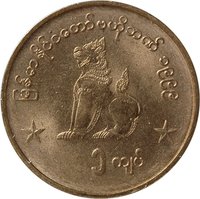
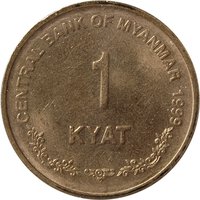
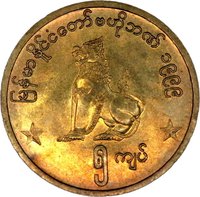
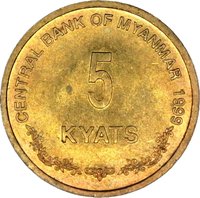
Series: 1999 Myanmar circulation coins
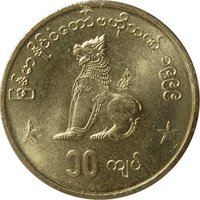
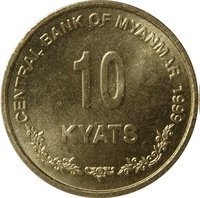
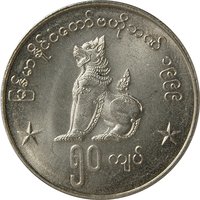
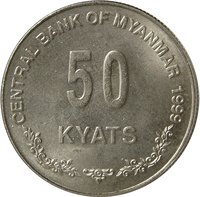

🌱 Common