

20 Dollars – Tuvalu
Tuvalu
Context

Material
Diameter: 38.61 mm
Weight: 31.7 g
Silver weight: 29.32 g
Shape: Round
Composition: 92.5% Silver
Standard: Silver ounce
Magnetic: No
Technique: Milled
References
KM: #Click to copy to clipboard27
Numista: #68596
Value
Exchange value: 20 AUD = $14.24
Bullion value: $85.05
Obverse
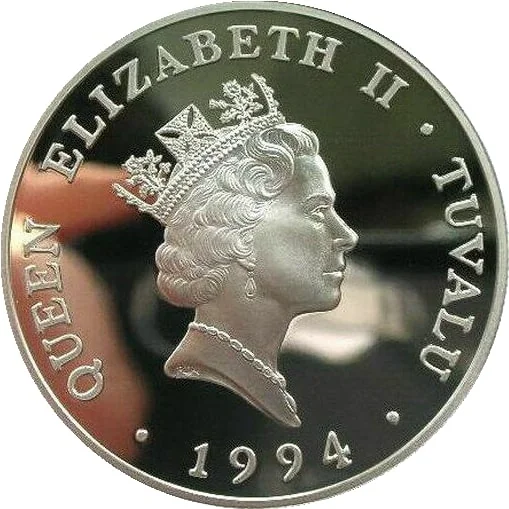
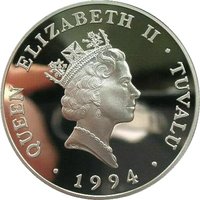
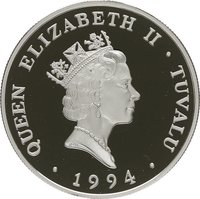
Description:
King facing right
Inscription:
QUEEN ELIZABETH II · TUVALU
RDM
· 1994 ·
RDM
· 1994 ·
Script: Latin
Designer: Raphael David Maklouf
Reverse
Edge
Reeded
Categories
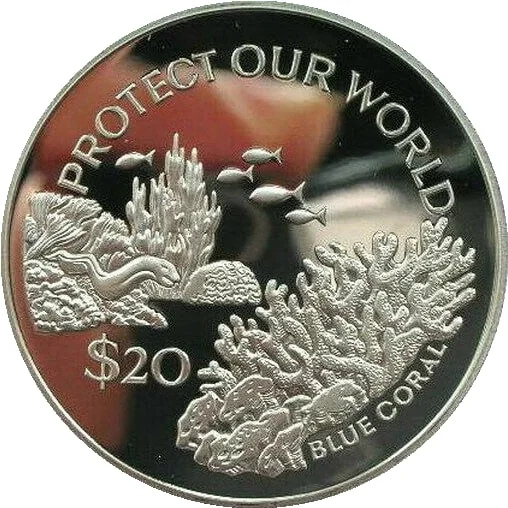
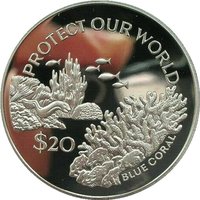
| Animal> Fish |
| Animal> Marine invertebrate |
Mintings
| Year | Mint Mark | Mintage | Quality | Collection |
|---|---|---|---|---|
| 1994 | — | 10,000 | Proof |
Historical background
In 1994, Tuvalu's currency situation was fundamentally defined by its use of the Australian dollar as its sole legal tender. This arrangement, established at independence in 1978, meant Tuvalu had no independent monetary policy or central bank. The Australian dollar provided crucial stability, insulating the small, remote island nation from inflation and exchange rate volatility, which was vital for an economy heavily reliant on imports and foreign aid. However, this also meant Tuvalu's monetary conditions were entirely determined by the Reserve Bank of Australia's policies, which were tailored for a large, developed economy rather than the specific needs of a microstate.
Alongside the Australian dollar, Tuvalu continued to mint and circulate its own non-circulating commemorative coinage, primarily for the collector market. More notably, it issued special, low-denomination Tuvaluan dollar coins (1, 2, 5, 10, 20, 50 cents, and 1 dollar). These coins were pegged at par to the Australian dollar and were legal tender within Tuvalu, but they physically circulated alongside their Australian counterparts. Their purpose was partly practical for small transactions and, more importantly, symbolic—fostering a sense of national identity through currency, even while the actual monetary system was Australian.
The year 1994 fell within a period of economic challenge for Tuvalu. Primary revenue sources were modest, relying on the "Tuvalu Trust Fund" (established in 1987 with international aid), fishing licence fees, and remittances. The fixed currency link to Australia provided a stable financial foundation during this time, but it also highlighted Tuvalu's constrained economic sovereignty and vulnerability to external shocks. There was no serious discussion of abandoning the Australian dollar, as the benefits of stability and credibility far outweighed the drawbacks for the nation's fragile economy.
Alongside the Australian dollar, Tuvalu continued to mint and circulate its own non-circulating commemorative coinage, primarily for the collector market. More notably, it issued special, low-denomination Tuvaluan dollar coins (1, 2, 5, 10, 20, 50 cents, and 1 dollar). These coins were pegged at par to the Australian dollar and were legal tender within Tuvalu, but they physically circulated alongside their Australian counterparts. Their purpose was partly practical for small transactions and, more importantly, symbolic—fostering a sense of national identity through currency, even while the actual monetary system was Australian.
The year 1994 fell within a period of economic challenge for Tuvalu. Primary revenue sources were modest, relying on the "Tuvalu Trust Fund" (established in 1987 with international aid), fishing licence fees, and remittances. The fixed currency link to Australia provided a stable financial foundation during this time, but it also highlighted Tuvalu's constrained economic sovereignty and vulnerability to external shocks. There was no serious discussion of abandoning the Australian dollar, as the benefits of stability and credibility far outweighed the drawbacks for the nation's fragile economy.
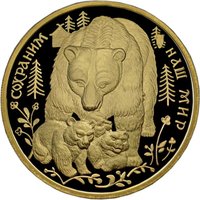
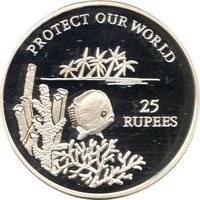
Series: Protect Our World
✨ Legendary