


Mints
| Name | Mark |
|---|---|
| Monnaie de Paris | (A) |
Mintings
| Year | Mint Mark | Mintage | Quality | Collection |
|---|---|---|---|---|
| 1891 | — | 595,000 | ||
| 1892 | — | 432,146 | ||
| 1893 | — | 300 | ||
| 1893 | — | — | ||
| 1894 | — | 300 | ||
| 1895 | — | 300 | ||
| 1896 | — | 300 | ||
| 1897 | — | 300 | ||
| 1898 | — | 300 | ||
| 1899 | — | 300 | ||
| 1900 | — | 300 | ||
| 1901 | — | 300 | ||
| 1902 | — | 300 |
Historical background
In 1891, Tunisia existed under the complex monetary system of the French Protectorate, established a decade earlier in 1881. The country was in a transitional period, caught between its Ottoman monetary heritage and the forceful integration into the French economic sphere. The official currency was the Tunisian rial, a silver coin subdivided into 16 kharub and 13 burbeu, but its circulation was overshadowed by a multitude of foreign coins. Spanish piastres, Ottoman mejidiehs, Austrian thalers, and notably French francs all circulated freely, creating a chaotic and inefficient marketplace where exchange rates fluctuated daily, hampering trade and state revenue collection.
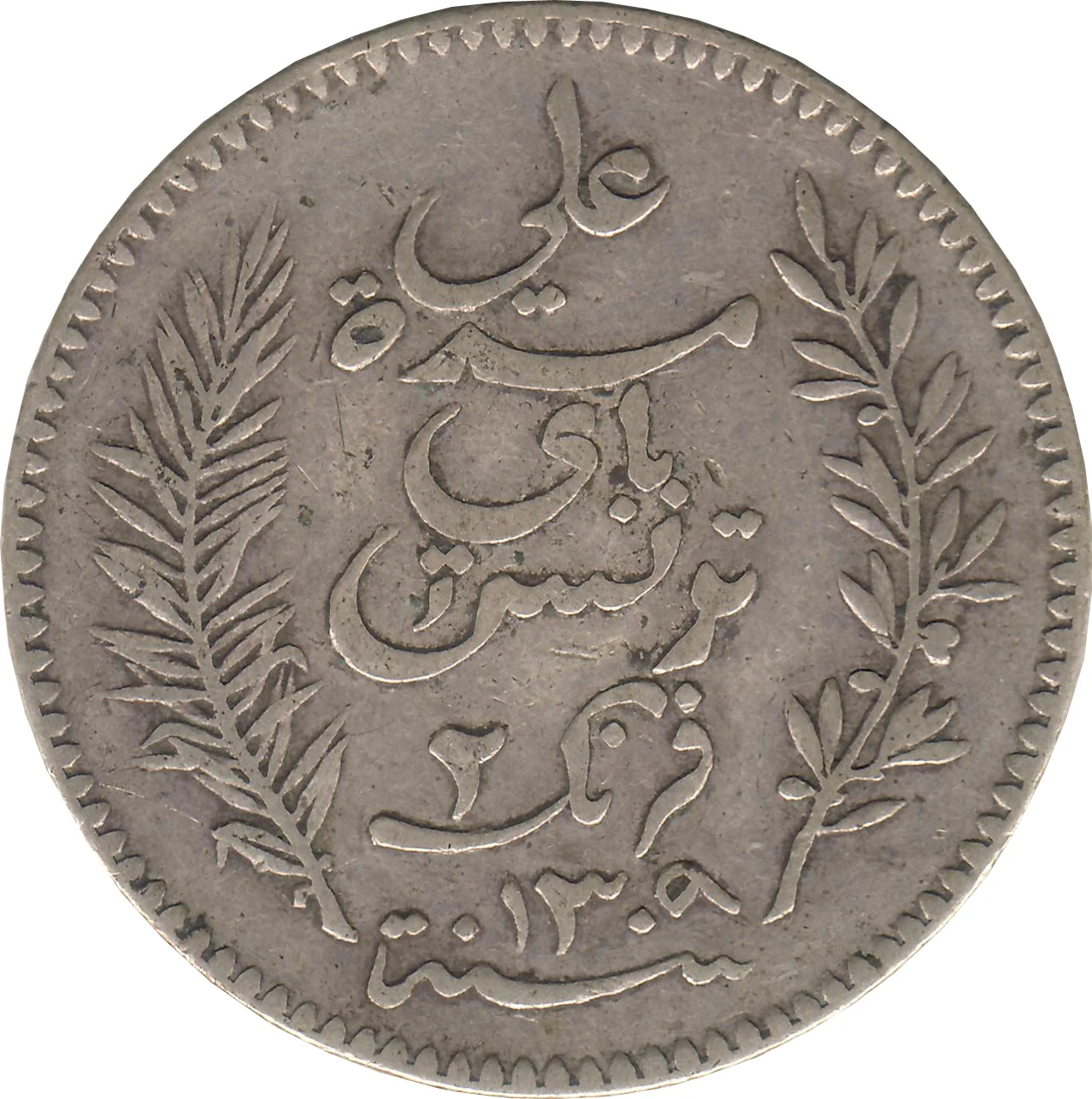
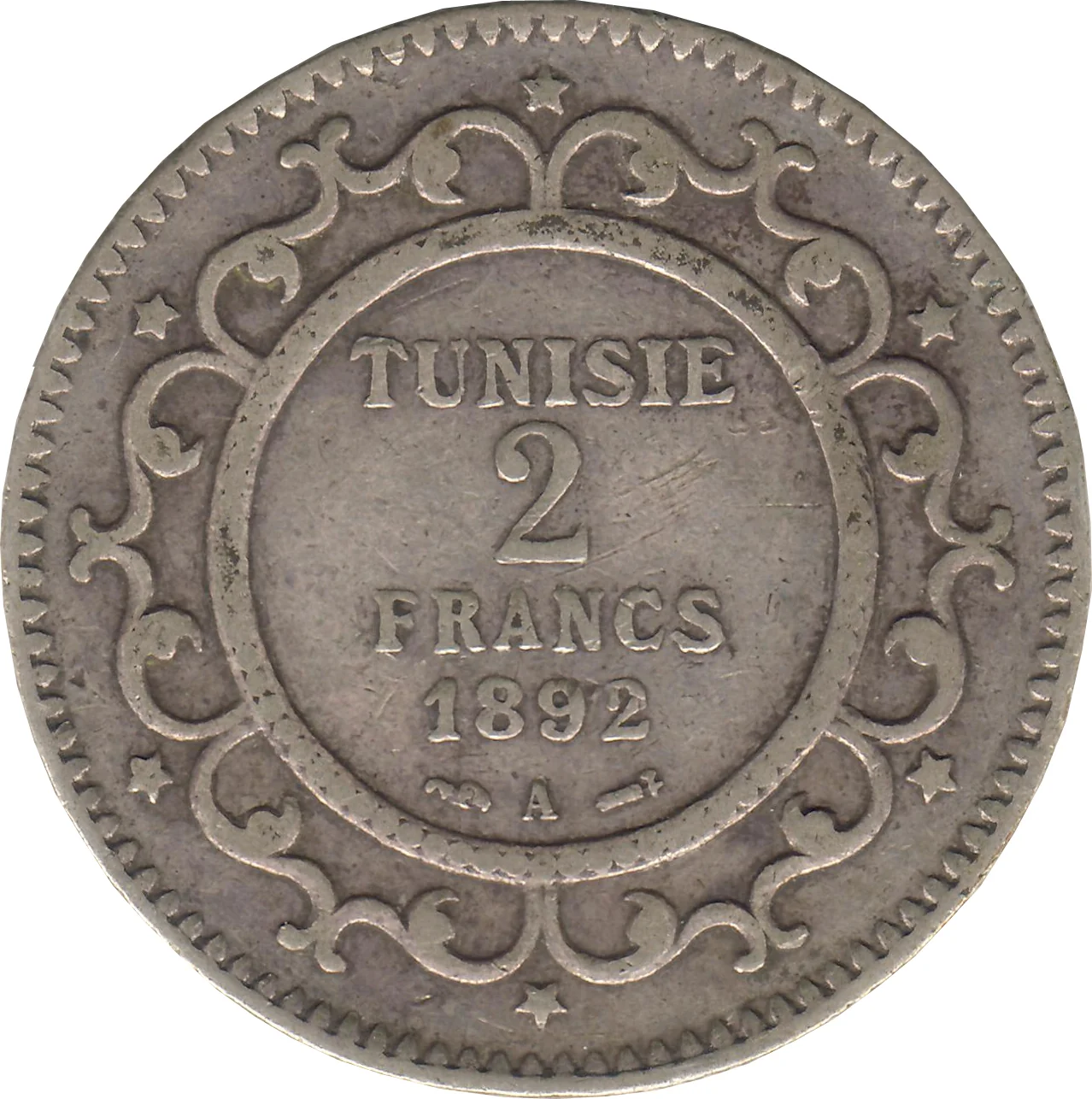
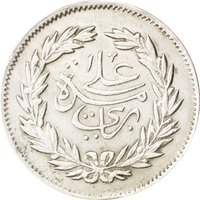
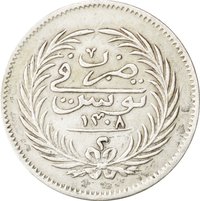
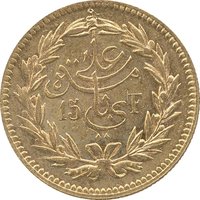
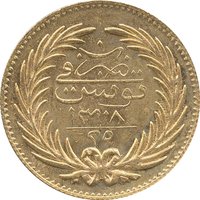
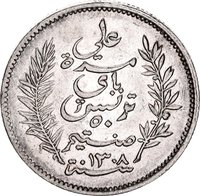
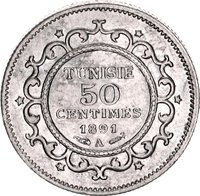
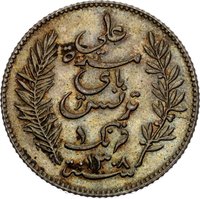
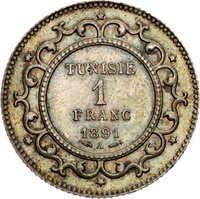
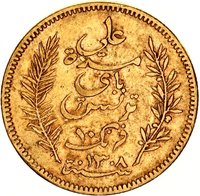
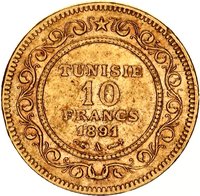
This monetary chaos was a primary concern for the French Resident-General, who sought to stabilize the economy and firmly anchor Tunisia to France. The year 1891 was pivotal, as it followed the 1890 decree that officially pegged the Tunisian rial to the French franc at a rate of 1 rial = 2.7 francs. The process of replacing the heterogeneous coinage with a unified, franc-based system was actively underway. The French administration was systematically withdrawing old coins from circulation and introducing new, modern Tunisian coinage minted in Paris, which bore Arabic script on one side and French insignia on the other, symbolizing the protectorate's dual authority.
Thus, the currency situation in 1891 was one of deliberate transformation. The background noise of a bazaar-like monetary system was being systematically silenced by colonial policy. The goal was clear: to replace a fragmented system with one of monetary dependency, facilitating French investment, administrative control, and the integration of Tunisia into the franc zone, which would be fully realized with the formal introduction of the Tunisian franc in 1898. The year represents a key moment in the economic subjugation of the protectorate, where control over money was a fundamental tool of colonial power.
This monetary chaos was a primary concern for the French Resident-General, who sought to stabilize the economy and firmly anchor Tunisia to France. The year 1891 was pivotal, as it followed the 1890 decree that officially pegged the Tunisian rial to the French franc at a rate of 1 rial = 2.7 francs. The process of replacing the heterogeneous coinage with a unified, franc-based system was actively underway. The French administration was systematically withdrawing old coins from circulation and introducing new, modern Tunisian coinage minted in Paris, which bore Arabic script on one side and French insignia on the other, symbolizing the protectorate's dual authority.
Thus, the currency situation in 1891 was one of deliberate transformation. The background noise of a bazaar-like monetary system was being systematically silenced by colonial policy. The goal was clear: to replace a fragmented system with one of monetary dependency, facilitating French investment, administrative control, and the integration of Tunisia into the franc zone, which would be fully realized with the formal introduction of the Tunisian franc in 1898. The year represents a key moment in the economic subjugation of the protectorate, where control over money was a fundamental tool of colonial power.
Series: 1891 Tunisia circulation coins

🌟 Limited