

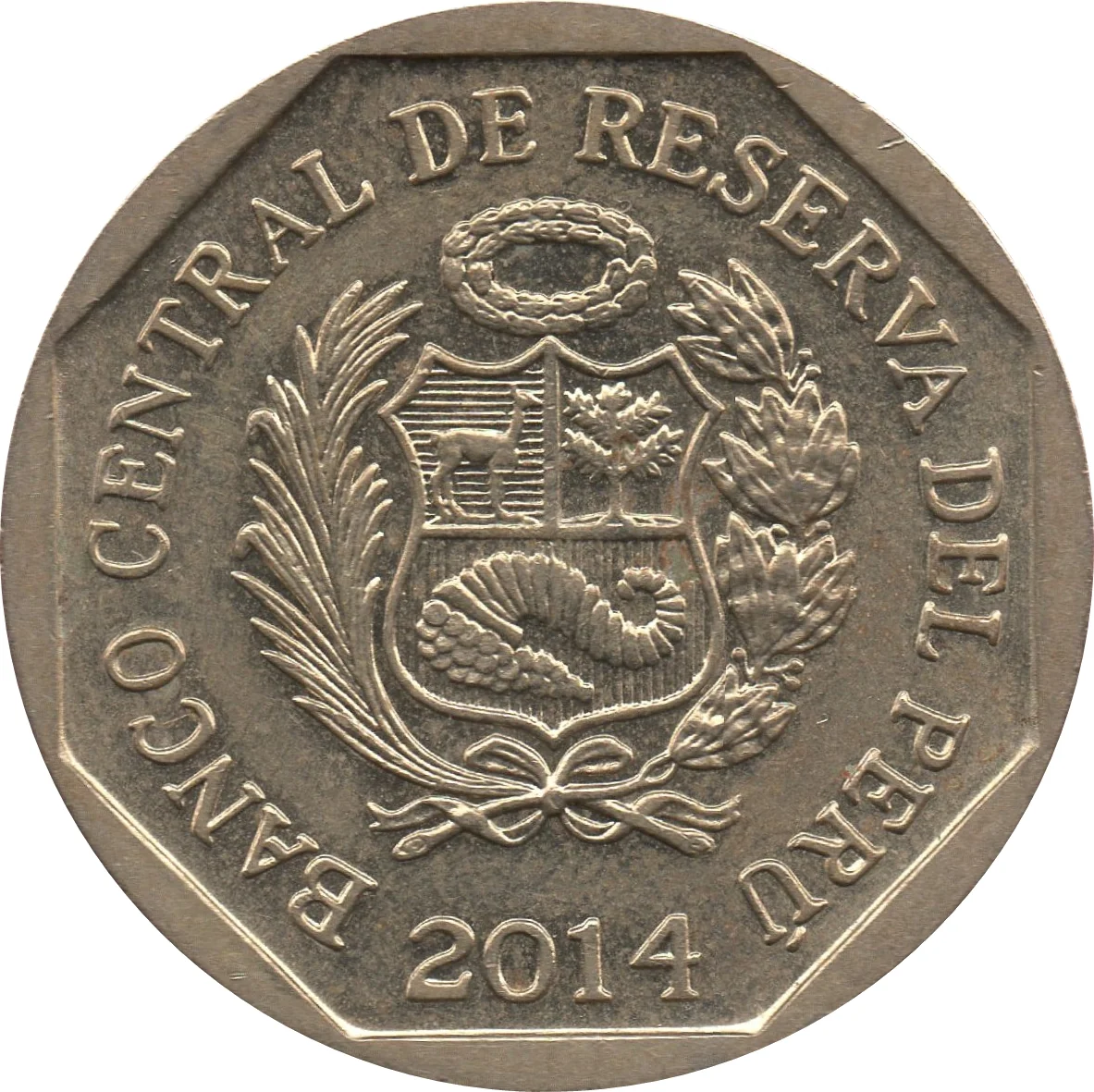
1 sol – Peru
Add to wishlist
Circulating commemorative coins
Commemoration: Antiguo Hotel Palace
Series: Wealth and Pride of Peru Series
Peru
Material
Diameter: 25.5 mm
Weight: 7.32 g
Thickness: 1.9 mm
Shape: Round
Composition: Nickel brass
Magnetic: No
Technique: Milled
Alignment: Coin alignment
flip
References
KM: #
Numista: #68197
Value
Exchange value: 1 PEN
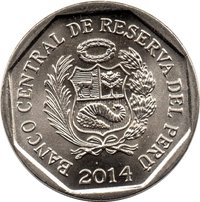
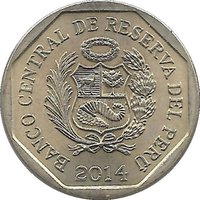
Obverse
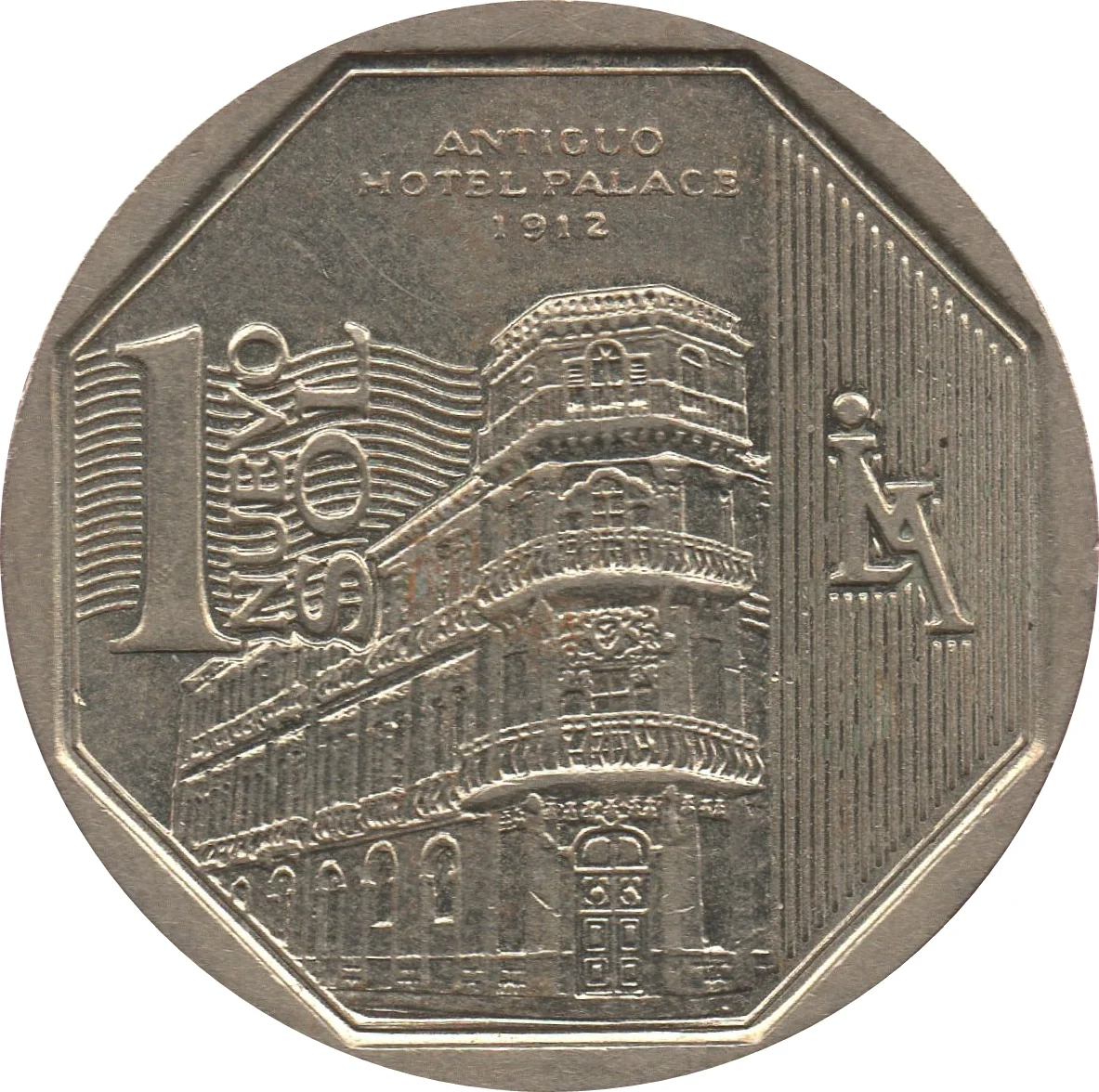
Reverse
Description:
Antiguo Hotel Palace façade
Inscription:
Antiguo Hotel Palace
1912
1 NUEVO SOL
1912
1 NUEVO SOL
Script: Latin
Edge
Reeded
Mintings
| Year | Mint Mark | Mintage | Quality | Collection |
|---|---|---|---|---|
| 2014 | LM | 12,000,000 |
Historical background
In 2014, Peru's currency, the nuevo sol (PEN), demonstrated notable resilience amidst a challenging regional and global economic climate. While many emerging market currencies weakened against a strengthening US dollar, the sol depreciated only moderately, losing about 3% of its value over the year. This relative stability was underpinned by Peru's strong macroeconomic fundamentals, including robust foreign reserves, a low public debt burden, and sustained economic growth, which averaged around 5% annually in the preceding years. The Central Reserve Bank of Peru (BCRP) played a key role, actively intervening in the foreign exchange market through pre-announced dollar purchases to accumulate reserves and smooth out excessive volatility, a policy it had maintained for several years.
The primary pressure on the currency stemmed from external factors, particularly the sharp decline in international prices for Peru's key commodity exports, such as copper, gold, and silver. As a major mining exporter, Peru's terms of trade deteriorated, reducing dollar inflows and putting downward pressure on the sol. This was partially offset by continued foreign direct investment in the mining sector, which provided underlying support. Domestically, inflation remained within the BCRP's target range (1-3%), ending the year at 3.2%, allowing the central bank to maintain its benchmark interest rate at 4.0% for most of the year to support growth without triggering significant currency flight.
Overall, 2014 was characterized by managed depreciation rather than instability. The BCRP's credible policies and the country's solid fiscal position provided a buffer against the commodity price shock, preventing the more severe currency crises seen in some neighboring economies. The year ended with the financial system stable and the sol weathering the external storm, setting a stage for the central bank to begin a gradual tightening cycle in late 2015 as inflation expectations began to rise.
The primary pressure on the currency stemmed from external factors, particularly the sharp decline in international prices for Peru's key commodity exports, such as copper, gold, and silver. As a major mining exporter, Peru's terms of trade deteriorated, reducing dollar inflows and putting downward pressure on the sol. This was partially offset by continued foreign direct investment in the mining sector, which provided underlying support. Domestically, inflation remained within the BCRP's target range (1-3%), ending the year at 3.2%, allowing the central bank to maintain its benchmark interest rate at 4.0% for most of the year to support growth without triggering significant currency flight.
Overall, 2014 was characterized by managed depreciation rather than instability. The BCRP's credible policies and the country's solid fiscal position provided a buffer against the commodity price shock, preventing the more severe currency crises seen in some neighboring economies. The year ended with the financial system stable and the sol weathering the external storm, setting a stage for the central bank to begin a gradual tightening cycle in late 2015 as inflation expectations began to rise.
Series: Wealth and Pride of Peru Series
🌱 Common