

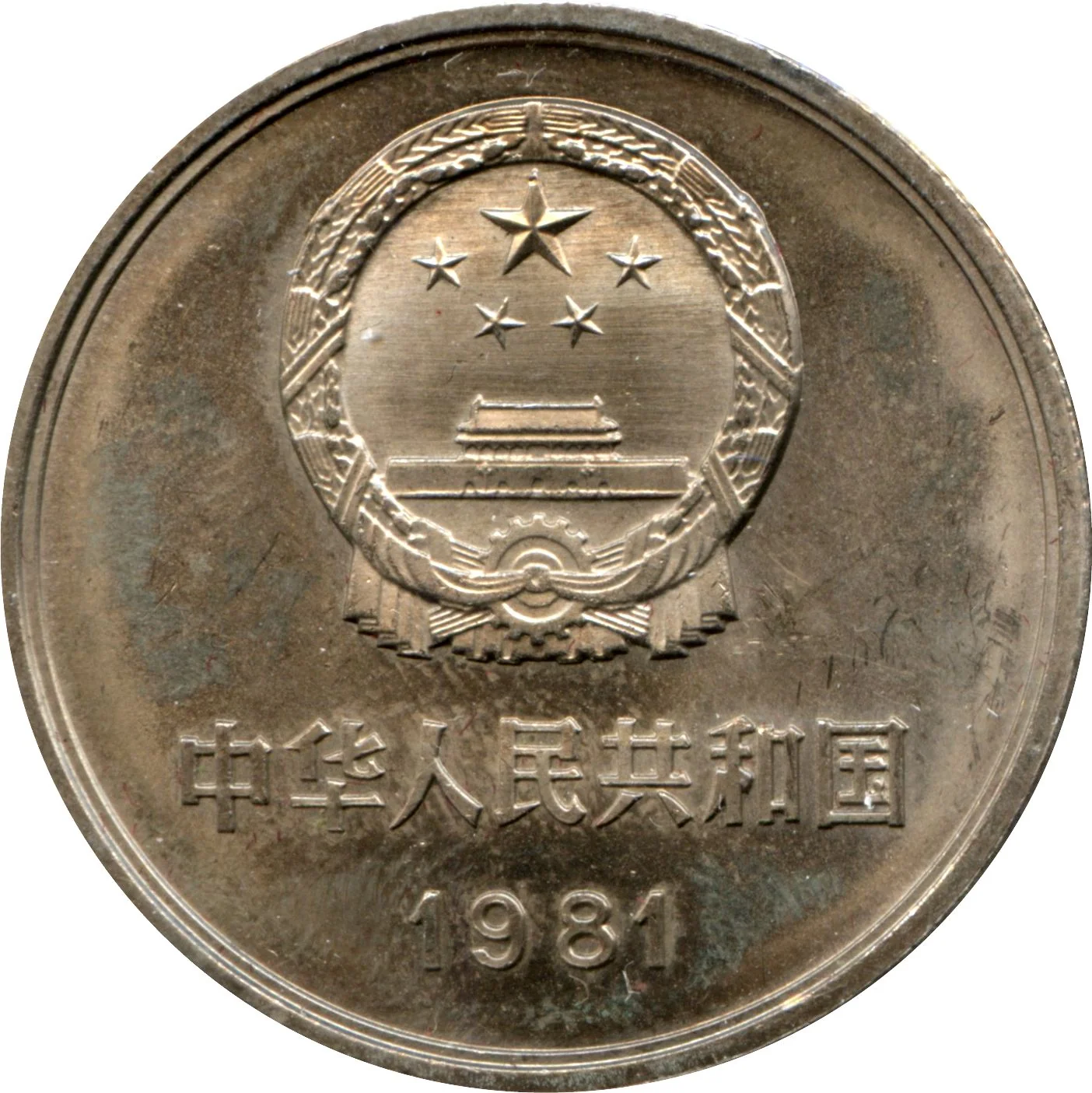
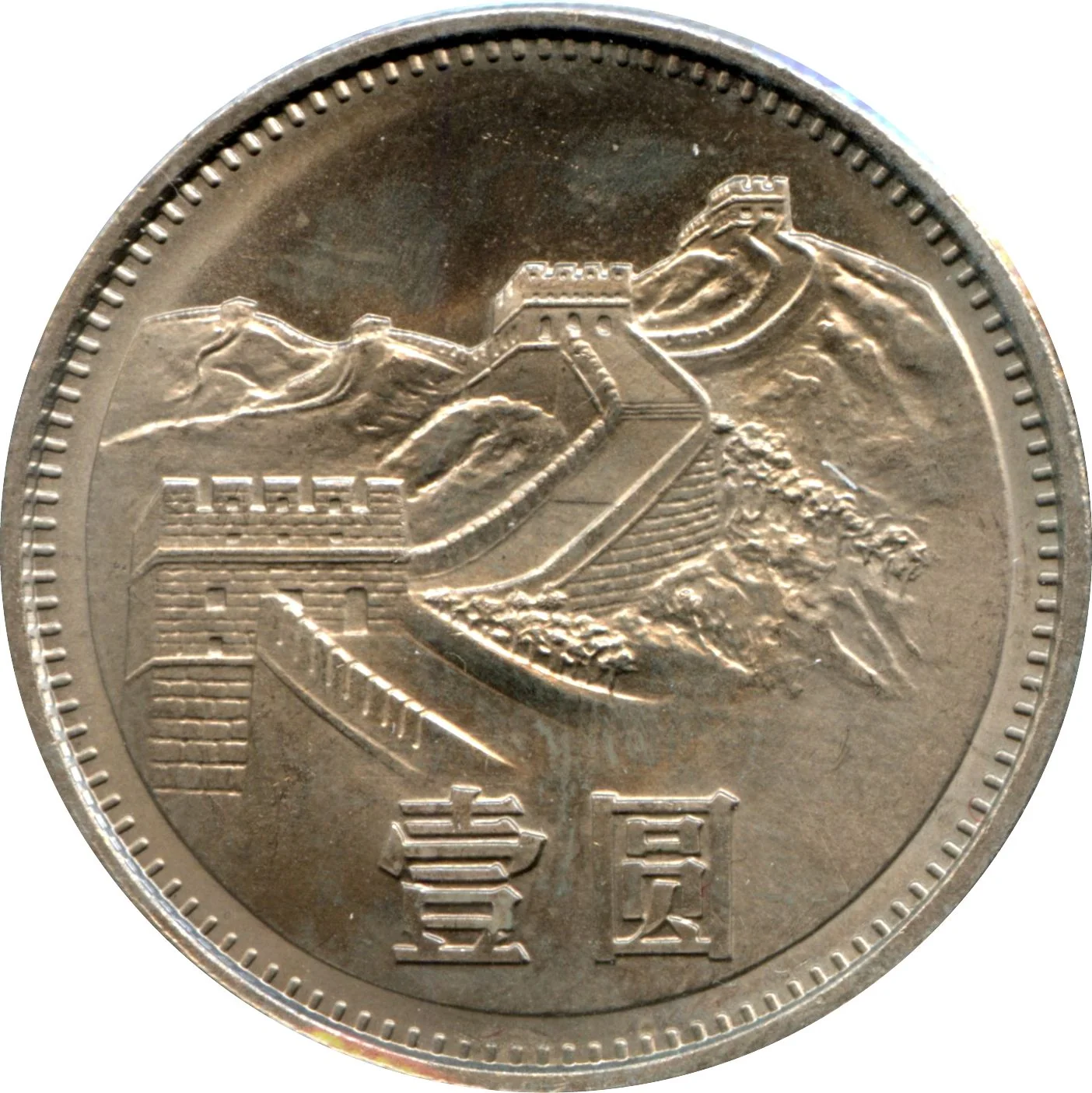
1 yuan – People's Republic of China
Add to wishlist
China
Context
Years: 1980–1986
Country: China
Issuer: People's Republic of China
Period:
(since 1949)
Currency:
(since 1955)
Total mintage: 7,200,000
Material
References
KM: #
Numista: #6818
Value
Exchange value: 1 CNY
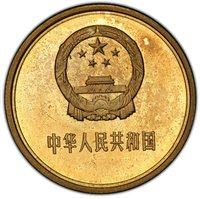
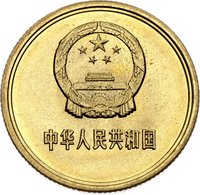
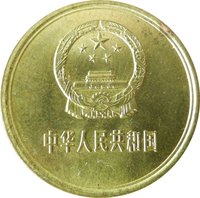
Obverse
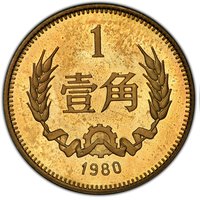
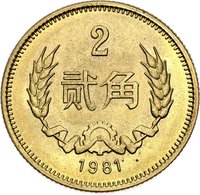
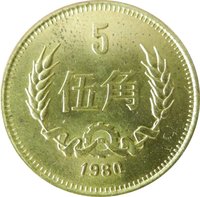
Reverse
Edge
Reeded
Categories
| Building> Castle or fortification |
| Symbols> Coat of Arms |
Mintings
| Year | Mint Mark | Mintage | Quality | Collection |
|---|---|---|---|---|
| 1980 | — | — | Proof | |
| 1980 | — | — | ||
| 1981 | — | — | ||
| 1981 | — | — | Proof | |
| 1982 | — | — | Proof | |
| 1983 | — | — | Proof | |
| 1983 | — | 3,100,000 | ||
| 1984 | — | 4,100,000 | ||
| 1984 | — | — | Proof | |
| 1985 | — | — | ||
| 1985 | — | — | Proof | |
| 1986 | — | — | Proof |
Historical background
In 1980, the People's Republic of China was in the early stages of its "Reform and Opening-Up" policy initiated by Deng Xiaoping. The currency system, centered on the Renminbi (RMB, with the primary unit being the yuan), was a tool of a centrally planned economy. It was strictly non-convertible, with its value set by administrative fiat rather than market forces. The official exchange rate, set by the People's Bank of China, was overvalued and existed alongside a complex system of internal settlement rates for foreign trade corporations, creating a significant disconnect between the domestic economy and international trade.
This period saw the critical introduction of a dual-track exchange rate system to manage the transition. In 1980, China established the Foreign Exchange Certificate (FEC) for use by foreigners alongside the regular RMB, effectively creating a two-tier currency system within its borders. More importantly, the government officially launched the "Internal Settlement Rate" for trade, which was set at a devalued rate of 2.8 yuan per US dollar, compared to the official rate of approximately 1.5. This devaluation was a pragmatic recognition of the RMB's overvaluation, aimed at boosting exports by making Chinese goods cheaper on the world market and providing a more realistic cost basis for importers.
The currency situation of 1980 was therefore characterized by rigid control and deliberate, managed experimentation. The reforms were cautious and incremental, designed to stimulate foreign trade and attract investment without immediately destabilizing the domestic price system or relinquishing state control over capital flows. This cautious approach laid the essential groundwork for the more profound financial and exchange rate reforms that would follow throughout the 1980s and 1990s, as China gradually moved towards a more market-oriented economy.
This period saw the critical introduction of a dual-track exchange rate system to manage the transition. In 1980, China established the Foreign Exchange Certificate (FEC) for use by foreigners alongside the regular RMB, effectively creating a two-tier currency system within its borders. More importantly, the government officially launched the "Internal Settlement Rate" for trade, which was set at a devalued rate of 2.8 yuan per US dollar, compared to the official rate of approximately 1.5. This devaluation was a pragmatic recognition of the RMB's overvaluation, aimed at boosting exports by making Chinese goods cheaper on the world market and providing a more realistic cost basis for importers.
The currency situation of 1980 was therefore characterized by rigid control and deliberate, managed experimentation. The reforms were cautious and incremental, designed to stimulate foreign trade and attract investment without immediately destabilizing the domestic price system or relinquishing state control over capital flows. This cautious approach laid the essential groundwork for the more profound financial and exchange rate reforms that would follow throughout the 1980s and 1990s, as China gradually moved towards a more market-oriented economy.
🌱 Common