

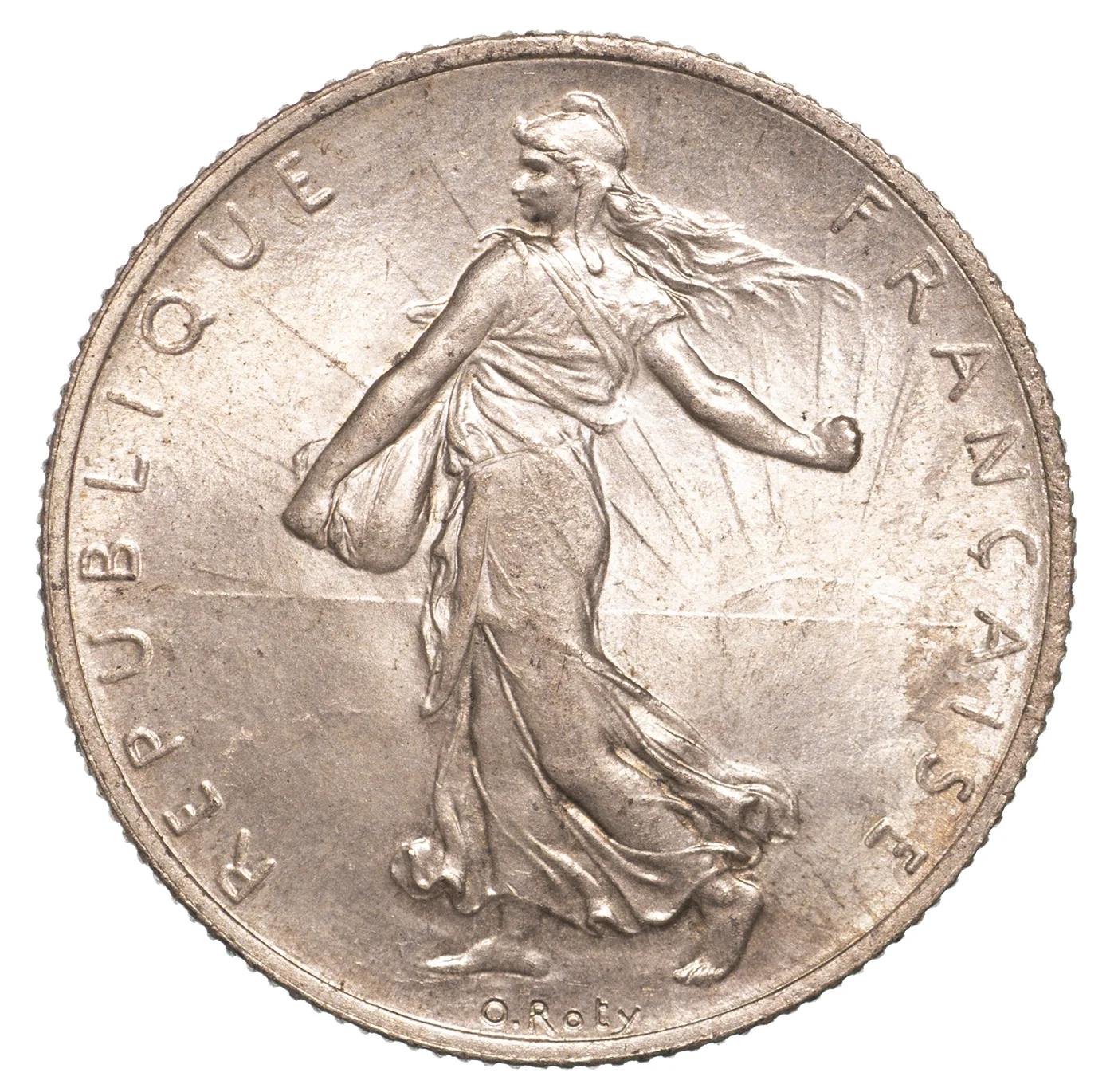
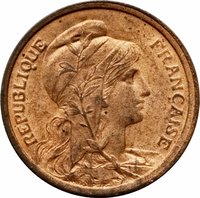
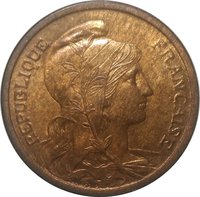
Obverse
Description:
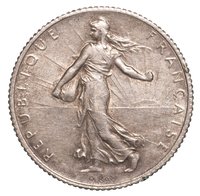
Sowing figure "La Semeuse."
Inscription:
REPUBLIQUE FRANÇAISE
O. Roty
O. Roty
Translation:
French Republic
O. Roty
O. Roty
Script: Latin
Language: French
Engraver: Louis-Oscar Roty
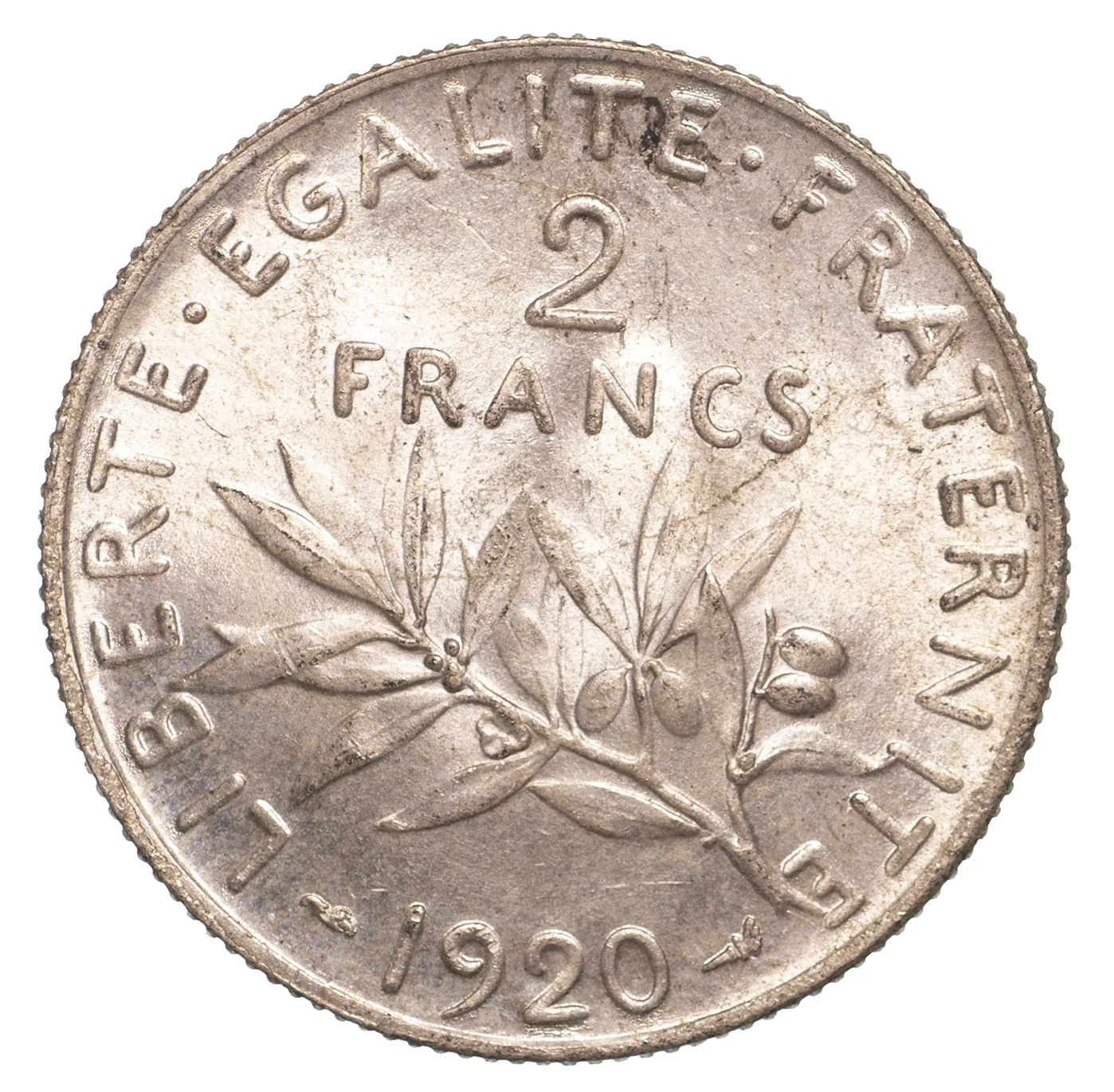
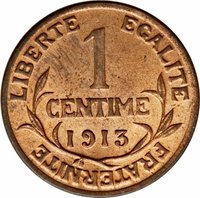
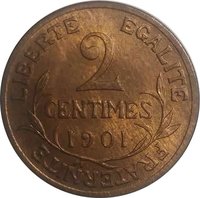
Reverse
Description:
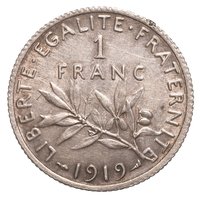
Branch splits value and year.
Inscription:
LIBERTE·EGALITE·FRATERNITE
2
FRANCS
1915
2
FRANCS
1915
Translation:
LIBERTY·EQUALITY·FRATERNITY
2
FRANCS
1915
2
FRANCS
1915
Script: Latin
Language: French
Engraver: Louis-Oscar Roty
Edge
Reeded
Mints
| Name | Mark |
|---|---|
| Monnaie de Paris | — |
| Castelsarrasin | C |
Mintings
| Year | Mint Mark | Mintage | Quality | Collection |
|---|---|---|---|---|
| 1898 | FM | — | ||
| 1898 | — | 5,000,000 | ||
| 1899 | — | 3,500,000 | ||
| 1899 | FM | — | ||
| 1900 | — | 450,938 | ||
| 1900 | FM | 49,062 | ||
| 1901 | — | 1,860,000 | ||
| 1902 | — | 2,000,000 | ||
| 1904 | — | 1,500,000 | ||
| 1905 | — | 2,000,000 | ||
| 1908 | — | 2,501,808 | ||
| 1909 | — | 1,000,265 | ||
| 1910 | — | 2,190,000 | ||
| 1912 | — | 1,000,000 | ||
| 1913 | — | 500,000 | ||
| 1914 | — | 5,718,526 | ||
| 1914 | C | 461,647 | ||
| 1915 | — | 13,963,409 | ||
| 1916 | — | 17,886,653 | ||
| 1917 | — | 16,555,357 | ||
| 1918 | — | 12,026,147 | ||
| 1919 | — | 9,260,934 | ||
| 1920 | — | 3,013,677 |
Historical background
In 1898, France operated under the Latin Monetary Union (LMU), a multinational bimetallic system it had spearheaded in 1865. The franc was defined by a fixed ratio of gold to silver (1:15.5), meaning both metals could be minted into legal tender coins. However, this system was under severe strain. A global surge in silver production following major discoveries had depressed its market value, causing the fixed LMU ratio to become misaligned with reality. Consequently, cheaper silver flooded the Union, while gold coins were increasingly hoarded or exported (Gresham's Law in action), threatening the gold reserves seen as the bedrock of financial stability.
Domestically, France was on a de facto gold standard. To protect its gold stock, the Bank of France had, since 1878, suspended the free minting of silver for private individuals—a policy known as "limping bimetallism." While existing silver coins remained legal tender, new ones were minted only for government account. This created a complex circulation: gold coins (20 and 100 franc pieces), full-bodied silver francs, and fractional subsidiary coins. The situation was a political and economic tightrope, with debtors and silver interests advocating for the full restoration of bimetallism to create inflationary relief, while creditors, financiers, and the Bank of France staunchly defended the gold standard as essential for France's prestige and stability.
Internationally, the currency question was intertwined with geopolitical rivalry. The prospect of Germany demonetizing silver and the United States' debate over "free silver" influenced French policy. By 1898, the Third Republic was firmly, if unofficially, committed to maintaining the gold standard, viewing it as crucial for its position as a global financial center and a leading creditor nation. The year thus represented a tense equilibrium within a failing multinational system, setting the stage for France's eventual formal adoption of the gold standard in the years following the turn of the century.
Domestically, France was on a de facto gold standard. To protect its gold stock, the Bank of France had, since 1878, suspended the free minting of silver for private individuals—a policy known as "limping bimetallism." While existing silver coins remained legal tender, new ones were minted only for government account. This created a complex circulation: gold coins (20 and 100 franc pieces), full-bodied silver francs, and fractional subsidiary coins. The situation was a political and economic tightrope, with debtors and silver interests advocating for the full restoration of bimetallism to create inflationary relief, while creditors, financiers, and the Bank of France staunchly defended the gold standard as essential for France's prestige and stability.
Internationally, the currency question was intertwined with geopolitical rivalry. The prospect of Germany demonetizing silver and the United States' debate over "free silver" influenced French policy. By 1898, the Third Republic was firmly, if unofficially, committed to maintaining the gold standard, viewing it as crucial for its position as a global financial center and a leading creditor nation. The year thus represented a tense equilibrium within a failing multinational system, setting the stage for France's eventual formal adoption of the gold standard in the years following the turn of the century.
Series: 1898 France circulation coins
🌱 Very Common